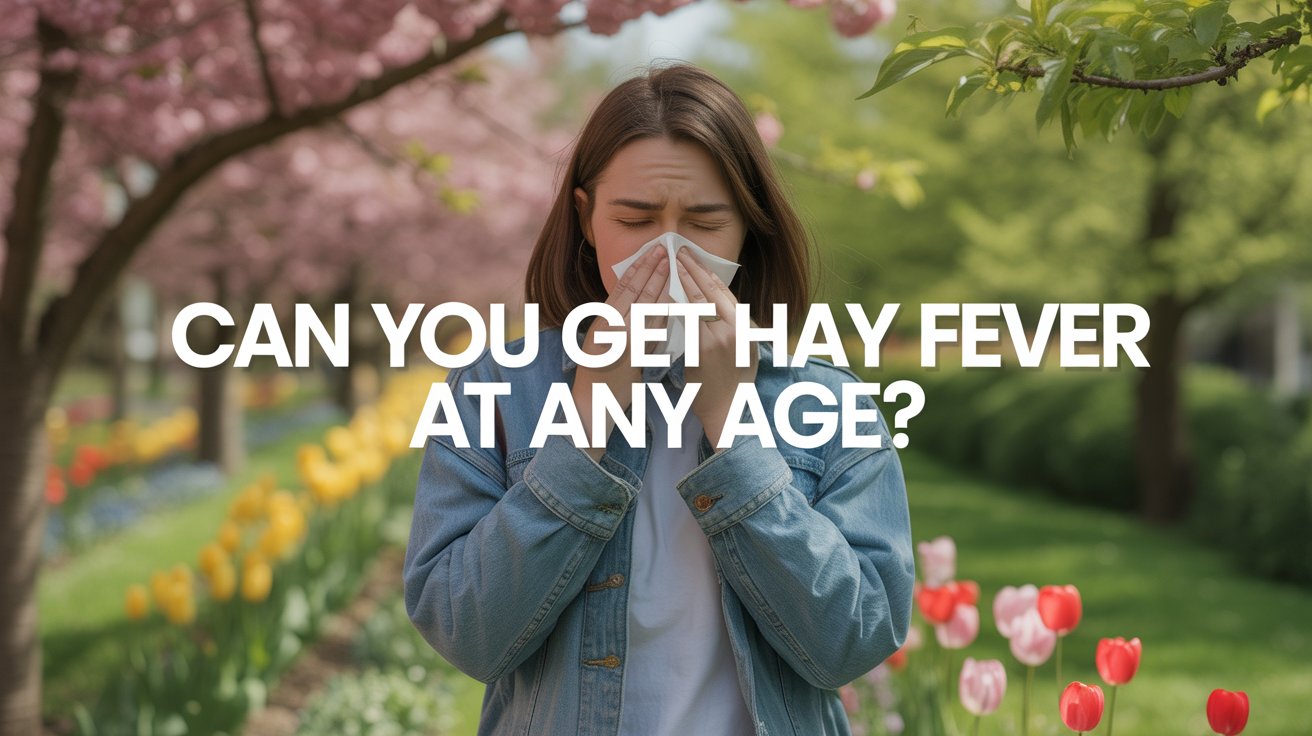
One of the most common things people say when they first develop hayfever as an adult is: “I’ve never had this before — why is it starting now?” It is a genuinely puzzling experience. You have lived through decades of pollen seasons without a second thought, and then one spring everything changes. Conversely, parents often wonder whether the sneezing and itchy eyes their young child develops in summer could really be hayfever, or whether they are simply too young.
The answer to both questions is the same: yes, hayfever can develop at any age. It is not a condition locked to childhood or adolescence. Understanding why this happens helps make sense of a symptom pattern that can feel entirely out of nowhere.
Why Hayfever Can Start at Any Point in Life
Hayfever — clinically known as allergic rhinitis — develops when the immune system becomes sensitised to a particular allergen, most commonly pollen from grasses, trees, or weeds. Sensitisation is not a one-time event fixed at birth. It is an ongoing process influenced by cumulative exposure, changes in immune function, environmental shifts, and life circumstances.
Think of it like a threshold. Each exposure to an allergen builds up gradually over time. For some people, that threshold is crossed in childhood. For others, it takes years of repeated seasonal exposure before the immune system tips into a recognisable allergic response. A change in environment — moving to a greener area, for instance, or spending more time outdoors — can accelerate that process considerably.
Hormonal changes also play a role. Pregnancy, the menopause, and shifts in thyroid function can all alter immune responsiveness in ways that trigger new allergic sensitivities or worsen existing ones. Stress, viral illness, and even changes in the gut microbiome are increasingly recognised as factors that influence allergic thresholds in adults.
Hayfever in Children
Hayfever is relatively uncommon in very young children — the immune system typically needs several seasons of pollen exposure before sensitisation occurs. It tends to emerge most commonly between the ages of five and fifteen, though it can appear earlier.
In children, the condition is worth taking seriously rather than dismissing as a seasonal inconvenience. Unmanaged allergic rhinitis disrupts sleep, reduces concentration, and can have a measurable impact on school performance — particularly during exam periods that coincide with peak grass pollen season in late May and June. Treating it effectively is not a minor consideration.
Adult-Onset Hayfever: More Common Than People Realise
Adult-onset hayfever is significantly more common than most people expect. Studies suggest that a meaningful proportion of new hayfever diagnoses occur in adults over thirty, and the condition can first appear in people well into their forties, fifties, and beyond. The immune system does not simply “lock in” its allergic profile in early life and remain static.
For adults who develop hayfever later in life, the pattern of symptoms can sometimes differ from the classic childhood presentation. Nasal congestion and postnasal drip tend to be more prominent relative to sneezing; fatigue and reduced concentration are often the most disruptive aspects. Some adults with late-onset hayfever initially attribute their symptoms to persistent colds or sinusitis before the seasonal pattern becomes apparent.
Can Hayfever Go Away as Well as Start?
Yes. Hayfever does not always follow a linear path of worsening over time. Some people find their symptoms diminish significantly in their thirties and forties, even without treatment. Others experience years of remission followed by a recurrence. The immune system continues to change throughout life, and its response to allergens can moderate as well as intensify.
This variability is one of the reasons hayfever can be confusing to manage. A treatment approach or avoidance strategy that worked well one season may feel less effective the next, and vice versa.
When to Seek Help
Self-management with over-the-counter antihistamines and nasal sprays is appropriate for mild to moderate symptoms. However, a GP consultation is worthwhile if:
- Symptoms are significantly affecting your sleep, concentration, or daily life
- Over-the-counter treatments are not providing adequate relief
- You are unsure whether your symptoms are hayfever or something else — such as a persistent cold, sinusitis, or a non-seasonal allergy
- You are considering a hayfever injection for more sustained seasonal relief
For patients in Birmingham, same-day appointments are available at The Private GP. Our doctors can confirm the diagnosis, review your current treatment, and discuss whether a hayfever and allergy injection is appropriate for your situation.
Frequently Asked Questions
- Can you suddenly develop hayfever as an adult?
Yes. Adult-onset hayfever is common and can appear at any point in life, including in people who have had no previous allergic symptoms. Cumulative pollen exposure, environmental changes, hormonal shifts, and changes in immune function can all trigger sensitisation in adulthood.
- What age does hayfever usually start?
Hayfever most commonly first appears between the ages of five and fifteen, but it can develop at any age. A significant number of people develop it in their twenties, thirties, or later. There is no age at which it becomes impossible to develop hayfever for the first time.
- Can hayfever disappear as you get older?
Yes, for some people. Hayfever symptoms can naturally reduce or go into remission in adulthood, though this is not guaranteed. The immune system’s allergic responses can change throughout life in both directions — improving as well as worsening.
- How do I know if I have hayfever or a cold?
The key distinction is pattern and duration. Hayfever symptoms tend to appear at the same time each year, correlate with high pollen counts, and persist throughout the relevant season. Colds typically resolve within seven to ten days, often include a fever or generalised aching, and are not reliably seasonal. Itchy eyes are much more characteristic of hayfever than of a viral cold.
- Is a hayfever injection suitable for adults who have developed it later in life?
Yes. A hayfever injection can be appropriate for adults of any age whose symptoms are significantly affecting their quality of life and are not adequately managed with antihistamines and nasal sprays. A GP consultation is needed first to confirm suitability.
Get the Right Support for Your Hayfever
Whether you’ve had hayfever for years or it’s appeared for the first time, effective treatment is available. At The Private GP in Birmingham, our doctors offer same-day appointments to assess your symptoms and discuss your options — including the hayfever injection for those who need more sustained seasonal relief.