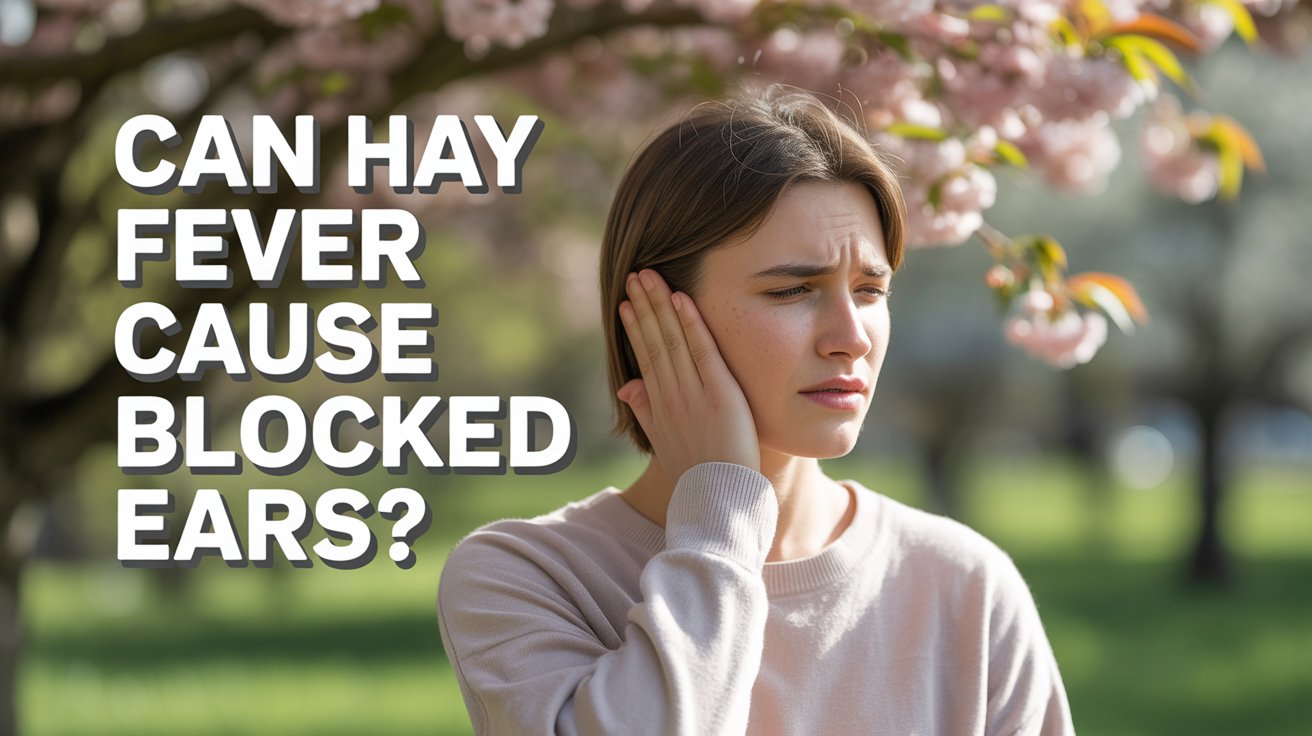
Blocked ears during hayfever season are one of those symptoms people rarely associate with their allergy until a GP points out the connection. The sneezing and itchy eyes are the obvious culprits, but the muffled hearing, sensation of fullness, and occasional popping that many hayfever sufferers experience each summer are just as much a part of the allergic response — and just as treatable.
If your ears feel blocked or dulled during the pollen season and clear up once it ends, hayfever is almost certainly the explanation.
Why Hayfever Affects the Ears
The connection between hayfever and blocked ears lies in the Eustachian tube — a narrow channel that runs between the middle ear and the back of the throat. Its job is to equalise pressure on either side of the eardrum and drain any fluid that accumulates in the middle ear. Under normal circumstances it does this efficiently and without any sensation at all.
When hayfever triggers inflammation in the nasal passages and the back of the throat, that inflammation extends to the lining of the Eustachian tube. The tube swells, its opening narrows, and its ability to drain and ventilate the middle ear is compromised. The result is a build-up of negative pressure or fluid behind the eardrum — which is experienced as a sense of fullness, muffled hearing, or intermittent popping when you swallow or yawn.
This condition is known as Eustachian tube dysfunction, and it is one of the most common ear complaints seen in GP surgeries during spring and summer. It is not an infection, and it does not cause permanent hearing damage. It is, essentially, congestion in a place most people do not think to look.
What Does It Feel Like?
The ear symptoms associated with hayfever are distinct enough that most people can identify them once they know what to look for:
- A sensation of fullness or pressure in one or both ears, similar to the feeling during a flight descent
- Muffled or slightly reduced hearing, as though sounds are coming from a distance
- Intermittent popping or clicking when swallowing, yawning, or moving the jaw
- Mild tinnitus — a faint ringing or buzzing — in some cases
- Occasional mild discomfort, though significant pain is more suggestive of an ear infection than hayfever-related dysfunction
These symptoms tend to fluctuate with pollen counts and are typically worse on high pollen days, in the evening when pollen levels rise again, and when other hayfever symptoms are at their peak.
Is It Hayfever or an Ear Infection?
This is a common source of uncertainty, and it is worth being clear about the distinction. Eustachian tube dysfunction from hayfever typically produces a dull, pressure-like sensation without significant pain. An ear infection — acute otitis media — tends to involve more pronounced pain, often a feeling of heat, and sometimes discharge or fever.
If your ear symptoms are predominantly a sense of blockage or dullness that correlates with your hayfever season and improve when your other symptoms are better managed, hayfever-related Eustachian tube dysfunction is the most likely explanation. If you are experiencing significant pain, discharge, or systemic symptoms such as a temperature, a GP assessment is warranted to rule out infection.
What Helps?
The most effective approach is to treat the underlying allergic inflammation rather than the ear symptoms in isolation. When nasal and Eustachian tube inflammation is properly controlled, ear symptoms typically resolve alongside the other hayfever symptoms.
- Nasal corticosteroid sprays. Used consistently throughout the season, a nasal steroid spray reduces inflammation in the nasal passages and the Eustachian tube opening. This is the most clinically effective treatment for hayfever-related ear symptoms and works best when started before peak pollen exposure rather than reactively.
- A non-sedating antihistamine helps reduce the overall allergic response, including the inflammation driving Eustachian tube dysfunction. Combining antihistamines with a nasal spray is more effective than either treatment alone for people with significant ear involvement.
- Steam inhalation. Inhaling steam can temporarily relieve Eustachian tube congestion and reduce the sensation of pressure. It does not treat the underlying allergy, but it can provide useful short-term comfort on bad days.
- Avoid decongestant nasal sprays long-term. Over-the-counter decongestant sprays (xylometazoline, oxymetazoline) can provide short-term relief but should not be used for more than a few days. Prolonged use causes rebound congestion that can make Eustachian tube dysfunction worse rather than better.
When to See a GP
If ear symptoms are persistent, significantly affecting your hearing, or not responding to standard hayfever treatment, it is worth a GP consultation rather than continuing to manage it alone. At The Private GP in Birmingham, same-day appointments are available, and our doctors can assess whether your ear symptoms are hayfever-related and whether a hayfever and allergy injection or a more tailored treatment plan would provide better seasonal control.
Frequently Asked Questions
- Can hayfever cause blocked ears?
Yes. Hayfever-related inflammation in the nasal passages extends to the Eustachian tube, which connects the middle ear to the back of the throat. When this tube becomes swollen and blocked, pressure builds behind the eardrum, producing a sensation of fullness, muffled hearing, and occasional popping. It is a common and treatable aspect of allergic rhinitis.
- How long do hayfever-related blocked ears last?
In most cases, ear symptoms follow the pattern of the pollen season — appearing during peak pollen periods and resolving once exposure reduces. With effective hayfever treatment, symptoms typically improve within days to weeks. If blocked ears persist beyond the pollen season or are accompanied by significant hearing loss or pain, a GP assessment is advisable.
- Will antihistamines help with blocked ears from hayfever?
Antihistamines help by reducing the overall allergic inflammatory response, which in turn reduces Eustachian tube swelling. They are most effective when combined with a nasal corticosteroid spray. For hayfever-related ear symptoms specifically, the nasal spray is generally the more targeted and effective treatment of the two.
- Should I use ear drops for hayfever-related blocked ears?
Ear drops are not typically helpful for Eustachian tube dysfunction caused by hayfever. The blockage is in the tube connecting the middle ear to the throat, not in the outer ear canal, so drops applied to the ear have no access to the site of the problem. The more effective approach is treating the nasal inflammation that is causing the tube to swell.
- Can a hayfever injection help with ear symptoms?
Yes. A hayfever injection provides sustained anti-inflammatory cover throughout the pollen season and can reduce the severity of all allergic symptoms — including ear fullness and Eustachian tube dysfunction — for patients whose symptoms are not adequately controlled with daily antihistamines and nasal sprays.
Get Better Seasonal Control in Birmingham
Blocked ears from hayfever are uncomfortable and easy to overlook as “just part of the season.” They do not have to be. The Private GP in Birmingham offers same-day appointments to review your hayfever management and discuss all available options — including the hayfever injection — so you can get through the pollen season with considerably less disruption.