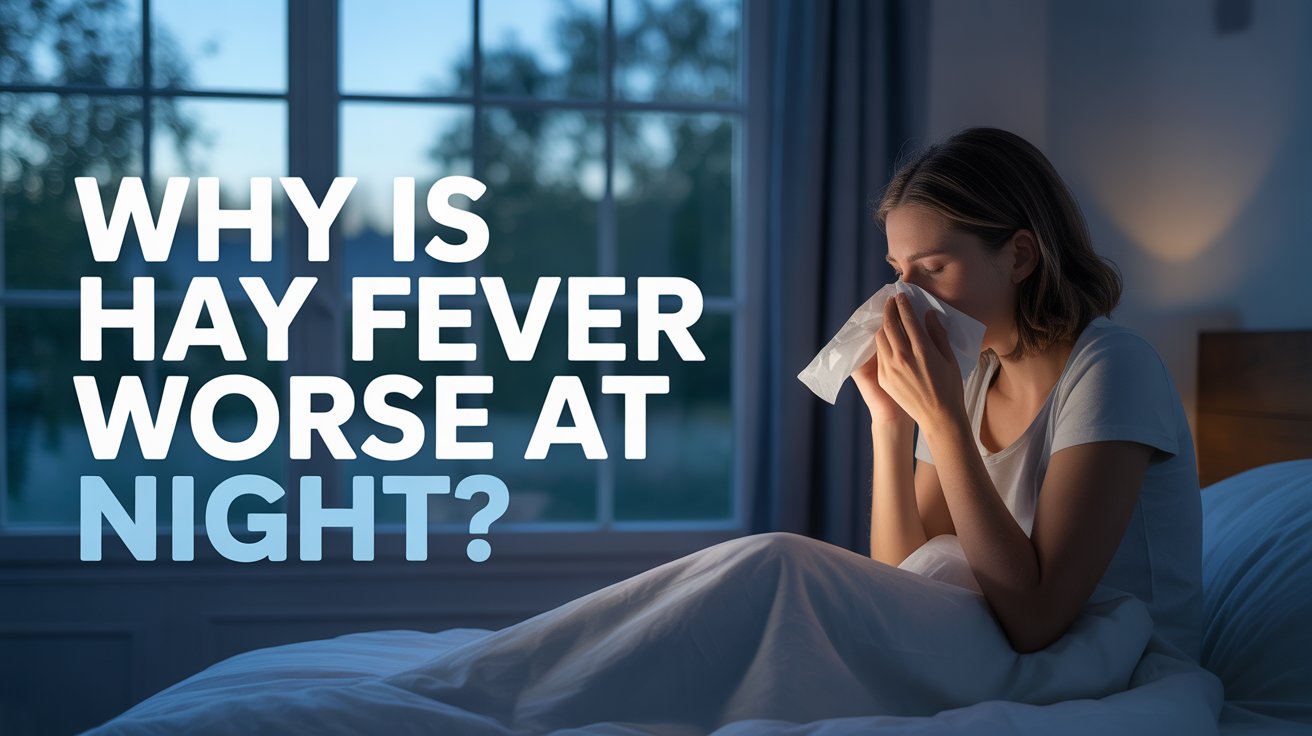
You manage to get through the day with your symptoms broadly under control, then the moment you get into bed everything seems to intensify. The sneezing starts, your nose blocks up, and sleep — the one thing that might actually help you feel better — becomes frustratingly elusive. If this pattern sounds familiar, you are not imagining it. Hayfever genuinely does tend to worsen at night, and there are several well-understood reasons why.
Pollen Falls at Night
Throughout the day, warm air rises and carries pollen upward, away from ground level. As temperatures drop in the evening, that air cools and descends — bringing the pollen back down with it. Pollen counts at ground level are typically at their highest in the early morning and again in the late evening for this reason, which means the period when you are winding down and going to bed often coincides with a surge in the very allergens driving your symptoms.
This is why stepping outside on a warm summer evening can trigger symptoms almost immediately, and why sleeping with windows open during pollen season almost always makes night-time hayfever significantly worse.
Your Bedroom Is Probably Full of Pollen
Even if you keep windows closed at night, pollen accumulates in the bedroom throughout the day. It arrives on clothing, hair, and skin when you come indoors. It settles on bedding, carpets, curtains, and soft furnishings. Your duvet and pillows, if not washed regularly during pollen season, can hold a surprisingly significant pollen load — meaning you effectively spend the night with your face pressed against the allergen causing your symptoms.
Pets compound this considerably. Dogs and cats that move between outdoors and the bedroom carry pollen on their coats and deposit it directly onto the surfaces where you sleep. If your pet shares your bed or bedroom during pollen season and your night-time symptoms are severe, this is a relationship worth examining honestly.
Your Body’s Natural Defences Drop at Night
Cortisol — the body’s primary anti-inflammatory hormone — follows a diurnal rhythm. Levels are highest in the early morning, which is partly why the immune system is relatively better at suppressing allergic inflammation during the day. As cortisol falls through the evening and reaches its lowest point in the early hours of the morning, the body’s natural brake on the allergic response is reduced. This physiological shift means allergic inflammation can intensify during sleep even without any additional pollen exposure.
This same mechanism is why asthma, which shares many features with allergic rhinitis, is also classically worse between midnight and early morning — a pattern recognised in clinical medicine as the “circadian dip” in respiratory and allergic symptoms.
Lying Down Changes Everything
When you are upright during the day, gravity helps drain mucus from your nasal passages naturally. The moment you lie down, that drainage is disrupted. Mucus pools in the nasal cavity and postnasal drip begins to trickle down the back of the throat, triggering coughing, irritation, and a congestion that feels dramatically worse than it did an hour earlier when you were sitting on the sofa.
For people with hayfever-related nasal polyps or underlying sinusitis, this positional change is even more pronounced. What presents as manageable congestion during the day can feel like a complete blockage once horizontal.
Practical Steps to Reduce Night-Time Symptoms
- Shower before bed. This is one of the most effective single interventions. Washing pollen from your hair and skin before lying down removes a significant allergen source from your pillow and bedding.
- Keep bedroom windows closed from late afternoon. Pollen counts begin rising again as the air cools in the evening. Closing windows by late afternoon keeps the overnight environment as pollen-free as possible.
- Change and wash bedding regularly. During peak season, washing bedding weekly at 60°C removes accumulated pollen and dust mite allergens — both of which can drive night-time symptoms.
- Consider a HEPA air purifier in the bedroom. A quality air purifier running overnight can substantially reduce the airborne pollen and particulate load in the room where you spend the most time.
- Try a nasal corticosteroid spray in the evening. Used consistently and timed for the evening, a nasal steroid spray helps reduce the inflammation that would otherwise peak during the night. It works best when used regularly rather than as a reactive measure.
- Raise the head of your bed slightly. Even a modest incline — achieved with an extra pillow or a wedge — improves nasal drainage at night and reduces the congestion that comes with lying flat.
When Your Symptoms Need More Than Self-Management
If night-time hayfever is consistently disrupting your sleep despite these measures, it is worth speaking with a GP. Poor sleep compounds every other aspect of health, and there is no reason to accept months of broken nights as an inevitable part of the season. At The Private GP in Birmingham, our doctors can review your current treatment and discuss whether a hayfever and allergy injection — which provides sustained relief without the need for daily medication — might be the right approach for you.
Frequently Asked Questions
- Why is hayfever always worse at night?
Several factors combine at night: pollen descends to ground level as temperatures drop, bedroom environments accumulate pollen throughout the day, the body’s natural anti-inflammatory cortisol levels fall during sleep, and lying down prevents normal nasal drainage. Together, these create conditions where allergic symptoms reliably intensify after dark.
- Does sleeping with the window open make hayfever worse?
Yes, significantly. Evening and early morning are when pollen counts at ground level are highest. Sleeping with windows open during pollen season allows a continuous influx of airborne allergens directly into the space where you are trying to rest. Keeping bedroom windows closed from late afternoon is one of the most effective steps you can take.
- Can my pillow make hayfever worse at night?
Yes. Pillows and duvets accumulate pollen, dust, and dust mite allergens over time. During pollen season, washing bedding weekly at 60°C and using allergen-proof pillow and mattress covers makes a meaningful difference to the overnight allergen load. Showering before bed also reduces the amount of pollen deposited onto your pillow directly from your hair.
- Is night-time hayfever a sign my treatment isn’t working?
It can be. If you are already taking antihistamines and using a nasal spray but still waking repeatedly with congestion, sneezing, or itching, your current treatment may need reviewing. A GP can assess whether the formulation, timing, or combination of treatments needs adjusting — or whether a more sustained approach would better suit the severity of your symptoms.
- Can a hayfever injection help with night-time symptoms?
Yes. A hayfever injection works by providing sustained corticosteroid cover throughout the season rather than relying on daily medication whose levels can fluctuate. For people whose symptoms are most disruptive at night, the consistent anti-inflammatory effect can be particularly beneficial for sleep quality.
Sleep Better This Hayfever Season
Night-time hayfever is one of the most disruptive aspects of the condition — and one of the most treatable. If you are not getting the relief you need from over-the-counter options, The Private GP in Birmingham offers same-day appointments to review your symptoms and discuss all available treatments, including the hayfever injection.