

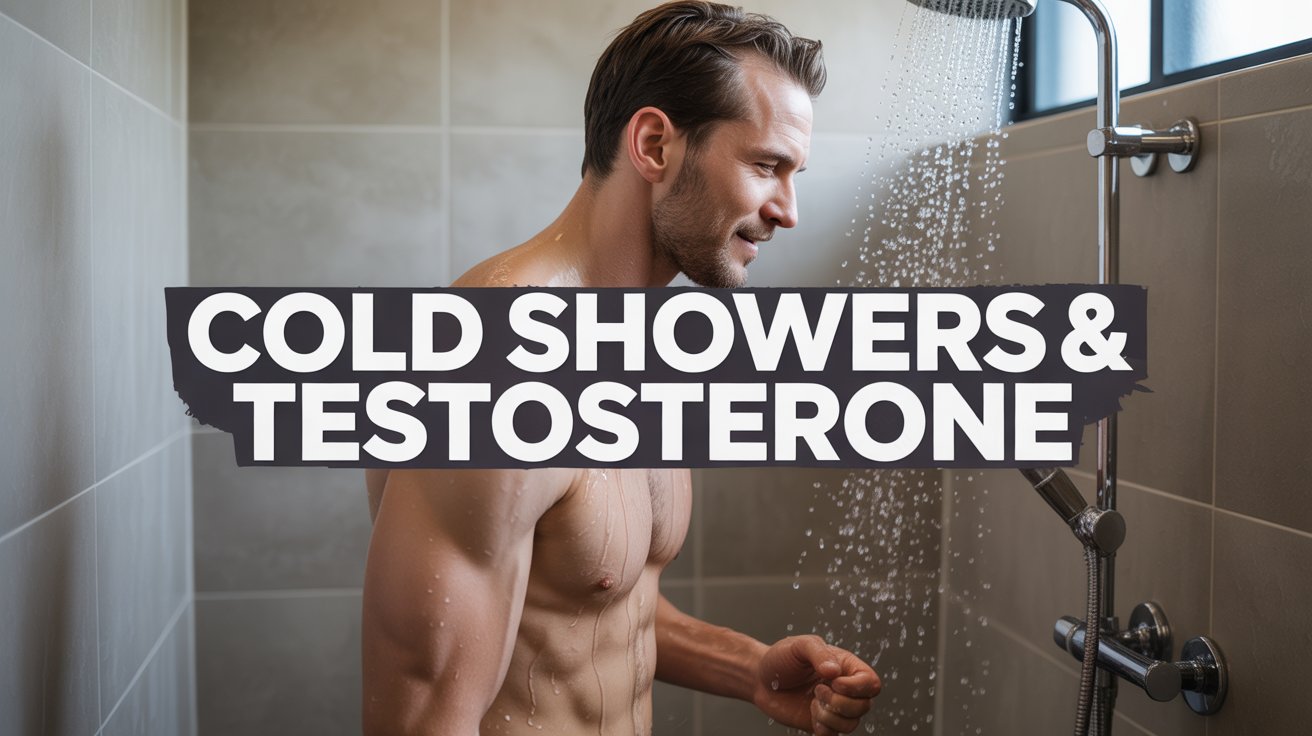
Cold showers have accumulated an enthusiastic following in recent years, credited with everything from improved mood and circulation to metabolic benefits and, most persistently, raised testosterone levels. The claim appears regularly in fitness content, men’s health podcasts, and wellness communities. But what does the clinical evidence actually show?
The honest answer is that cold showers have some genuine physiological effects — but their impact on testosterone is considerably more modest than the online conversation suggests. Understanding what the evidence does and does not support helps distinguish useful habits from overstated claims.
What the Evidence Actually Shows
There is a biological rationale behind the cold shower and testosterone claim, and it centres on testicular temperature. Testosterone is produced in the testes, which are housed outside the body in the scrotum precisely because sperm production and optimal testicular function require a temperature slightly below core body temperature — typically around 34 to 35 degrees Celsius rather than the body’s internal 37 degrees.
The logic follows that if heat impairs testicular function and cold preserves it, then cold exposure should support testosterone production. This is partially supported by evidence: sustained heat exposure — from hot baths, saunas, or prolonged sitting — has been shown in some studies to temporarily suppress testosterone levels and sperm production. Reducing that heat stress should, in theory, be beneficial.
However, the leap from “cold preserves testicular function” to “cold showers meaningfully raise testosterone in healthy men” is not well supported by clinical data. The studies most frequently cited in this context are small, methodologically limited, and do not demonstrate the kind of consistent, clinically significant testosterone elevation that would justify the confidence with which the claim is often made.
What Cold Exposure Does Do
Setting testosterone aside, cold water immersion does produce measurable physiological effects that are relevant to men interested in hormonal health and general wellbeing:
Cortisol Regulation
Brief cold exposure activates the sympathetic nervous system and triggers a stress response, including a transient cortisol spike. Regular cold exposure may, over time, improve the body’s cortisol regulation and stress resilience — relevant because chronically elevated cortisol suppresses testosterone production. In this indirect way, cold showers may support testosterone by helping manage stress physiology, though this chain of causation is speculative rather than directly proven.
Dopamine and Mood
Cold exposure produces a significant and sustained rise in dopamine — a neurotransmitter associated with motivation, drive, and mood. This is one of the most robustly supported effects of cold water immersion and is relevant to men experiencing low mood or low motivation alongside any hormonal concerns.
Sympathetic Activation and Alertness
The immediate physiological response to cold water — increased heart rate, deeper breathing, heightened alertness — is real and pronounced. Whether or not testosterone is significantly affected, many men report feeling more energised and mentally sharp after a cold shower, which has genuine practical value.
What Actually Moves Testosterone Levels
If raising testosterone is the goal, the evidence points clearly toward lifestyle factors that have a substantially larger and better-documented effect than cold showers:
Resistance Training
Heavy compound exercise — particularly squats, deadlifts, and presses — produces a well-documented acute and potentially chronic rise in testosterone. This is one of the most consistent and reproducible findings in exercise endocrinology.
Sleep Quality and Duration
The majority of daily testosterone production occurs during sleep, particularly during deep slow-wave sleep. Men sleeping fewer than six hours consistently show meaningfully lower testosterone levels than those sleeping seven to nine hours. Sleep is likely the single most impactful modifiable lifestyle factor for testosterone.
Body Composition
Excess body fat — particularly visceral abdominal fat — increases the activity of aromatase, an enzyme that converts testosterone to oestrogen. Reducing body fat through diet and exercise has a direct and clinically meaningful effect on testosterone levels.
Stress Management
Chronic psychological stress elevates cortisol, which directly suppresses testosterone production via the hypothalamic-pituitary-gonadal axis. Addressing chronic stress is a more impactful testosterone intervention than any single wellness practice.
Vitamin D and Zinc
Deficiency in either is associated with lower testosterone levels. Vitamin D deficiency is common in the UK, particularly through autumn and winter. Correcting a genuine deficiency through supplementation or sun exposure has a measurable effect on testosterone in those who are deficient.
When Low Testosterone Needs Clinical Assessment
If you are experiencing symptoms of low testosterone — persistent fatigue, reduced libido, low mood, difficulty building muscle, or poor concentration — cold showers and lifestyle optimisation are reasonable starting points but are not a substitute for clinical assessment. A testosterone blood test provides an accurate baseline from which to understand whether your levels are genuinely low and whether treatment is warranted.
Low testosterone has identifiable causes — ranging from lifestyle factors to hormonal disorders — and effective treatments including testosterone replacement therapy for those who meet the clinical criteria. Self-management with wellness practices is appropriate when symptoms are mild and levels are within the normal range. When symptoms are significant and persistent, a GP-led assessment is the more appropriate path.
Frequently Asked Questions
- Do cold showers increase testosterone?
The evidence is limited and inconsistent. There is a biological rationale based on testicular temperature regulation, and cold exposure does produce genuine physiological effects — including dopamine release and sympathetic activation. However, current research does not demonstrate a clinically meaningful or sustained rise in testosterone from cold showers in healthy men. The effect, if present, is likely modest and indirect.
- How long would a cold shower need to be to have any effect?
The studies that have examined cold water exposure and hormonal effects typically use cold water immersion rather than showers, and for periods of several minutes at water temperatures below 15 degrees Celsius. A brief cold rinse at the end of a shower is unlikely to produce the degree of physiological stress used in research settings. Dedicated cold water immersion — in a cold plunge or bath — is more consistent with what has actually been studied.
- What are the signs of low testosterone?
Common symptoms include persistent fatigue and low energy, reduced sex drive, difficulty building or maintaining muscle mass, increased body fat particularly around the abdomen, low mood or depressive symptoms, poor concentration, and reduced morning erections. These symptoms are not specific to low testosterone and can have other causes, which is why a blood test is an important part of the assessment.
- How is low testosterone diagnosed?
Low testosterone is diagnosed through a blood test measuring total testosterone, typically taken in the morning when levels are at their daily peak. A private testosterone blood test at The Private GP in Birmingham can be arranged same-day with results reviewed directly with a doctor who can place the number in clinical context rather than simply reporting it against a reference range.
- Is testosterone replacement therapy available in Birmingham?
Yes. Testosterone replacement therapy (TRT) is available at The Private GP in Birmingham for men who have confirmed low testosterone on blood testing and meet the clinical criteria for treatment. A thorough assessment including history, examination, and blood work is carried out before any treatment is initiated.
Get Your Testosterone Properly Assessed in Birmingham
If you have symptoms that suggest low testosterone, the most useful thing you can do is get a clear picture of where your levels actually stand. The Private GP in Birmingham offers same-day testosterone blood tests and GP consultations to assess your hormonal health properly — so any decisions about treatment are based on evidence rather than wellness claims.