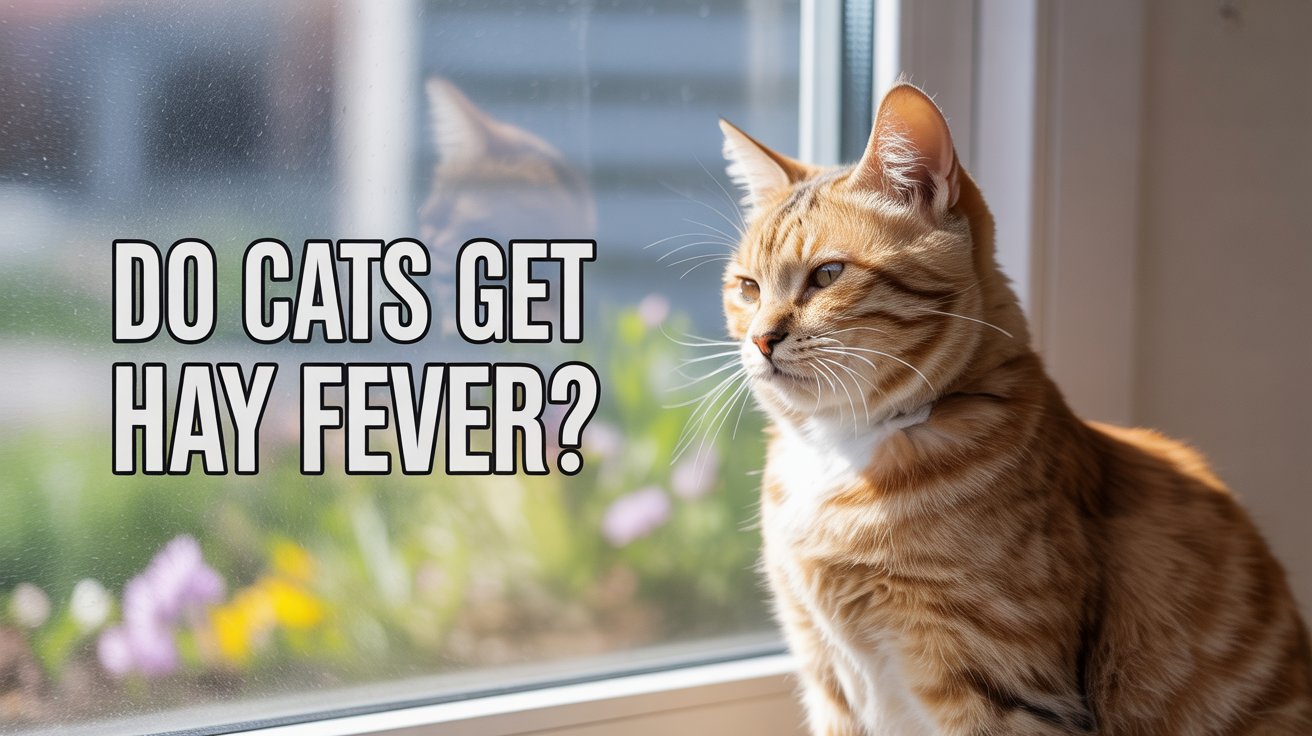
As hayfever season takes hold and pollen counts climb, many cat owners notice their pets behaving differently — more scratching than usual, watery eyes, or an unexpected bout of sneezing. It is a reasonable question to ask: can cats actually get hayfever?
The answer is yes, although the way seasonal allergies manifest in cats is notably different to the familiar runny nose and sneezing we associate with the condition in humans. Understanding what to look for — and what to do about it — can make a significant difference to your cat’s comfort during the warmer months.
Can Cats Really Get Hayfever?
Cats can develop allergic responses to many of the same environmental triggers as humans — pollen, mould spores, grass, and dust among them. The underlying mechanism is broadly similar: the immune system identifies a harmless substance as a threat and mounts an inflammatory response. However, the symptoms this produces in cats are quite different from those we experience.
While humans typically suffer most with nasal and eye symptoms — sneezing, congestion, itchy eyes — cats tend to express allergic reactions primarily through their skin. The condition is more accurately described as atopic dermatitis or feline atopy, though the casual term “hayfever” captures the seasonal pattern many owners observe.
Common Signs of Seasonal Allergies in Cats
The signs are often subtle at first, and many owners initially attribute them to minor skin irritation or normal cat behaviour. The following are the most frequently reported indicators:
Excessive scratching
Particularly around the head, ears, neck, and belly. This is the most common presentation of allergic skin disease in cats and can be intense enough to cause hair loss or open sores if left unmanaged.
Cats experiencing skin discomfort often respond by licking and grooming affected areas far more than usual. Patches of thinning fur or bald spots — particularly along the abdomen, inner thighs, or lower back — can be a sign of allergy-driven overgrooming rather than straightforward moulting.
Watery or red eyes
Unlike in humans where eye symptoms dominate, conjunctivitis in cats is a secondary rather than primary sign of seasonal allergy. It should be assessed by a vet to rule out infection, which can look very similar.
Sneezing or nasal discharge
Less common in cats than in humans, but some cats do show respiratory signs during high pollen periods. Occasional sneezing is normal; persistent or productive sneezing warrants veterinary attention.
Chewing at paws or rubbing the face
These are classic signs of allergic discomfort in cats and dogs alike. A cat that repeatedly rubs its face on furniture or chews at its feet during pollen season may be reacting to environmental allergens.
Skin redness, scabs, or miliary dermatitis
Tiny crusty bumps along the back and neck — a pattern known as miliary dermatitis — are a common allergic skin response in cats and can be triggered by pollen as well as flea allergy or food intolerance.
Which Allergens Affect Cats?
The same seasonal allergens that trouble humans can affect cats: tree pollen in early spring, grass pollen through late spring and summer, and mould spores from late summer into autumn. Cats that spend time outdoors are more directly exposed, but indoor cats are not immune — pollen travels indoors on clothing, through open windows, and on the fur of other pets.
It is also worth noting that feline allergies are rarely caused by a single allergen. Most cats with atopic dermatitis are sensitised to multiple triggers, which means symptoms can be present across an extended period rather than aligning neatly with a single pollen season.
How Is Feline Seasonal Allergy Diagnosed?
Diagnosing seasonal allergy in cats requires a degree of detective work. The most important initial step is ruling out other common causes of skin symptoms — particularly flea allergy dermatitis, which is the most common cause of itching in UK cats and produces a very similar clinical picture.
A vet will typically take a full history, examine the skin, and may recommend a strict flea control trial as a first step. If symptoms persist despite optimal parasite control, intradermal skin testing or serum allergy testing can be used to identify specific allergens — although these are usually carried out by a veterinary dermatologist rather than a general practice vet.
Food allergy is another important differential, as dietary intolerances produce skin symptoms that can be indistinguishable from environmental allergy. A supervised elimination diet trial is often recommended alongside environmental management to rule this out.
What Can You Do to Help an Allergic Cat?
There is no cure for feline atopy, but symptoms can be managed effectively with the right combination of approaches:
- Reduce indoor pollen exposure. Keeping windows closed during peak pollen periods, using air purifiers with HEPA filters, and regularly vacuuming soft furnishings can reduce the allergen load in your cat’s environment.
- Wipe your cat down after outdoor time. A gentle wipe with a damp cloth when your cat comes indoors removes pollen from the coat before it is ingested during grooming or shed onto bedding.
- Maintain rigorous flea control year-round. Even a single flea bite can trigger a significant allergic response in a sensitised cat. Using an effective veterinary-prescribed flea treatment consistently — regardless of season — eliminates one major variable from the picture.
- Speak to your vet about medical management. Options include antihistamines (some of which are used off-label in cats), essential fatty acid supplementation to support skin barrier function, and in more severe cases, immunosuppressive or targeted anti-itch medications prescribed by a vet.
- Consider allergen-specific immunotherapy. For cats with confirmed allergen sensitivities, desensitisation injections — tailored to the specific allergens identified through testing — can reduce the severity of the immune response over time. This is a longer-term treatment approach managed by a veterinary dermatologist.
When to See a Vet
Mild seasonal symptoms that are manageable and do not affect your cat’s general behaviour or quality of life may not require immediate veterinary attention. However, a vet appointment is advisable if:
- Scratching is causing hair loss, open sores, or skin infections
- Symptoms are present for more than a few weeks without improvement
- Your cat is visibly uncomfortable or distressed
- Eye or respiratory symptoms are persistent or worsening
- You are unsure whether the symptoms are allergy-related or could have another cause
Veterinary dermatology has advanced considerably in recent years, and cats with moderate to severe atopic disease now have access to effective targeted treatments that were not available a decade ago. Early veterinary involvement leads to better long-term skin management and a more comfortable life for your cat.
A Note for Hayfever Sufferers Who Own Cats
It is worth mentioning that whilst cats do not cause hayfever in themselves, cat dander — the microscopic particles of skin, saliva, and fur — is one of the most potent and common indoor allergens for humans. If you are a hayfever sufferer and also own a cat, your symptoms during pollen season may be amplified by the combination of outdoor pollen and indoor pet allergen exposure. Managing both your own and your cat’s allergies together, if relevant, tends to produce a better outcome for everyone in the household.
Frequently Asked Questions
- Do cats sneeze from hayfever?
Some cats do sneeze in response to seasonal allergens, though respiratory symptoms are less dominant in cats than in humans. Occasional sneezing during high pollen periods may be allergy-related, but persistent, frequent, or productive sneezing should be assessed by a vet to rule out infection or other causes.
- What does hayfever look like in a cat?
In cats, seasonal allergy most commonly presents as skin symptoms rather than nasal or eye symptoms. Excessive scratching, overgrooming, hair loss, scabby skin, and face-rubbing are the most typical signs. Watery eyes and sneezing can occur but are secondary features.
- Can cats take antihistamines for hayfever?
Some antihistamines are used in cats under veterinary guidance, but they are not licensed specifically for this purpose in felines and responses vary considerably between individuals. Never give your cat antihistamines intended for human use without veterinary advice — some formulations contain ingredients that are toxic to cats.
- Is my cat’s scratching definitely caused by hayfever?
Not necessarily. Flea allergy dermatitis, food intolerance, and other skin conditions can produce identical symptoms. A vet assessment is the only reliable way to identify the cause, and most vets will recommend ruling out flea allergy — the most common culprit — as a first step.
- Can I do anything at home to reduce my cat’s hayfever symptoms?
Yes. Reducing indoor pollen levels with air purifiers and closed windows, wiping your cat’s coat after outdoor exposure, and maintaining strict flea control are all practical steps that can reduce symptom severity. For persistent or severe symptoms, veterinary assessment and targeted treatment will produce better results than home management alone.
Medical Disclaimer: This article is intended for general informational purposes only and does not constitute veterinary advice. If you are concerned about your cat’s health or symptoms, please consult a registered veterinary surgeon. The Private GP provides human medical services only and is not a source of veterinary care.