

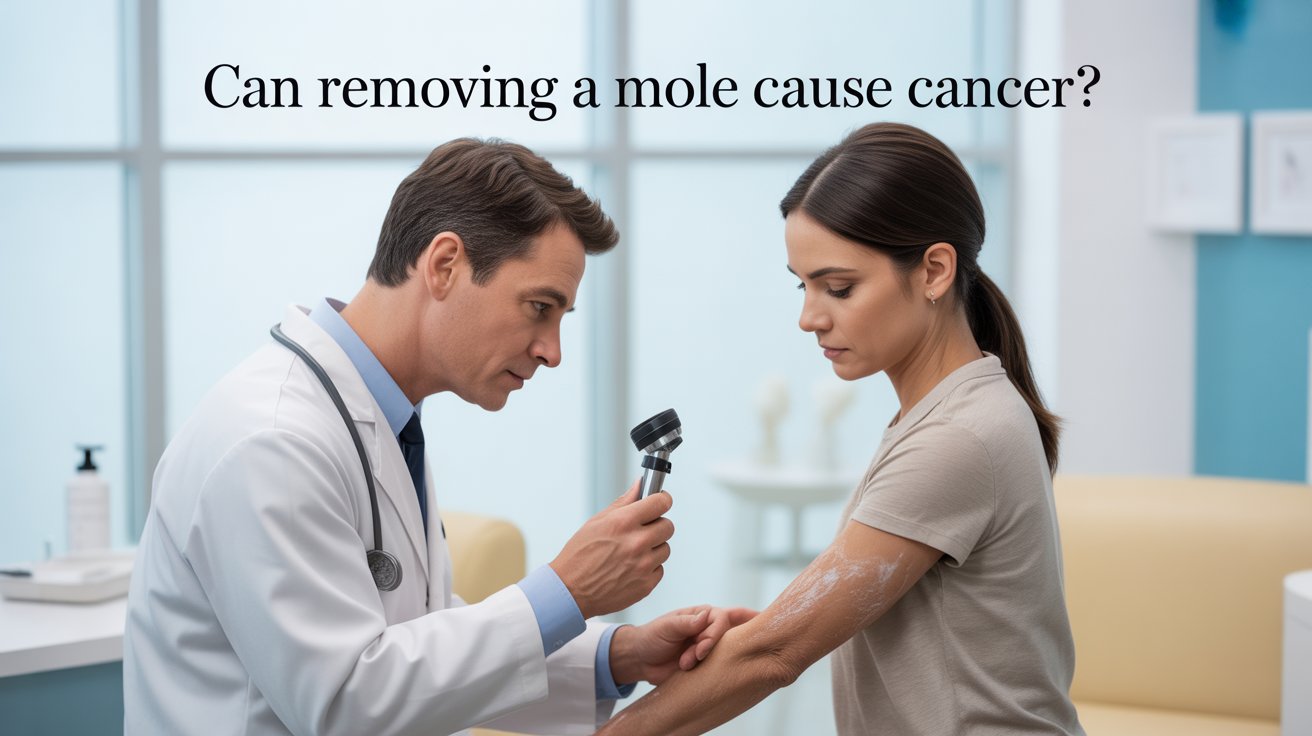
If you have a mole you’ve been thinking about getting removed, you may have heard people say: “Don’t touch it — you’ll spread the cancer.” It’s an understandable concern, and one we hear regularly at The Private GP. But is there any truth to it? Can removing a mole cause cancer — or is this simply a persistent myth that’s putting people off a safe and often necessary procedure?
The short answer is: no, professionally performed mole removal does not cause cancer. In fact, for certain moles, having them assessed and removed promptly is one of the most effective things you can do to protect your long-term skin health. In this article, we’ll explain the science behind that reassurance, clarify the risks that do exist, and help you understand when to seek professional advice.
Understanding Moles: What Are They, Exactly?
Moles — known medically as melanocytic naevi — are small clusters of melanocytes, the pigment-producing cells that give your skin its colour. They appear as flat or raised spots, typically brown or black, and most people have somewhere between 10 and 40 of them. The vast majority are completely benign and will never cause any medical concern.
Occasionally, however, a mole can change in a way that warrants attention. Changes in size, shape, colour, or texture — or a mole that bleeds, itches, or develops an irregular border — can be early indicators of melanoma, a form of skin cancer. This is why professional mole checks are so important, particularly if you notice anything new or different.
So, Can Removing a Mole Actually Cause Cancer?
This is the question at the heart of things, and it deserves a clear answer. Professional mole removal does not cause cancer. Surgically removing healthy tissue — or even a suspicious mole — cannot trigger the genetic mutations that lead to cancer. Cancer requires specific changes within a cell’s DNA; a scalpel simply eliminates the cells entirely.
The confusion often arises from a particular scenario: someone has a mole removed, and later — at the same site or nearby — cancer is diagnosed. In these cases, the cancer was already present before the removal. The procedure didn’t cause it; the biopsy simply revealed it, or incomplete removal meant some abnormal cells remained.
As experts at MD Anderson Cancer Center explain, a mole that looks unusual is sent to a pathologist after removal. If cancer is found, it was there to begin with — the removal process itself is not the cause.
The Real Risks: Where the Concern Comes From
While professional mole removal is safe, there are circumstances where things can go wrong — and it’s important to understand what those are, so you can make an informed decision.
1. Incomplete Removal
If a suspicious mole is only partially removed, some atypical cells may remain. These can regrow and, in a worst-case scenario, may continue to develop abnormally. This is why proper surgical technique — ensuring complete removal with an appropriate margin of surrounding tissue — matters so much. It’s also why tissue is routinely sent to a laboratory for pathological analysis after any minor surgery procedure.
2. DIY Mole Removal
Attempting to remove a mole at home using over-the-counter creams, acids, or cutting instruments is genuinely dangerous. Without a professional examination beforehand, you have no way of knowing whether the mole contains abnormal cells. You could inadvertently mask a melanoma that needs prompt treatment, cause significant scarring or infection, and — crucially — miss a diagnosis entirely, since no tissue is sent for analysis. The Skin Cancer Foundation strongly advises against any form of DIY removal.
3. Misdiagnosis Due to Improper Removal Methods
Certain removal methods, if applied incorrectly, can alter the cellular structure of the tissue. This can make accurate pathological assessment more difficult, potentially complicating diagnosis.
How to Tell If a Mole Needs Attention: The ABCDE Rule
A useful framework for monitoring your own moles is the ABCDE method, widely used by dermatologists and skin specialists to identify potential warning signs:
- Asymmetry — One half of the mole doesn’t match the other.
- Border — Edges are irregular, scalloped, or blurred rather than smooth.
- Colour — Multiple shades of brown, black, red, or blue within the same mole.
- Diameter — Larger than 6mm across (roughly the size of a pencil eraser).
- Evolving — Any change in size, shape, colour, or symptoms such as bleeding or itching.
If a mole displays any of these signs, it’s important not to wait. A prompt, professional assessment gives you the clearest picture of whether anything needs to be done — and peace of mind if everything looks fine.
What Professional Mole Removal Actually Involves
The term ‘mole removal’ encompasses a few different techniques, and the most appropriate one will depend on the size, location, and nature of the mole. At The Private GP, our experienced doctors assess each patient individually before recommending a course of action. The main approaches include:
- Surgical excision — The mole is cut out under local anaesthetic, along with a small margin of surrounding skin. The wound is stitched closed. This method allows the removed tissue to be sent for full pathological analysis — a crucial step when there’s any concern about the mole’s nature.
- Shave excision — Suited to raised moles, this technique removes the mole flush with the skin’s surface without requiring stitches. Ideal for cosmetic removal of benign moles.
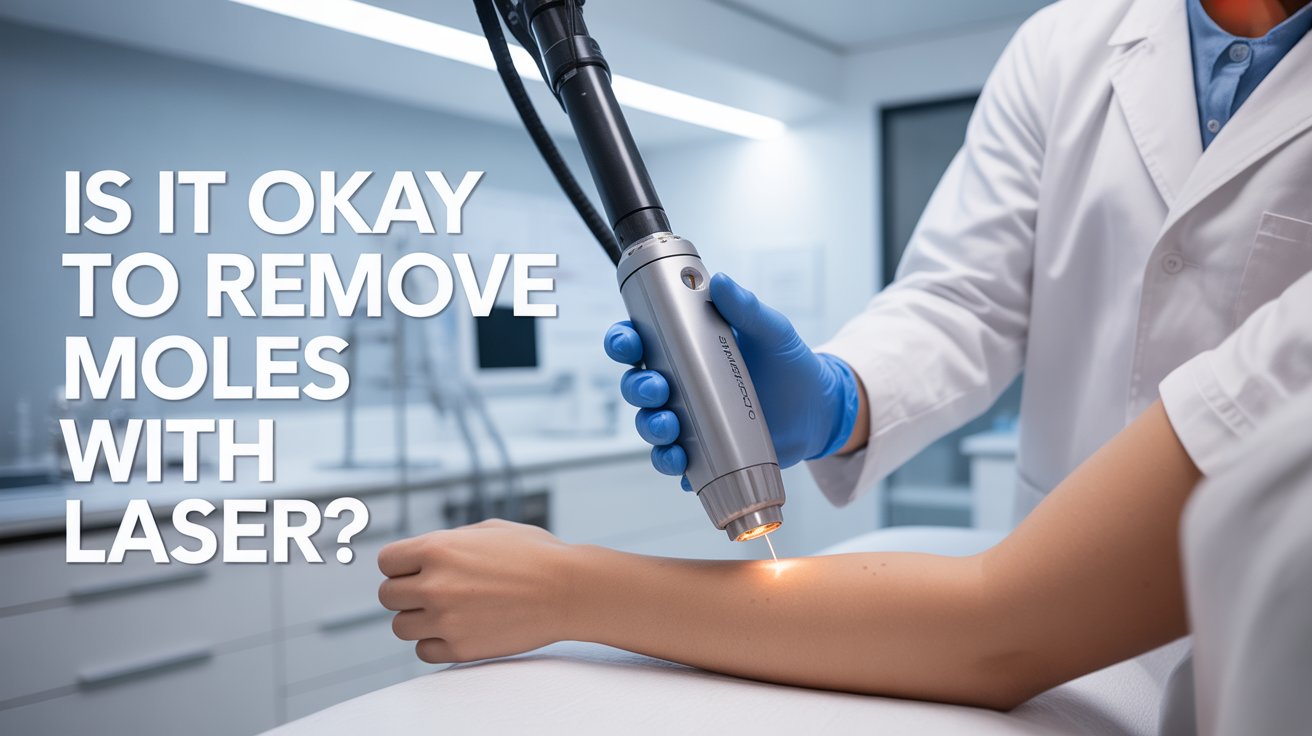
- Laser removal — Uses light energy to break down pigment within small, superficial moles. Not suitable where biopsy is required.
Our minor surgery service in Birmingham is performed by qualified doctors in a clinical setting, with full aftercare guidance provided. If your mole requires further consultation before any procedure, we also offer a minor surgery and joint injection consultation to walk through your options in detail.
What Happens After Removal? The Importance of Biopsy
Whenever there is any concern about a mole — even a mild one — the removed tissue should be examined by a pathologist. This process, known as a biopsy, looks at the cellular structure under a microscope to determine whether any abnormal or cancerous changes are present.
If the biopsy comes back clear, you can be reassured that the mole was benign. If abnormal cells are detected, your doctor can then advise on next steps — which may mean further treatment or referral. Either way, you’re in a far better position for having acted.
If there is any broader concern about your health, a full health check-up at our Birmingham clinic can give you a comprehensive overview alongside your mole assessment. We also offer private blood tests in Birmingham if further investigation is needed.
When Should You See a Doctor About a Mole?
You don’t need to wait until something looks dramatically wrong. The earlier a concern is identified, the more straightforward any treatment tends to be. We’d recommend booking an assessment if:
- A mole has changed in size, shape, or colour over a period of weeks or months
- A mole is bleeding, crusting, or itching without an obvious cause
- You have a new mole that appears after the age of 40
- You have a family history of skin cancer or melanoma
- You’re simply unsure about a mole and would like a professional opinion
You can book a face-to-face consultation with one of our GPs to have a mole assessed. We offer 30-minute face-to-face GP consultations at our Birmingham clinic, with same-week appointments typically available. If getting to the clinic is difficult, we also offer home visit appointments for those who prefer to be seen in the comfort of their own home.
The Bottom Line
Can removing a mole cause cancer? No — when performed by a qualified professional, mole removal is a safe procedure that carries no cancer risk. The greater danger, in most cases, is leaving a suspicious or changing mole unchecked.
We understand that any skin concern can feel worrying, and that the idea of a procedure — however minor — can feel daunting. Our approach at The Private GP is to give you honest, clear information, assess each situation individually, and ensure you feel fully informed and supported throughout.
If you have a mole you’d like assessed, or if you’d simply like some reassurance, don’t hesitate to get in touch. Early attention to any skin change is always worthwhile — and far better than waiting and wondering.