


Can I Switch From NHS to Private GP?

Here’s the reworded version with the word removed throughout, formatted for a clean paste into WordPress:


TL;DR

You do not need to switch from NHS to private GP care in the sense of giving one up for the other — most people use both. You stay registered with your NHS GP and book private appointments separately as needed. There is no formal switching process, no de-registration required, and your NHS entitlements remain unaffected. The practical question is less about switching and more about how to use both services together effectively.

“Switching” is a slightly misleading way to think about this, because in the UK you are not actually choosing one system over the other — you are choosing how much of each to use, and when.

Do You Need to De-Register From Your NHS GP to Use a Private One?

No. There is no requirement, and no advantage, to de-registering from your NHS GP in order to use private GP services.

The two systems operate entirely independently of each other. There is no formal switching process, no paperwork that links your NHS registration to a private appointment, and no administrative step required before you can book privately. You simply book a private GP appointment when you want one, while remaining registered with your NHS practice exactly as before.

De-registering would only disadvantage you. It would remove your access to NHS hospital care, emergency treatment, maternity services, vaccinations, and the broader NHS pathway — none of which a private GP clinic is designed to replace. The overwhelming majority of people who use private GP services remain registered with an NHS practice throughout, using each for what it does best.

How to Start Using a Private GP Alongside Your NHS One

Getting started with a private GP is considerably simpler than people often expect.

Choosing a provider is your first decision, and unlike NHS general practice, private GP services do not operate within catchment areas — you can choose any provider you like, regardless of where you live. Location, appointment availability, the range of services offered, and whether video or in-person consultations suit you better are all reasonable things to weigh up.

You do not need a referral to book. You can contact a private clinic directly, by phone or online, and arrange an appointment without going through your NHS GP first. Some private clinics require you to register as a patient; others allow pay-as-you-go booking without any prior sign-up.

Bring a list of your current medications and any relevant medical history to your first appointment. Since private and NHS records are held separately, your private GP will not automatically have access to your NHS file, so this information helps them give you the most accurate assessment.

Billing is typically straightforward — most private GP services charge per consultation, though some offer membership-style plans with a fixed fee covering a set number of appointments over a period of time.

NHS GP vs Private GP — A Practical Comparison

NHS GPPrivate GP
Referral neededNoNo
Catchment areaYes, based on registrationNo, any provider
Typical appointment wait1–3 weeks for non-urgent; same-day urgent slots limitedSame-day or next-day in most cases
Typical consultation lengthAround 10 minutesTypically 20–30 minutes
Cost of consultationFreePaid, varies by clinic
Access to NHS specialist referralYesYes, via NHS e-Referral system
Medical recordsHeld by NHS practiceHeld separately, shared only with consent

This is a general comparison and individual practices vary — but it gives a realistic picture of where the two systems genuinely differ in day-to-day use.

What Happens to Referrals and Medication When Using Both?

A private GP can refer you either into the NHS system or to a private specialist, and both routes are entirely valid — your choice depends on whether you want NHS-funded treatment with its associated waiting times, or faster private specialist access.

Medication costs work slightly differently depending on where they originate. Guidance published by an NHS general practice confirms that if you take a private medication order to an NHS pharmacy, you will pay the full cost of the drug, not the standard NHS charge. This applies regardless of which pharmacy dispenses it — what determines the cost is who authorised the medication, not where you collect it.

For long-term medication that a private specialist or GP has started, your NHS GP may be able to take over the ongoing supply once you are clinically stable, which would then mean paying the standard NHS charge going forward rather than the full private cost. This depends on the specific medication. NHS commissioning guidance on the boundaries between NHS and private healthcare describes medicines as falling into categories — broadly, those considered safe for GPs to issue in primary care, and those that must be started and monitored by a hospital specialist due to their complexity or risk profile. Whether your NHS GP can take over responsibility for a particular medication depends on which category it falls into and whether a formal shared care agreement exists between the GP and the specialist who started it. Your GP is not obligated to accept ongoing responsibility for a medication recommended by another doctor if they do not feel able to do so safely.

Does Your NHS GP Need to Know You’re Using a Private GP?

Not automatically. Private GPs do not routinely share consultation records with NHS GPs, and the same applies in reverse — your NHS GP’s notes are not automatically visible to a private clinician you see.

That said, telling your NHS GP is good practice, particularly where a private consultation has resulted in a new diagnosis, a new medication being started, or test results that are clinically relevant to your ongoing care. A GP managing your health without full information about medication started elsewhere is working with an incomplete picture, which is a genuine safety consideration rather than just a tidiness issue.

The simplest way to keep things joined up is to ask your private GP to send a brief summary letter to your NHS practice after your appointment, or to mention the consultation yourself at your next NHS visit. Neither is mandatory, but both make for safer, better-coordinated care.

Can You Mix NHS and Private Care for the Same Condition?

You cannot split a single course of treatment between NHS and private funding — but using private care for one stage and NHS care for another, as clearly separate episodes, is generally permitted.

A straightforward and common example: you see a private GP for a prompt assessment and arrange a private scan to get a fast diagnosis, then take the results back to your NHS GP to access NHS-funded treatment for what the scan found. This is a recognised and accepted pathway.

What is not permitted is blending the two within a single treatment episode — for instance, having a procedure performed on the NHS and then paying privately for an add-on to that same procedure, or having part of a course of physiotherapy on the NHS and part privately for the same injury at the same time. NHS guidance is explicit that you cannot have part of one treatment privately and another part on the NHS — the two must stay clearly separate.

Importantly, choosing a private consultation at any stage does not move you up or down an existing NHS waiting list. Your position is determined by clinical need, not by whether you have also sought private advice alongside it.

Frequently Asked Questions

Will I lose my place on an NHS waiting list if I see a private GP?
No. Choosing a private consultation does not move you up or down any existing NHS waiting list. Your position remains based on clinical need, entirely separate from any private care you also access.

Can a private GP arrange NHS-funded medication for me?
No. Medication authorised by a private GP is charged at the full drug cost even if collected from an NHS pharmacy. Our urgent medication service provides prompt access privately when you cannot reach your NHS GP in time.

Do I need a referral to see a private GP?
No. You can book a private GP appointment directly without any referral from your NHS GP or anyone else.

Can I go back to my NHS GP after a private appointment?
Yes, always. Your NHS registration and entitlements are entirely unaffected by any private appointments you have. You can return to your NHS GP for ongoing care at any time.

Is private GP care covered by health insurance?
It depends on your specific policy. Some private health insurance plans include GP consultations as part of their cover; others do not. Check your policy documents or contact your insurer to confirm before booking if you intend to claim.

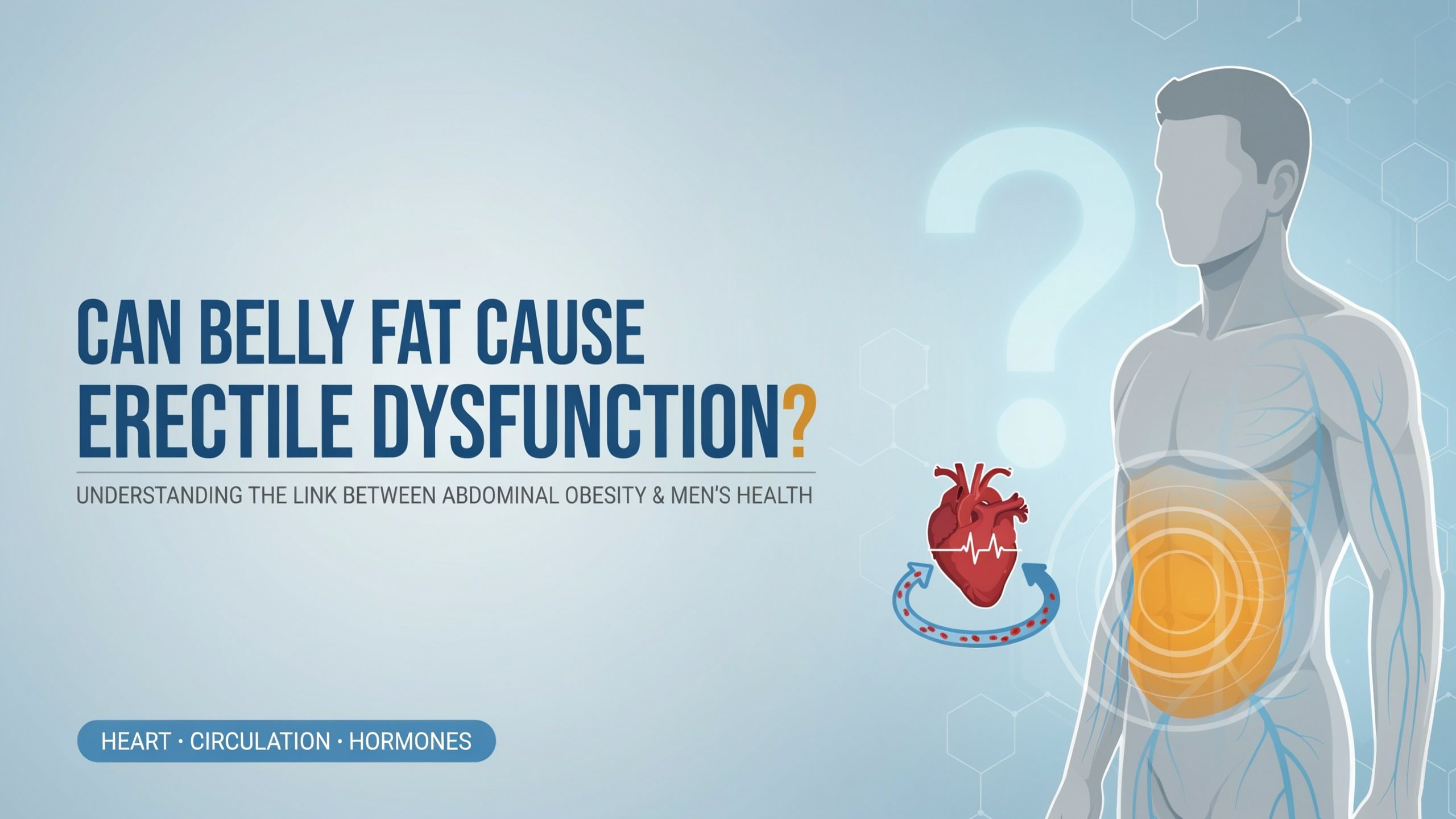
Can Belly Fat Cause Erectile Dysfunction?

TL;DR: Yes, belly fat — specifically visceral fat stored around the abdominal organs — is independently linked to erectile dysfunction. Large studies show obesity more than doubles ED risk, with visceral fat specifically driving this through testosterone suppression, oestrogen conversion, endothelial dysfunction, and chronic inflammation. The relationship works in both directions — low testosterone also promotes further visceral fat storage, creating a self-reinforcing cycle. Losing visceral fat specifically, not just overall weight, improves the outlook.


Not all fat affects the body the same way, and this matters directly for erectile function. The fat visible just under the skin is largely cosmetic. The fat stored deep around the abdominal organs — visceral fat — is metabolically active tissue that actively interferes with testosterone production and blood vessel health, and the evidence linking it specifically to erectile dysfunction has become considerably stronger in recent years.


Is Belly Fat Specifically Linked to Erectile Dysfunction?

Yes — and recent research has gone further than simply linking obesity to ED in general. It has isolated visceral fat specifically as an independent driver.

A cross-sectional study published in Frontiers in Endocrinology, using the Visceral Adiposity Index — a measure that estimates visceral fat from waist circumference, BMI, triglycerides, and HDL cholesterol rather than relying on overall body weight — found a significant positive correlation between this index and erectile dysfunction in American men, with the strength of the association increasing as visceral fat levels rose.

A separate NHANES-based study published in PMC used the METS-VF index, another visceral fat-specific metabolic score, and found the same pattern: a clear, non-linear positive correlation between visceral fat and ED. The same paper cites earlier multicentre research showing that obesity, when defined specifically by waist circumference and BMI, made men more than twice as likely to develop ED compared to non-obese men — and this elevated risk held even after adjusting for lifestyle factors like smoking, alcohol use, and physical activity.

The distinction matters. A man with a high BMI but low visceral fat — broadly muscular, fat distributed elsewhere — carries meaningfully less of this specific risk than a man with the same BMI whose excess weight sits predominantly around the abdomen.


How Belly Fat Lowers Testosterone

The mechanism connecting visceral fat to testosterone is well established and direct.

Visceral fat tissue is rich in an enzyme called aromatase, which converts testosterone into oestrogen. The more visceral fat a man carries, the more aromatase activity occurs, and the more of his circulating testosterone gets converted away from the hormone responsible for libido and erectile function and into oestrogen instead. This is not a minor side effect — it is one of the most direct hormonal consequences of central obesity in men.

The Frontiers in Endocrinology review notes that obesity typically provokes a decrease in testosterone associated with suppression of the hypothalamic-pituitary-testicular axis — the hormonal signalling chain that regulates testosterone production — alongside worsening insulin resistance. Insulin resistance itself further suppresses testosterone, compounding the aromatase effect with a second, independent mechanism working in the same unhelpful direction.

The same research cites findings of a strong negative correlation between visceral fat measures and total testosterone levels, and notes that high visceral fat was strongly associated with hypogonadism specifically in men with type 2 diabetes — a population in which both the metabolic and hormonal mechanisms are operating simultaneously.


The Vicious Cycle Between Belly Fat and Low Testosterone

This relationship does not run in one direction only, which is part of why it can be so difficult to break without deliberate intervention.

Low testosterone does not just result from visceral fat — it actively promotes further visceral fat accumulation. Testosterone influences where the body stores fat, and when levels fall, fat distribution shifts further towards the abdomen while lean muscle mass declines. Animal research cited in the visceral fat literature found that surgically removing the testes in mice produced a significant increase in visceral adiposity, and that supplementing those same mice with testosterone inhibited the increase and helped regulate fat distribution back towards a healthier pattern.

The practical consequence is a self-reinforcing loop. Visceral fat lowers testosterone through aromatase conversion and insulin resistance. Lower testosterone promotes further visceral fat storage and muscle loss. More visceral fat means more aromatase activity and worse insulin resistance. Without a deliberate intervention — whether through lifestyle change, medical treatment, or both — this cycle tends to continue rather than resolve on its own.


How Belly Fat Damages the Blood Vessels Erections Depend On

Beyond the hormonal pathway, visceral fat independently damages the vascular system that erectile function physically depends on.

Erections require healthy endothelial function — the inner lining of blood vessels needs to respond properly to signals that relax smooth muscle and allow blood flow in. Research cited in the Frontiers review describes a randomised controlled trial that found increased visceral fat caused measurable endothelial dysfunction even in healthy young adults of normal overall body weight — demonstrating that visceral fat’s vascular effects are not simply a downstream consequence of general obesity, but a distinct and direct mechanism in their own right.

Chronic inflammation compounds this. Visceral fat releases active inflammatory compounds called adipokines, and the PMC review notes a strong connection between this inflammation and ED development, particularly pronounced in those with significant visceral adiposity. Abnormal lipid profiles associated with visceral fat — elevated triglycerides, reduced HDL — also damage smooth muscle cells directly and contribute to peripheral nerve damage, with diabetic peripheral neuropathy being the clearest example of this pathway in practice.


Does Losing Belly Fat Improve Erectile Function?

Yes — and the evidence supports targeting visceral fat specifically, not simply chasing a lower number on the scale.

Weight loss, particularly when it reduces visceral fat, improves multiple components of the mechanism described above. Research on testosterone replacement and visceral fat confirms that testosterone replacement therapy reduces waist circumference and fat mass in hypogonadal men, improving metabolic syndrome parameters and quality of life in men with both ED and low testosterone. A 56-week randomised controlled trial found that men with obesity and low testosterone who combined testosterone replacement with a structured very-low-calorie diet lost significantly more visceral fat and preserved more lean muscle than those managing diet alone — supporting the idea that addressing the hormonal and lifestyle components together produces better outcomes than either approach in isolation.

Bariatric surgery research provides further mechanistic support. Animal studies have shown that bariatric surgery improves endothelial function specifically by reducing inflammation within visceral fat tissue itself — direct evidence that the fat reduction, not just the weight loss broadly, is what drives the vascular improvement.

This does not mean dramatic surgical or pharmacological intervention is required for every man. Visceral fat responds particularly well to resistance training and dietary quality improvements — even without large reductions in overall body weight, meaningful reductions in visceral fat specifically are achievable and measurable through waist circumference tracking.


What to Do If Belly Fat and ED Are Affecting You

The right starting point is a proper assessment rather than guessing whether lifestyle change alone will be enough.

This should include testosterone (to establish whether hormonal suppression has reached a level that may benefit from direct treatment), HbA1c or fasting glucose (insulin resistance is a core part of the mechanism), a full lipid panel, and waist circumference specifically — a far more relevant measurement for this particular risk pathway than BMI alone. Our private blood tests cover all of these markers with same-day results.

A clinical assessment also clarifies whether testosterone replacement alongside lifestyle change is appropriate for you, or whether lifestyle change alone is the right first step — a meaningful distinction, since the research suggests combined approaches outperform diet or exercise changes alone in men with confirmed hormonal suppression.

At The Private GP in Birmingham, a private GP consultation can review your symptoms, arrange the relevant blood tests, and help build a plan that addresses both the hormonal and vascular sides of this relationship. Same-day appointments available, no referral needed.


Frequently Asked Questions

Is belly fat worse for erectile dysfunction than fat elsewhere on the body?

Yes. Visceral fat — stored around the abdominal organs — is metabolically active in ways that subcutaneous fat elsewhere on the body is not. It independently drives testosterone suppression and vascular damage, which is why waist circumference is a more relevant measure for this risk than overall BMI.

How much weight loss is needed to improve erectile dysfunction?

There is no universal figure, as the relevant factor is the reduction in visceral fat specifically rather than total weight lost. Even modest reductions in waist circumference, achieved through consistent dietary and exercise changes, are associated with measurable improvements in testosterone and vascular markers.

Can losing belly fat naturally raise testosterone?

Yes, in many men. Reducing visceral fat lowers aromatase activity (which converts testosterone to oestrogen) and improves insulin sensitivity, both of which support higher testosterone levels. The degree of improvement varies between individuals and depends on how much visceral fat is lost.

Should I get my testosterone checked if I have belly fat and ED?

Yes. Given how directly visceral fat suppresses testosterone, a blood test clarifies whether hormonal treatment alongside lifestyle change would be beneficial, or whether lifestyle change alone is the appropriate first step for you.

Can exercise alone fix belly fat-related erectile dysfunction?

For some men, yes, particularly with resistance training, which specifically targets visceral fat reduction and supports testosterone. For others, especially those with established hormonal suppression or insulin resistance, exercise alone may not be sufficient and a clinical assessment can clarify whether additional treatment would help.

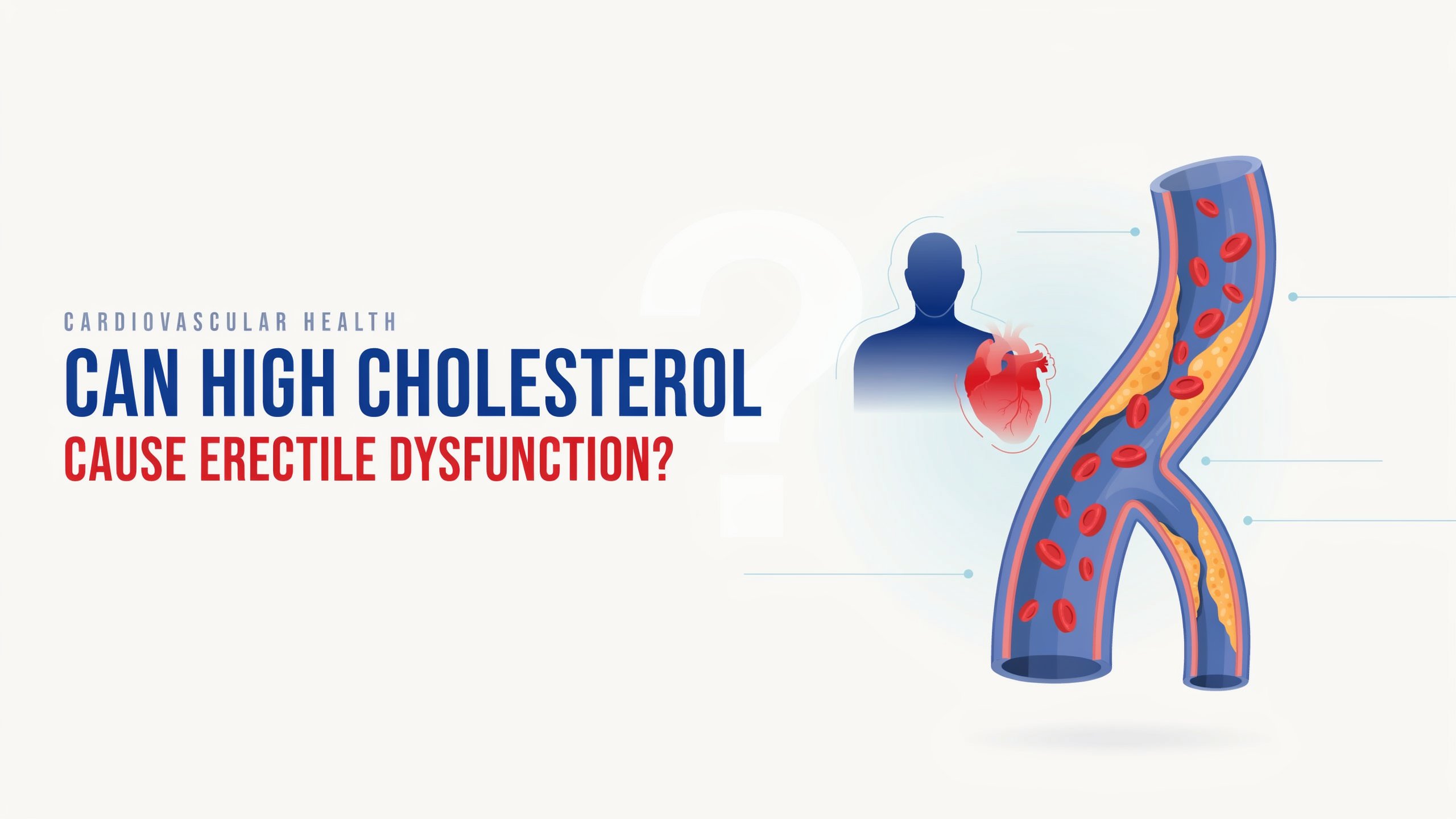
Can High Cholesterol Cause Erectile Dysfunction?

TL;DR: Yes, high cholesterol — specifically elevated LDL — is a well-documented and mechanistically understood cause of erectile dysfunction. A Mendelian randomisation study found a genetic association between high LDL and ED, supporting a true causal relationship rather than mere correlation. LDL damages the blood vessel lining and reduces nitric oxide availability, directly impairing the blood flow erections depend on. Lowering cholesterol, including with statins, has been shown in a meta-analysis to significantly improve erectile function scores.


A cholesterol reading on a blood test result can feel abstract — a number with no obvious connection to daily life. Erectile function is not abstract at all, and the link between the two is one of the most direct and well-established relationships in cardiovascular medicine.


Is There a Genuine Link Between High Cholesterol and ED?

Yes — and the evidence goes well beyond simple correlation, which is what makes this particular link unusually convincing.

A Mendelian randomisation study published in Nature Scientific Reports found a genetic association between high LDL cholesterol concentrations and erectile dysfunction. Mendelian randomisation is a research method that uses naturally occurring genetic variation as a kind of built-in experiment. Because the genetic variants that influence LDL levels are assigned essentially at random at conception, and are present for life, this method largely sidesteps the confounding and reverse causation problems that plague typical observational studies — where it is hard to know whether high cholesterol causes ED, whether some third factor causes both, or whether the relationship runs the other way entirely.

Finding a genetic signal linking LDL levels specifically to ED risk is a considerably stronger form of evidence than simply observing that men with high cholesterol also tend to have more erectile dysfunction. It suggests LDL itself is doing something biologically relevant to erectile function, not just travelling alongside it in the same population of unhealthy men.


How High Cholesterol Actually Damages Erectile Function

The mechanism connecting LDL cholesterol to erectile dysfunction is well characterised and runs through the same vascular pathway responsible for most physical causes of ED.

Research published in PMC examining LDL as a marker of erectile dysfunction in men with coronary artery disease describes LDL cholesterol as playing a central role in endothelial dysfunction through three connected mechanisms: promoting oxidative stress, decreasing nitric oxide bioavailability, and exacerbating vascular inflammation. Each of these works against the precise process an erection depends on.

The endothelium is the thin inner lining of every blood vessel in the body, and its job during arousal is to respond to nerve signals by releasing nitric oxide, which relaxes the smooth muscle in the penile arteries and allows blood to flow in. Elevated LDL damages this lining directly. Oxidised LDL particles trigger oxidative stress within the vessel wall, provoke inflammation, and reduce the endothelium’s ability to produce and respond to nitric oxide. The net effect is an artery that cannot dilate as readily as it should — exactly the mechanical failure that underlies vasculogenic ED.

This is not only a human clinical finding. Animal research cited in a related review found that mice genetically engineered to lack LDL receptors, when fed a high-cholesterol diet, showed a significantly reduced erectile response, along with measurably increased oxidative stress directly within penile tissue. This gives a clean, controlled demonstration of the same mechanism implicated in the human data.


Why This Matters Most for Men With Heart Disease

Erectile dysfunction and high cholesterol cluster together most heavily in men who already have, or are developing, coronary artery disease — and this overlap is clinically significant rather than coincidental.

The same PMC research on LDL and ED in coronary artery disease patients found a striking distribution of erectile dysfunction severity within this population: 38.5% had mild ED, 23.1% mild-to-moderate, 21.1% moderate, and 13.5% severe ED. In other words, the overwhelming majority of men with established coronary artery disease in this cohort had some degree of erectile dysfunction.

This is because ED and coronary artery disease share the same underlying pathophysiology — endothelial dysfunction and atherosclerosis affecting arteries throughout the body, including both the coronary arteries and the smaller penile arteries. The penile arteries are narrower, which means they often show the effects of this process earlier and more visibly than the coronary arteries do. ED in a man with risk factors for heart disease is not simply an inconvenient side issue — it is frequently the first noticeable symptom of a vascular problem that has not yet caused chest pain or breathlessness. Evaluating erectile function in men with cardiovascular risk factors offers a genuine opportunity for earlier intervention, not just better sexual health.


Can Lowering Cholesterol Improve Erectile Function?

Yes — and this is one of the more encouraging and well-supported findings in this entire area of research.

A systematic review and meta-analysis published in PMC, combining data from seven randomised controlled trials involving 586 patients, found that statin treatment was associated with a statistically significant improvement in IIEF-5 erectile function scores, alongside significant improvements across the full lipid profile — total cholesterol, LDL, HDL, and triglycerides all improved meaningfully.

The mechanism behind this improvement goes beyond simply lowering a number on a blood test. Statins reverse endothelial dysfunction by reducing the harmful action of oxidised LDL on endothelial cells, which increases nitric oxide activity — directly reinstating the signalling pathway that LDL had been disrupting. Notably, several studies have found that statins can improve endothelial function quite rapidly, sometimes before the cholesterol levels themselves have meaningfully changed, suggesting a benefit that runs somewhat independently of the lipid-lowering effect itself.

This is not a new or speculative idea. An early clinical observation study, published in the Journal of Urology, specifically selected 18 men whose only identifiable risk factor for ED was elevated cholesterol — no diabetes, no hypertension, no smoking, nothing else clouding the picture — and found that statin treatment improved their erectile function. Two decades of subsequent research have built on this initial, carefully controlled observation.


Does This Mean Everyone With High Cholesterol and ED Should Take a Statin?

Not automatically — and being honest about the remaining uncertainty here matters.

While the meta-analysis evidence is genuinely positive, the broader picture is not entirely settled. A separate Mendelian randomisation study examining lipid-lowering drug targets explicitly describes the effect of lipid-lowering drugs on male erectile function as still controversial in the wider literature, reflecting genuine ongoing scientific debate rather than a fully resolved question.

The decision to start a statin should be based on your overall cardiovascular risk profile — established guidelines recommend statin therapy for secondary prevention in anyone with diagnosed cardiovascular disease, and for primary prevention in those with very high LDL or diabetes — not on the presence of ED alone. If your cholesterol is high enough to warrant treatment on cardiovascular grounds, an associated improvement in erectile function is a welcome additional benefit rather than the primary reason. If your cholesterol is only mildly elevated and your cardiovascular risk is otherwise low, dietary change, increased physical activity, and weight management may be the more appropriate first step, with medication reserved for cases where lifestyle measures are insufficient or risk is higher.

Other lipid-lowering approaches beyond statins — including ezetimibe and PCSK9 inhibitors — exist for specific clinical situations and work through different mechanisms. Which approach, if any, is appropriate depends on your individual cardiovascular risk, not a generic rule.


What to Do If You Have High Cholesterol and Erectile Dysfunction

The right starting point is a full lipid panel rather than relying on a single total cholesterol figure, since LDL specifically — not total cholesterol — is the marker most directly implicated in the mechanism described above.

Beyond cholesterol, a broader cardiovascular risk assessment is the appropriate response to ED in general, given how strongly the two conditions overlap. This should include blood pressure, blood glucose or HbA1c, and a formal cardiovascular risk calculation alongside your lipid results. Our private blood tests cover the full lipid panel and the wider cardiovascular markers relevant to this picture, with same-day results.

At The Private GP in Birmingham, a private GP consultation can review your individual cardiovascular risk profile and discuss whether cholesterol-lowering treatment is appropriate for you, alongside any other factors contributing to your erectile dysfunction. Same-day appointments available, no referral needed.


Frequently Asked Questions

How quickly can high cholesterol affect erectile function?

This varies, as cholesterol-related vascular damage accumulates gradually over years rather than suddenly. However, research shows that the endothelial dysfunction it causes can begin improving relatively quickly once cholesterol is properly managed — sometimes within weeks of starting effective treatment.

Is LDL or total cholesterol more important for erectile dysfunction?

LDL specifically is the marker most directly implicated in the research, including the genetic Mendelian randomisation evidence. A full lipid panel breaking down LDL, HDL, and triglycerides gives a more clinically useful picture than total cholesterol alone.

Can diet alone improve cholesterol-related erectile dysfunction?

For some men, yes, particularly with mildly elevated cholesterol and no other major risk factors. Dietary changes that lower LDL and improve vascular health can meaningfully help. For others with more significant elevation or additional cardiovascular risk, medication alongside diet produces better outcomes.

Will a statin definitely fix my ED if I have high cholesterol?

Not definitely. Meta-analysis evidence shows a significant average improvement across study populations, but ED is usually multifactorial, and the wider research on lipid-lowering drugs and erectile function is still described as somewhat controversial. A statin may help, but it is not guaranteed to fully resolve ED on its own.

Should I get my cholesterol checked if I have new erectile dysfunction?

Yes. Given how strongly the two conditions are linked, a full lipid panel is a sensible and often overlooked part of investigating new erectile dysfunction, particularly alongside blood pressure and blood glucose testing.

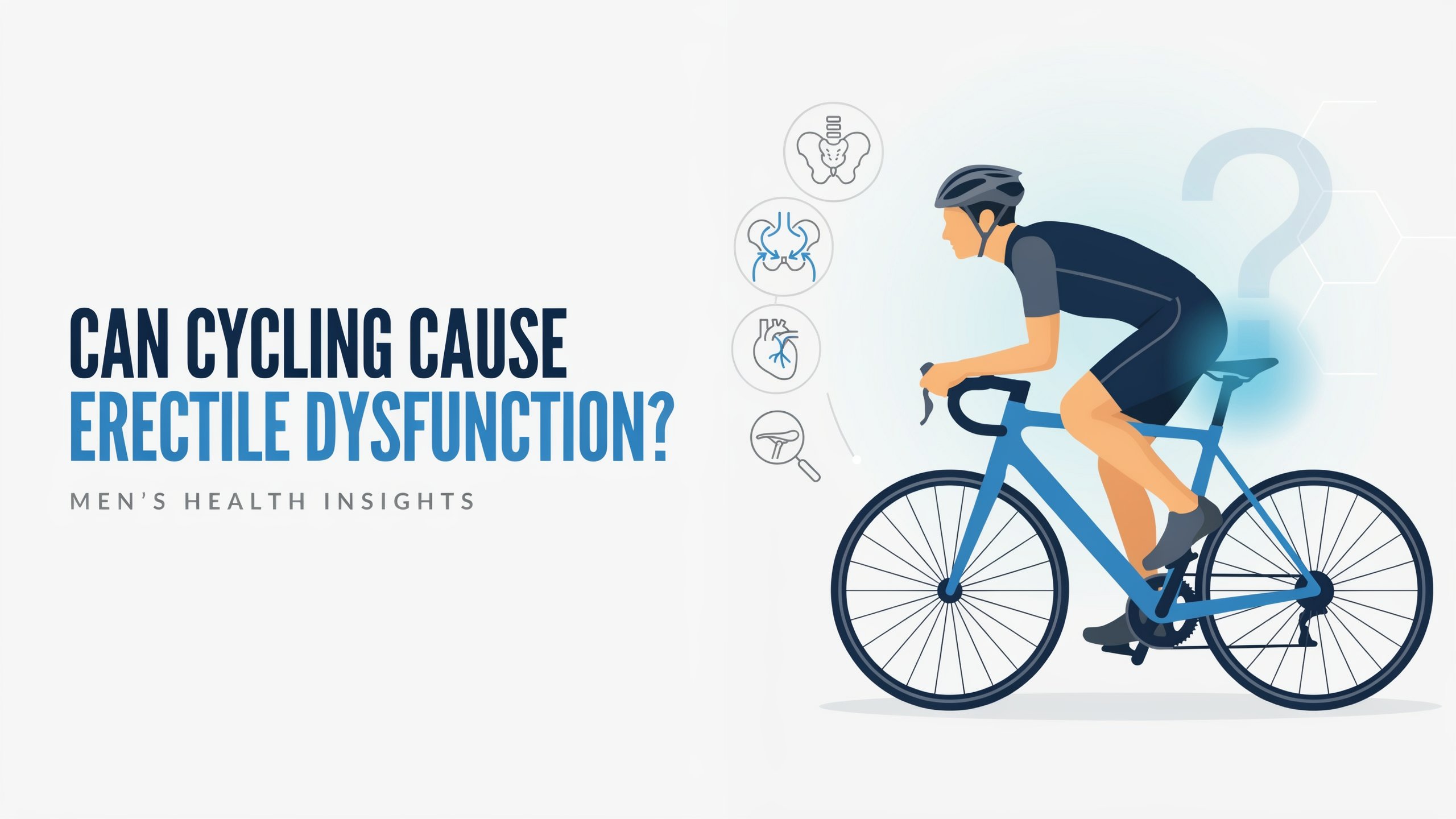
Can Cycling Cause Erectile Dysfunction?

TL;DR: Yes, cycling can cause erectile dysfunction, but the risk is specific rather than general — it concentrates in men who cycle more than three hours a week, particularly with poor saddle choice or position. The mechanism is compression of the pudendal nerve and arteries between the saddle and pelvis, which can cause numbness and, with repeated compression, longer-term erectile difficulty. Saddle design, bike fit, and handlebar height all measurably affect this risk, and most cyclists can significantly reduce it with simple changes.


Cycling is one of the best forms of cardiovascular exercise available, and cardiovascular fitness is itself protective against erectile dysfunction — which makes the question of whether cycling causes ED a genuinely interesting paradox. The honest answer involves a specific mechanical mechanism that has been studied directly, with findings precise enough to point to exactly what changes reduce the risk.


How Cycling Can Cause Erectile Dysfunction

The mechanism here is mechanical, not hormonal or vascular in the way most other causes of ED are. Sitting on a bicycle saddle places sustained pressure directly on the perineum — the area between the genitals and the anus — which sits right on top of the pudendal nerve and the arteries supplying blood to the penis.

A literature review on bicycling and erectile dysfunction describes early clinical investigations measuring exactly this effect. One study used a digital blood pressure cuff to measure penile systolic pressure before, during, and after men sat on an unpadded bicycle saddle. After five minutes of sitting, penile pressure had dropped to 60% of baseline — a substantial and immediate reduction in blood supply, though pressure returned fully to normal after a 10-minute recovery period off the saddle.

This compression can affect both the nerve and the artery. Compression of the pudendal nerve produces the numbness or tingling sensation many cyclists are familiar with. Compression of the arteries reduces blood flow more directly. With brief or occasional exposure, both effects reverse quickly once pressure is relieved. The concern arises with repeated, prolonged, and high-pressure exposure over time, where the same review notes documented cases of genuine nerve injury — one report described electromyographical evidence of bilateral pudendal nerve damage in a man following excessive cycling combined with an episode of perineal trauma, who experienced both penile numbness and erectile dysfunction.


Who Is Actually at Risk?

This is the most important distinction to make, because the risk is not evenly distributed across everyone who rides a bike.

According to a Harvard Medical School special health report on erectile dysfunction, the Massachusetts Male Aging Study found that the risk of cycling-related nerve and artery compression leading to erectile problems was highest specifically among men who cycled more than three hours a week. Below this threshold, the picture looks considerably less concerning.

The Pulsus literature review cites a comparative study that found cyclists presented with erectile dysfunction 80% more frequently than horse riders or runners — but this comparison involved committed, high-volume cyclists, averaging 142 kilometres per week, not casual or occasional riders. A separate 2014 observational study found that cycling did not pose a serious threat of ED or infertility at more typical recreational volumes.

There is also a genuine paradox worth holding in mind here. Regular cardiovascular exercise, including cycling, independently improves the vascular health that protects against erectile dysfunction through entirely separate mechanisms — better blood pressure, healthier cholesterol, improved endothelial function. For most recreational cyclists, these cardiovascular benefits likely outweigh any mechanical risk from saddle pressure. The concern is genuinely concentrated at the higher end of cycling volume and intensity, not a reason for the average commuter or weekend rider to be alarmed.


Saddle Design — the Counterintuitive Finding

Saddle shape has a measurable and sometimes surprising effect on this risk, and the research here contains a genuinely counterintuitive finding worth knowing before you buy a new saddle assuming the marketing claims are accurate.

Narrow saddles, and particularly those with a V-shaped nose, have been shown in European Urology research to reduce oxygen levels in the penis substantially — by 82.4% with narrow saddles and 72.4% with narrow V-shaped nose designs, according to findings reported by Harvard Health. This is a striking reduction and provides a clear mechanistic explanation for why saddle shape matters so much.

The counterintuitive part concerns “cutout” saddles — those with a central groove or hole specifically marketed as relieving perineal pressure. A prospective cohort study of 463 long-distance cyclists, published in PMC, found that in subjects who reported perineal numbness during their ride, using a saddle with a cutout actually increased the risk of erectile dysfunction, with a relative risk of 6.0 — the opposite of what the marketing for these saddles claims. Interestingly, the same study found cutout saddles decreased ED risk in cyclists who did not report numbness during the ride. The study’s authors noted some uncertainty about whether men with a prior history of numbness and ED were simply more likely to choose cutout saddles in the first place, which could partly explain this unexpected finding.

The practical lesson is that saddle choice should be individualised based on your own experience, rather than assumed from product marketing. If you experience numbness on a particular saddle, including a cutout design, that is useful personal data — not something to ignore because the saddle was specifically marketed to prevent the problem.


Bike Fit and Position — What Actually Reduces Risk

Beyond saddle shape, how the bike is set up and how you sit on it measurably changes the pressure on the perineum.

The PMC cohort study found that handlebar height parallel with or higher than the saddle increased the risk of erectile dysfunction compared with handlebars positioned lower than the saddle. A lower handlebar position shifts the rider’s weight forward, off the perineum and onto the hands and arms, reducing the sustained pressure on the area where the pudendal nerve and arteries are most vulnerable.

A 2014 study in Applied Ergonomics, cited by Harvard Health, found that a saddle nose no longer than 6 centimetres was associated with reduced risk. A wide, well-padded saddle — a gel-filled design is a reasonable choice — distributes weight over a larger surface area and reduces peak pressure on any single point.

The same PMC study’s overall recommendation for long-distance cyclists wanting to minimise ED risk was specific and practical: ride a road bicycle rather than a mountain bicycle (which tends to position riders more upright and creates different pressure distribution), keep handlebar height lower than saddle height, and avoid a cutout saddle specifically if you experience perineal numbness during rides.

Beyond equipment, simply standing on the pedals periodically during longer rides — even briefly every 10 to 15 minutes — interrupts sustained compression and allows blood flow and nerve function to recover before resuming the seated position.


What Are the Warning Signs to Watch For?

Penile or perineal numbness during or after cycling is the clearest early signal that something about your position or equipment needs to change before the problem becomes more persistent.

Numbness that resolves quickly once you are off the bike is a useful warning rather than a cause for alarm — it tells you that pressure was high enough to affect nerve function temporarily, and it is the point at which adjusting saddle, position, or riding frequency is most likely to prevent further progression. Numbness that persists for hours after riding, or that is beginning to occur with increasing frequency, deserves more serious attention.

The documented case described earlier — a man who developed genuine bilateral pudendal nerve injury following excessive cycling and a specific episode of perineal trauma — illustrates what happens when these warning signs are repeatedly ignored over time. The nerve compression that initially produces temporary numbness can, with sustained and repeated exposure, progress to genuine nerve damage that takes considerably longer to resolve, or in some cases does not fully resolve.


When to See a GP About Cycling-Related ED

If numbness or erectile difficulty persists despite changing your saddle, adjusting your handlebar height, and varying your position during rides, it is worth getting properly assessed rather than assuming it will continue to be a purely mechanical issue.

This matters because cycling-related compression rarely exists in complete isolation from other potential contributors. A man in his fifties who cycles regularly may have cycling-related perineal compression and age-related vascular risk factors occurring simultaneously, and addressing the saddle alone will not resolve ED that has multiple contributing causes. A proper assessment should consider blood pressure, cholesterol, blood glucose, and testosterone alongside the cycling-specific mechanical factors. Our private blood tests cover all of these markers with same-day results.

At The Private GP in Birmingham, a private GP consultation can help distinguish between purely mechanical, cycling-related causes and other contributing factors, and advise on the right next steps for both. Same-day appointments available, no referral needed.


Frequently Asked Questions

How many hours of cycling per week is considered risky for ED?

Research points to more than three hours per week as the threshold where risk becomes more apparent, based on findings from the Massachusetts Male Aging Study. Below this, the evidence for increased risk is considerably weaker.

Are cutout saddles better or worse for preventing ED?

It depends on your individual experience. Research found cutout saddles reduced ED risk in cyclists without perineal numbness, but actually increased risk in those who experienced numbness during rides. Choose based on how your body responds, not assumptions from saddle marketing.

Will cycling-related ED go away if I stop cycling?

In most cases, yes, particularly if the issue is recent and related to acute nerve or vascular compression rather than established nerve injury. Numbness and mild erectile difficulty often improve significantly once pressure is removed, though longer-standing nerve injury can take more time to resolve.

Should I worry about cycling ED if I only ride occasionally?

Probably not significantly. The clearest evidence for increased risk concentrates in cyclists doing more than three hours per week, often at high volumes such as 100km or more weekly. Occasional or moderate recreational cycling has not been shown to carry the same risk.

Does an electric bike carry the same erectile dysfunction risk as a regular bike?

The same saddle pressure mechanism applies regardless of whether the bike is electric or not, since the issue relates to perineal compression from sitting position rather than pedalling effort specifically. Saddle choice, bike fit, and riding position remain the relevant factors either way.

Erectile Dysfunction After Heart Bypass Surgery

TL;DR: Erectile dysfunction after heart bypass surgery is common but the outcome varies significantly between men. Studies report ED in up to 38.5% of men after CABG, and the evidence is genuinely mixed — some research shows improved erectile function after surgery as blood flow improves, while other studies show new or worsened ED, particularly linked to the cardiopulmonary bypass machine’s effect on testosterone. Anxiety, depression, and pre-existing cardiovascular risk factors all influence outcomes.


Heart bypass surgery is performed to restore blood flow to a heart starved of oxygen by blocked coronary arteries. Many men reasonably expect that fixing their heart’s blood supply might also fix any erectile difficulties they had beforehand. The reality, based on the research, is more complicated — and worth understanding honestly, whether you are preparing for surgery or recovering from it.


How Common Is Erectile Dysfunction After Heart Bypass Surgery?

Erectile dysfunction has been reported in a substantial proportion of men following coronary artery bypass graft (CABG) surgery — one study found ED in 38.5% of men afterwards, with higher rates in those with anxiety, depression, peripheral vascular disease, diabetes, hypertension, and a smoking history.

What is easy to overlook is how much ED already existed before the operation. Research published in PMC examining sexual dysfunction patterns after cardiac surgery cites a study finding that around 33% of men had poor erectile function before their CABG operation. This makes sense clinically — coronary artery disease severe enough to require bypass surgery and erectile dysfunction share the same underlying pathology. Both conditions stem from atherosclerosis narrowing arteries; the coronary arteries and the penile arteries are simply different vessels affected by the same disease process.

This matters for how you interpret your own situation. A man who has ED after his bypass surgery may be continuing with a problem that started years before his heart disease was even diagnosed — not necessarily experiencing something new caused by the operation itself.


Why the Research on ED After Bypass Surgery Is Genuinely Mixed

This is one of the more honestly conflicting areas of medical literature, and pretending otherwise would not serve you well.

Some studies find that erectile function improves after CABG. A prospective cohort study of 426 men assessed using the IIEF-5 questionnaire before and six months after on-pump CABG surgery found a small but statistically significant improvement in erectile function scores following surgery — consistent with the idea that restoring blood flow to the heart, and improving overall cardiovascular fitness, can have a modest positive knock-on effect on erectile blood flow too.

Other studies find the opposite. Research published in ScienceDirect examining sexual dysfunction before and after CABG cites findings that after exposure to cardiac interventional procedures including CABG, 25% of men lost their sexual function completely, and 50% reported sexual function worse than before the procedure. The same paper found increased rates of erectile dysfunction, premature ejaculation, and loss of libido following cardiac surgery in another cohort.

These findings are not simply contradictory noise — they likely reflect genuine differences between studies in surgical technique, patient population, timing of assessment, and the psychological context of the surgery. A 58-year-old man with well-controlled diabetes who recovers quickly and returns to exercise confidently is in a very different position to a 70-year-old man with a long hospital stay, ongoing breathlessness, and significant anxiety about his heart. Both may have had the same operation; their erectile function outcomes are likely to look very different.


How the Heart-Lung Machine Itself May Affect Erectile Function

One mechanism specific to bypass surgery — separate from the vascular disease itself — deserves particular attention: the effect of cardiopulmonary bypass on hormone levels.

During on-pump CABG, the heart is temporarily stopped and a heart-lung bypass machine takes over the work of circulating and oxygenating blood. The ScienceDirect research notes that cardiopulmonary bypass can affect serum levels of androgenic hormones, including testosterone — the hormone central to libido and erectile function. Normal sexual function requires both intact circulation and a normal hormonal profile, and the bypass machine has the potential to disrupt the second of these even while surgery addresses the first.

This is one reason off-pump CABG — performed on a beating heart without the bypass machine — is sometimes discussed as having a different sexual function profile to on-pump surgery, though direct comparative research specifically on this point remains limited. If hormonal disruption from cardiopulmonary bypass is contributing to your ED, it is, in principle, reversible — testosterone levels that fall around the time of major surgery often recover over subsequent months, though this should be confirmed with a blood test rather than assumed.


The Psychological Weight of Major Heart Surgery on Sexual Function

Heart bypass surgery is not a minor procedure, and its psychological impact on sexual confidence is significant and well documented.

Higher rates of ED after CABG were specifically associated with higher levels of anxiety and depression in the men studied. This is unsurprising. A man recovering from major cardiac surgery is often anxious about his heart, uncertain about what physical exertion is safe, and dealing with a body that feels less reliable than it did before. Some men develop a specific fear that sexual activity — which does raise heart rate and blood pressure — might trigger a cardiac event, even when their cardiac rehabilitation team has confirmed they are fit for normal activity.

Body image plays a role too. A sternotomy scar down the centre of the chest is a visible, permanent reminder of major surgery, and some men report reduced sexual confidence related to this alone, independent of any physical erectile difficulty.

The same research found that a longer hospital stay and a higher BMI were both associated with greater ED risk after surgery — likely markers of a more complicated recovery and poorer baseline health, rather than independent causes in themselves.


When Does Erectile Function Typically Return After Bypass Surgery?

There is no single timeline, and being told to expect one specific recovery pattern would be misleading.

Research following patients at different intervals — 4 to 10 weeks, 3 to 6 months, and 12 months after surgery — generally finds that resumption of social and sexual activity is one marker of overall recovery from cardiac surgery. For men whose ED was primarily related to anxiety, deconditioning, and the physical limitations of early recovery, improvement often becomes noticeable as general fitness, confidence, and exercise tolerance return — commonly somewhere in the 6 to 12 week range, though this varies by individual recovery pace.

For men whose ED has a stronger vascular or hormonal basis, improvement — where it occurs — tends to develop more gradually over the 3 to 6 month mark, in line with broader cardiovascular recovery.

If ED has not improved by around six months after surgery, it is reasonable to treat it as a persistent issue warranting its own assessment, rather than something that will simply resolve given more time.


Is It Safe to Have Sex After Heart Bypass Surgery?

For most men, yes — once sufficiently recovered. The general benchmark used by cardiac rehabilitation teams is exercise tolerance: if you can comfortably climb two flights of stairs without chest pain, significant breathlessness, or excessive fatigue, you are generally considered fit enough for sexual activity, which places a broadly similar demand on the heart.

This assessment should come from your cardiac team, not be assumed independently — every recovery is different, and your surgeon or cardiologist will give you guidance specific to your procedure and progress.

PDE5 inhibitors such as sildenafil and tadalafil are generally considered safe for most men after CABG and are commonly used to treat post-surgical ED. The one absolute and important exception is nitrate medication — if you are taking nitrates for angina, PDE5 inhibitors are contraindicated, as the combination causes a dangerous drop in blood pressure. Always confirm your full medication list with your GP or cardiologist before starting any ED treatment after cardiac surgery.


What to Do If ED Persists After Bypass Surgery

If erectile dysfunction has continued for several months after your operation, it is worth treating as its own problem rather than waiting indefinitely for it to resolve.

A proper assessment at this stage should include testosterone (particularly relevant given the cardiopulmonary bypass mechanism described above), a review of how your overall cardiovascular recovery is progressing, blood pressure, blood glucose, and a frank conversation about anxiety or low mood, which are common and treatable contributors in this specific population.

Treatment remains available and effective even after cardiac surgery. PDE5 inhibitors, addressing any underlying hormonal deficiency, and psychological support where anxiety or depression are significant factors, can all meaningfully improve outcomes. ED after bypass surgery is not something men need to simply live with.

At The Private GP in Birmingham, a private GP consultation and private blood tests can check testosterone and relevant recovery markers, working alongside — not instead of — your existing cardiac care team. Same-day appointments available, no referral needed.


Frequently Asked Questions

How long after bypass surgery can I have sex?

This depends on your individual recovery and should be confirmed with your cardiac team. A common general benchmark is the ability to climb two flights of stairs comfortably without chest pain or significant breathlessness — typically reached within 6 to 12 weeks for most men, though this varies.

Will my erectile dysfunction improve after bypass surgery?

It depends. Some studies show modest improvement in erectile function following CABG as blood flow and overall fitness improve. Others show ED persisting or worsening, particularly in men with higher anxiety, depression, or longer recovery periods. Outcomes vary significantly between individuals.

Can I take Viagra after heart bypass surgery?

Generally yes, once your cardiac team has confirmed you are fit for normal physical activity including sex. The key exception is if you are taking nitrate medication for angina — PDE5 inhibitors cannot be combined with nitrates due to a dangerous blood pressure interaction. Always confirm with your cardiologist or GP first.

Why did my erectile dysfunction get worse after surgery?

Several factors can contribute, including hormonal disruption from the cardiopulmonary bypass machine during on-pump surgery, anxiety or depression related to the surgery itself, a longer or more difficult recovery, and pre-existing vascular disease that surgery addresses in the heart but not necessarily elsewhere. A proper assessment can help identify which factors are relevant to you.

Should I tell my cardiologist about erectile dysfunction?

Yes. ED is a recognised and common issue after cardiac surgery, and your cardiologist or GP needs to know both to address it directly and because erectile dysfunction itself can be a marker of how your broader cardiovascular recovery is progressing.

Does Lisinopril Cause Erectile Dysfunction?

TL;DR: Lisinopril is not a significant cause of erectile dysfunction. A large 18-year follow-up study of over 7,400 men found no statistically significant difference in ED risk between lisinopril, the thiazide diuretic chlorthalidone, and the calcium channel blocker amlodipine. As an ACE inhibitor, lisinopril works through a mechanism that does not typically interfere with erectile blood flow. The hypertension lisinopril treats is a far more established and likely cause of any erectile difficulty.


Lisinopril is one of the most commonly prescribed blood pressure medications in the world. Long-term, large-scale data on exactly this question — does lisinopril cause ED — now exists, and it gives a clearer answer than the vague reassurances found in most general advice on the topic.


What Lisinopril Does and Why It’s Prescribed

Lisinopril belongs to a class of drugs called ACE inhibitors — angiotensin-converting enzyme inhibitors. It works by blocking the conversion of angiotensin I into angiotensin II, a hormone responsible for constricting blood vessels and raising blood pressure. With angiotensin II production reduced, blood vessels relax, and blood pressure falls.

This mechanism is why lisinopril sits among the first-line treatments for hypertension, and why it is also widely used in heart failure and following heart attacks to improve long-term cardiovascular outcomes. It has been in clinical use for decades and is one of the most extensively studied medications in cardiovascular medicine.


The 18-Year Study That Directly Tested Lisinopril and ED

Most reassurances about a drug’s sexual side effects rest on small studies or general drug-class reasoning. Lisinopril is unusual in having genuinely robust, long-term, head-to-head data specifically addressing this question.

A post-trial analysis published in PMC followed participants from the Antihypertensive and Lipid-Lowering Treatment to Prevent Heart Attack Trial (ALLHAT) by linking their data to 18 years of Medicare claims. The erectile dysfunction outcome was assessed in 7,444 men who were free of ED at baseline, comparing those treated with lisinopril against those treated with chlorthalidone (a thiazide diuretic) and amlodipine (a calcium channel blocker).

The result: there were no statistically significant differences in the 18-year risk of erectile dysfunction among the three drugs based on adjusted hazard ratios. This is a substantial, real-world, long-duration comparison — not a short trial measuring symptoms over a few weeks, but nearly two decades of outcome data across thousands of men.

What makes this study particularly convincing is that it was sensitive enough to detect other genuine differences between the same three drugs. The same analysis found that lisinopril carried a significantly higher 18-year risk of angioedema than amlodipine or chlorthalidone, and a significantly lower risk of insomnia than amlodipine. The study clearly had the statistical power to identify real differences where they existed — and for erectile dysfunction specifically, it did not find one.


How ACE Inhibitors Like Lisinopril Affect the Body’s Erection Mechanism

The biological reasoning behind this neutral finding is consistent with what is understood about how erections work and what lisinopril actually does in the body.

Angiotensin II — the hormone lisinopril suppresses — is not a passive bystander in erectile physiology. It plays an active role in causing the penis to return to its flaccid state after arousal, and it contributes to endothelial dysfunction, the underlying process that narrows and stiffens blood vessels throughout the body. By reducing circulating angiotensin II, lisinopril removes a hormone that works against, rather than for, sustained erection.

There is a second relevant pathway. ACE inhibitors also slow the breakdown of bradykinin, a peptide that triggers nitric oxide release. Nitric oxide is the signalling molecule responsible for relaxing the smooth muscle in penile arteries, allowing the blood flow that produces an erection. More available bradykinin means, in principle, more support for this exact pathway.

None of this proves lisinopril actively improves erectile function in every patient. But it explains, mechanistically, why the large-scale outcome data shows no increased ED risk — the drug simply does not interfere with the processes erections depend on in the way some older blood pressure medications do.


Why Other Blood Pressure Drugs Carry More ED Risk Than Lisinopril

It is worth being honest here, because the picture is slightly more nuanced than a simple “older drugs are bad, newer drugs are fine” story.

Beta-blockers carry the most consistent and longest-documented association with erectile dysfunction among blood pressure medications, thought to relate to their effects on the central and peripheral nervous system pathways involved in arousal and erection. If you are taking lisinopril alongside a beta-blocker for combination blood pressure control, the beta-blocker is statistically the more likely contributor to any ED you experience.

Thiazide diuretics, including chlorthalidone, have also historically been associated with ED in some studies. Interestingly, the ALLHAT data described above found no significant difference between lisinopril and chlorthalidone specifically — which is a useful reminder that drug-class generalisations do not always hold up cleanly when tested directly against each other in large, long-term studies. The honest summary is that lisinopril performs at least as well as, and likely better than, several alternatives — but the differences between drug classes are not always as stark in rigorous data as general advice columns sometimes suggest.


Why Your Blood Pressure, Not Your Lisinopril, Is the Likely Cause

This is the point that matters most for how you interpret your own experience.

The NHS confirms that high blood pressure is itself a recognised physical cause of erectile dysfunction. Chronically elevated blood pressure damages the endothelium throughout the body — including the small arteries supplying the penis — causing the same vascular stiffening and reduced blood flow responsiveness that produces ED, entirely independently of whatever medication is later prescribed to treat it.

This creates a common misattribution. A man is diagnosed with hypertension, started on lisinopril, and notices erectile difficulty some months or years later. The natural conclusion is that the newest variable — the tablet — must be responsible. But hypertension frequently goes undiagnosed for years before it is picked up, quietly damaging blood vessels throughout that time. The erectile difficulty may well have been developing during the undiagnosed period, with the lisinopril simply marking the point the underlying condition was finally identified and treated.


What to Do If You Take Lisinopril and Have Erectile Dysfunction

Do not stop taking lisinopril without speaking to your GP first. The cardiovascular protection it provides — particularly if you have heart failure or have had a heart attack — is significant, and the evidence does not support the drug as the cause of your ED.

A proper assessment should review how well your blood pressure is actually controlled (poorly controlled hypertension, even while on treatment, continues to cause vascular damage), check your full medication list for other drugs more strongly linked to ED such as beta-blockers, and include testosterone and blood glucose or HbA1c to rule out other common contributors.

PDE5 inhibitors such as sildenafil and tadalafil are generally safe to use alongside lisinopril. Both can lower blood pressure to some degree, so a mild additive effect is possible, but this is rarely a significant clinical issue and is something your GP can advise on directly based on your individual blood pressure readings.

At The Private GP in Birmingham, a private GP consultation and private blood tests can review your blood pressure control and check the relevant hormonal and cardiovascular markers, with same-day results and no referral needed.


Frequently Asked Questions

Should I stop taking lisinopril if I think it’s causing ED?

No — not without speaking to your GP first. The strongest available evidence does not support lisinopril as a meaningful cause of ED, and stopping it removes important cardiovascular protection while leaving the more likely cause, your underlying blood pressure, unaddressed.

Can I take Viagra or Cialis with lisinopril?

Yes. PDE5 inhibitors including sildenafil and tadalafil are generally safe alongside lisinopril. Both can lower blood pressure slightly, so a mild additive effect is possible, but this is rarely clinically significant. Discuss your individual blood pressure readings with your GP.

Is lisinopril better than other blood pressure medications for erectile function?

The evidence suggests it performs at least as well as several common alternatives. An 18-year study found no significant ED difference between lisinopril, chlorthalidone, and amlodipine, while beta-blockers carry the most established association with ED among blood pressure drug classes.

Why did I notice ED right after starting lisinopril?

This is most likely a timing coincidence rather than cause and effect. Hypertension often goes undiagnosed for years before treatment begins, quietly damaging the blood vessels responsible for erectile function throughout that time. The ED may have been developing well before the lisinopril.

Should I switch from lisinopril to a different blood pressure medication for my ED?

This is rarely necessary given the evidence, but if other causes have been ruled out and ED persists, it is a reasonable conversation to have with your GP. Reviewing your full medication list for other drugs more strongly linked to ED, such as beta-blockers, is usually a more productive first step than switching the lisinopril itself.

Does Minoxidil Cause Erectile Dysfunction?

TL;DR: Topical minoxidil for hair loss is not established to cause erectile dysfunction — clinical trials and post-marketing data have not identified it as a significant side effect, and absorption into the bloodstream from scalp application is minimal. Oral minoxidil, used for severe high blood pressure, has a different risk profile, though ED is still not listed as a recognised side effect in major hypertension guidelines. Confusion sometimes arises with finasteride, a separate hair loss medication with documented sexual side effects.


Searching minoxidil and erectile dysfunction online throws up a confusing mix of anecdotal warnings and reassurance. Some of that confusion comes from mixing up two very different products — topical minoxidil applied to the scalp, and oral minoxidil taken as a tablet for blood pressure — which behave very differently in the body.


Does Topical Minoxidil for Hair Loss Cause Erectile Dysfunction?

No significant clinical evidence supports topical minoxidil causing erectile dysfunction. Erectile dysfunction is not listed as a recognised side effect in UK product information for topical minoxidil, and systemic absorption through intact scalp skin is minimal.

This minimal absorption is the key point. Topical minoxidil is designed to act locally on the hair follicles, and only a small fraction reaches general circulation. Common side effects relate to the application site itself — scalp irritation, itching, dryness, and occasionally contact dermatitis — rather than effects elsewhere in the body.

The anecdotal concern circulating online appears to trace back largely to a single old case report. A 1987 study of topical minoxidil for androgenetic alopecia found that 2 out of 149 men reported impotence, which resolved within days of stopping the medication. This isolated finding has not been replicated in subsequent, larger, or more rigorous studies, and it is not reflected in current clinical guidance on the drug’s side effect profile. One small, decades-old report in a tiny subset of a study population is a reasonable thing to be aware of, but it does not establish a meaningful causal link.


The Surprising Twist — Minoxidil Has Actually Been Studied as a Treatment for ED

Here is where the story takes an unexpected turn. Rather than being investigated as a cause of erectile dysfunction, topical minoxidil has been specifically studied as a potential treatment for it.

A 2023 academic review published in Sexual Medicine Reviews examined the use of topical minoxidil applied directly to the penis as a therapeutic approach to erectile dysfunction, building on a body of earlier clinical research. The most common formulation studied was a 2% minoxidil solution. The review found that, with the exception of cases in patients with paralysis (where stronger effects were seen), topical treatment with minoxidil applied this way appeared to produce a mild erectile response — though the authors were careful to note that this finding was insufficient to confirm the treatment’s effectiveness on its own.

This builds on earlier work, including a 1994 clinical study in which men with erectile dysfunction from varying causes — neurogenic, vascular, and psychogenic — applied a 2% minoxidil solution directly to the glans penis approximately 20 minutes before intercourse. Some men, including one with impotence following surgery for Peyronie’s disease, reported a rigid erection adequate for intercourse following application.

It is worth being precise about what this does and does not mean. This is not an established, licensed, or widely recommended treatment for ED, and the evidence remains limited and preliminary. The 2023 review’s own conclusion was that while evidence to confirm minoxidil’s therapeutic properties in ED is limited, combination therapy and newer formulations represent a promising area for future research — language that reflects genuine scientific interest rather than a settled clinical recommendation.


How Minoxidil Actually Works in the Body

Understanding minoxidil’s core mechanism explains both why it grows hair and why researchers became curious about its potential erectile application.

Minoxidil is a vasodilator — a drug that opens and relaxes blood vessels. It was originally developed and remains used as an oral medication for severe, treatment-resistant high blood pressure, where this blood-vessel-relaxing property reduces vascular resistance throughout the body.

When applied topically to the scalp, this same vasodilating property is believed to increase blood flow to hair follicles, which is thought to be part of why it stimulates hair regrowth in androgenetic alopecia. The same underlying mechanism — improving blood flow to a specific tissue by relaxing the blood vessels supplying it — is exactly what made researchers curious about applying it directly to penile tissue, where an erection fundamentally depends on increased blood flow into the corpus cavernosum.

The crucial difference between the hair loss use case and the oral blood pressure use case is the route and scale of absorption. Applied to the scalp, minoxidil acts largely locally with minimal entry into general circulation. Taken orally as a tablet, it circulates throughout the entire body and has systemic effects far beyond the scalp or, theoretically, the penis.


Does Oral Minoxidil for Blood Pressure Cause ED?

Erectile dysfunction is not listed among the recognised side effects of oral minoxidil in major hypertension treatment guidelines, even though this version of the drug does have substantial systemic effects throughout the body.

Clinical reference information on minoxidil confirms that oral minoxidil’s recognised side effects include sodium and water retention, reflex tachycardia (a compensatory increase in heart rate), hirsutism (excessive hair growth, ironically the opposite problem to what topical minoxidil treats), and in some patients, pericardial effusion — a build-up of fluid around the heart that requires monitoring. Because of the fluid retention risk, oral minoxidil is typically prescribed alongside a loop diuretic.

ED’s absence from this established side effect list is notable, particularly given how thoroughly documented and well known the other side effects are. Oral minoxidil is reserved specifically for severe hypertension that has not responded to other treatments, which means it is used relatively rarely and under close specialist supervision — a context in which a significant sexual side effect, had one existed at a meaningful frequency, would likely have been identified by now.

By contrast, several other blood pressure medications are well documented to cause sexual dysfunction. Beta-blockers, particularly older non-selective types, are consistently linked to erectile dysfunction. Spironolactone, a potassium-sparing diuretic sometimes used alongside other blood pressure treatments, is specifically associated with impotence and decreased libido. Clonidine, a central alpha-2 agonist, can also cause sexual dysfunction. If you are taking oral minoxidil alongside any of these other medications, they are more plausible candidates for any ED you are experiencing.


Could Finasteride Be the Real Cause If You’re Also Using It?

Many men treating hair loss use minoxidil and finasteride together, and it is worth separating the two clearly if you are experiencing ED while on combination treatment.

Finasteride works through a completely different mechanism to minoxidil. Rather than acting as a vasodilator, finasteride blocks the conversion of testosterone into dihydrotestosterone (DHT) — the hormone primarily responsible for male pattern hair loss. This hormonal mechanism is well documented to carry a real risk of sexual side effects, including reduced libido and erectile dysfunction, in a meaningful minority of men who take it.

If you are using both medications and have noticed erectile changes, finasteride is the considerably more plausible cause based on the established evidence for each drug individually. This is a useful distinction to raise directly with whichever clinician prescribed or recommended your hair loss treatment, as it may change the conversation about whether to adjust your regimen.


What to Do If You Use Minoxidil and Have Erectile Dysfunction

The first practical step is reviewing your full hair loss regimen honestly. If you are using minoxidil alone, the evidence does not support it as a significant cause of your ED, and other explanations deserve more serious consideration. If you are using minoxidil alongside finasteride, the finasteride is the more likely contributor based on the available evidence.

Beyond your hair loss treatment, a proper assessment for ED should consider the full range of more established causes — cardiovascular health, testosterone, blood glucose, and psychological factors including stress and anxiety. Our private blood tests cover testosterone and the relevant cardiovascular and metabolic markers with same-day results.


Frequently Asked Questions

Is it minoxidil or finasteride causing my erectile dysfunction?

If you are using both, finasteride is the more plausible cause based on current evidence — it has a well-documented hormonal mechanism linked to sexual side effects, while topical minoxidil does not have established evidence supporting a similar effect.

Can I use minoxidil safely if I already have erectile dysfunction?

Yes. There is no established evidence that topical minoxidil worsens existing erectile dysfunction. Continuing your hair loss treatment alongside a separate clinical assessment of your ED is reasonable.

Does oral minoxidil for blood pressure affect libido?

Erectile dysfunction and libido changes are not listed among the recognised side effects of oral minoxidil in major hypertension guidelines, despite the drug having significant systemic effects. Other antihypertensives, including beta-blockers and spironolactone, are more strongly linked to sexual side effects.

Should I stop using minoxidil if I notice erectile changes?

Not necessarily, and not without speaking to a GP first. Given the lack of established evidence linking topical minoxidil to ED, stopping it is unlikely to resolve the issue. A proper assessment to identify the actual cause is a more productive first step.

Is applying minoxidil to the penis a recommended ED treatment?

No, not currently. While academic research has explored this as a potential treatment with some promising early findings, the evidence remains limited and this is not an established or widely recommended clinical approach. Speak to a GP about proven first-line ED treatments such as PDE5 inhibitors.

Can an Enlarged Prostate Cause Erectile Dysfunction?

TL;DR: Yes, an enlarged prostate (BPH) is independently associated with erectile dysfunction. Large studies show ED prevalence of up to 47.6% in men with BPH, and BPH is recognised as an independent risk factor for ED in men over 60. The link works through shared smooth muscle pathways, chronic inflammation, and reduced nitric oxide availability — not simply because both conditions become more common with age.

An enlarged prostate and erectile dysfunction often arrive in a man’s life around the same decade — which makes it tempting to write both off as “just getting older.” The research tells a more specific story than that. The two conditions are genuinely connected, sharing biological mechanisms that go well beyond coincidental timing.


Is There a Real Link Between an Enlarged Prostate and ED?

Yes — and the evidence is strong enough to rule out coincidence as the explanation.

A large analysis of NHANES data published in PMC, examining 2,225 men aged 40 to 80, found that the prevalence of ED among men with BPH was 47.57% — considerably higher than the 27.47% prevalence found across the whole study population. After adjusting statistically for age and other shared risk factors, BPH remained an independent risk factor for ED specifically in men aged 60 to 80, with an odds ratio of 1.93. In plain terms: even once you account for the fact that both conditions become more common as men age, having BPH still roughly doubles the likelihood of having ED in this age group.

This finding is reinforced by a separate epidemiological review applying Hill’s Causality criteria — a formal framework used to assess whether an association between two conditions is likely to reflect a genuine causal relationship rather than coincidence. That review found a strong strength of association, internal consistency, and a dose-response effect between erectile dysfunction and lower urinary tract symptoms caused by BPH — meaning that as urinary symptoms become more severe, erectile dysfunction tends to become more severe too. A dose-response relationship is one of the stronger pieces of evidence epidemiologists look for when distinguishing a real biological connection from two conditions that simply happen to be common in the same population.


How an Enlarged Prostate Actually Causes Erectile Difficulty

The leading explanation for how BPH and ED are connected involves a single receptor type that both conditions depend on.

Research published in PMC examining the correlation between prostate volume and erectile dysfunction describes the likely mechanism through alpha-1 adrenergic receptors. These receptors control smooth muscle tone in the prostatic capsule and bladder neck — when they are overactive, they increase resistance to urine flow, producing the classic urinary symptoms of BPH: weak stream, hesitancy, frequency.

The same receptor family, and the same broader sympathetic nervous system activity, plays a role in penile smooth muscle tone. Penile erection depends on a precise balance — the smooth muscle in the penile arteries and corpus cavernosum needs to relax to allow blood flow in, while a separate, more general background tone needs to be appropriately managed elsewhere in the pelvic floor and urinary tract. When alpha-adrenergic activity is chronically elevated, as it is in BPH, this balance is disrupted. The same overactivity that tightens the bladder neck may work against the smooth muscle relaxation an erection requires.

This is not a side effect of BPH medication — this is a proposed mechanism for why the disease itself, independent of any treatment, links to erectile difficulty.


The Role of Inflammation and Prostate Size

Beyond the adrenergic receptor pathway, two further mechanisms help explain the BPH-ED connection.

The first is inflammation. Research on BPH surgical treatments and sexual health, published in PMC, describes chronic inflammation within the prostate gland as commonly observed in BPH, with the resulting inflammatory mediators capable of affecting the function of adjacent tissues. The prostate sits in close anatomical proximity to the structures involved in erectile function, and ongoing low-grade inflammation in BPH may have spillover effects on nearby vascular and nerve tissue.

The second is a direct correlation with prostate size itself. The same PMC study on prostate volume divided men with BPH into three groups based on prostate volume — 30 to 40ml, 40 to 60ml, and above 60ml — and assessed the relationship with erectile dysfunction severity. The findings supported a correlation between increasing prostate volume and worsening erectile dysfunction, reinforcing that this is not simply two unrelated age-related conditions occurring together, but a relationship that scales with the severity of the prostate disease itself.

Reduced nitric oxide availability is the final shared thread. Nitric oxide is essential both for the smooth muscle relaxation needed for erection and for normal bladder and prostatic smooth muscle function. Conditions that reduce nitric oxide availability throughout the body — including the endothelial dysfunction associated with ageing, smoking, diabetes, and cardiovascular disease — affect both systems simultaneously.


Does Treating BPH Improve or Worsen Erectile Function?

This depends heavily on which treatment is used, and the honest answer is more cautionary than reassuring when it comes to surgery specifically.

Medication for BPH has variable effects on erectile function. Alpha-blockers such as tamsulosin generally have a neutral-to-mildly-positive effect on erectile function in men who also have ED, largely through relief of distressing urinary symptoms rather than any direct effect on the erectile mechanism. 5-alpha reductase inhibitors such as finasteride, by contrast, carry a more established risk of worsening erectile function and reducing libido in some men, related to their effect on hormone metabolism.

Surgical treatment for BPH is where the evidence is most concerning. The same PMC review on surgical treatments found that while surgical interventions effectively relieve BPH symptoms, they often carry significant consequences for sexual function, including erectile and ejaculatory dysfunction. This is an important conversation to have with a urologist before agreeing to surgery, particularly for men whose erectile function and sexual activity matter significantly to their quality of life. The review does note that newer surgical techniques are specifically being developed with the aim of preserving sexual function, and outcomes are improving — but this remains a genuine and significant consideration, not a footnote.

For men with both conditions, tadalafil — the only medication licensed in the UK to treat both BPH symptoms and erectile dysfunction simultaneously — is worth discussing with a GP as a single-treatment option that avoids choosing between addressing one condition at the expense of the other.


Why BPH and ED Often Need to Be Assessed Together

BPH and ED do not just share biological mechanisms — they share a risk factor profile, which makes treating either one in isolation a missed opportunity.

The NHANES analysis found that the association between BPH and ED was particularly significant in men who were non-diabetic, overweight or obese, and smokers. Diabetes, hypertension, smoking, and obesity all independently increase the risk of both BPH progression and erectile dysfunction — meaning a man addressing his weight, blood pressure, or smoking habit is very likely improving both conditions at once, even if he only sought help for one of them.

This is precisely why a man who presents to a GP with urinary symptoms alone, or with erectile difficulty alone, benefits from being asked about both — rather than each being managed in a separate silo as though they were unrelated.


What to Do If You Have Both BPH and ED

Both conditions deserve proper assessment together, not sequential treatment of whichever symptom feels most pressing at the time.

A thorough assessment should include testosterone, blood pressure, blood glucose or HbA1c, and cholesterol — markers that reveal the shared cardiovascular and metabolic risk factors driving both conditions. Our private blood tests cover all of these with same-day results.

Discussing the severity of your urinary symptoms alongside your erectile function gives your GP the full picture needed to recommend the right approach — whether that is lifestyle changes addressing shared risk factors, a medication that helps both conditions such as tadalafil, or a referral to urology where symptoms are more severe.

At The Private GP in Birmingham, a private GP consultation can assess both BPH and erectile dysfunction together and discuss the treatment approach most appropriate for your situation. Same-day appointments available, no referral needed.


Frequently Asked Questions

Does prostate size affect erectile dysfunction severity?

Yes. Research has found a correlation between increasing prostate volume in BPH and worsening erectile dysfunction scores, suggesting the relationship between the two conditions scales with disease severity rather than simply coexisting by chance.

Can treating my enlarged prostate improve my erections?

Sometimes. Medications such as alpha-blockers can produce modest indirect improvement in erectile function by relieving distressing urinary symptoms. Tadalafil treats both conditions directly through a shared mechanism. Surgical treatment, however, can sometimes worsen erectile function, so this should be discussed carefully beforehand.

Will BPH surgery make my erectile dysfunction worse?

It can. Studies show surgical treatment for BPH is associated with erectile and ejaculatory dysfunction in some men, although newer surgical techniques are being developed specifically to better preserve sexual function. This is an important question to raise with your urologist before any surgical procedure.

Is it my prostate or my age causing my ED?

Likely both, working together rather than separately. Large studies show BPH remains an independent risk factor for ED even after accounting for age — meaning the prostate condition itself contributes additional risk beyond what ageing alone would explain.

Can prostate cancer cause erectile dysfunction even without treatment?

Yes. Research has found a strong association between prostate cancer and erectile dysfunction independent of treatment, with one large study finding an odds ratio as high as 11.90 in men aged 40 to 60. The cancer itself, not just its treatment, appears to carry an independent risk.

Does Ramipril Cause Erectile Dysfunction?

TL;DR: Ramipril is not a recognised cause of erectile dysfunction. ACE inhibitors like ramipril have a neutral to beneficial effect on erectile function, supported by a major randomised trial involving over 1,500 men. This is in clear contrast to older blood pressure medications — beta-blockers and thiazide diuretics — which do carry a recognised ED risk. The hypertension ramipril treats is the far more likely cause of any erectile difficulty.


Ramipril is one of the most widely prescribed blood pressure medications in the UK. Men starting it for hypertension often worry, reasonably, about sexual side effects — but ramipril sits at the favourable end of the blood pressure medication spectrum when it comes to erectile function, and the evidence for this is unusually strong and specific.


What Ramipril Does and Why It’s Prescribed

Ramipril belongs to a class of drugs called ACE inhibitors — angiotensin-converting enzyme inhibitors. It works by blocking the conversion of angiotensin I into angiotensin II, a hormone that constricts blood vessels and raises blood pressure. With less angiotensin II in circulation, blood vessels relax and widen, and blood pressure falls.

This mechanism makes ramipril one of the first-line treatments for hypertension in the UK, alongside its use in heart failure and as a kidney-protective treatment in people with diabetes. It is well-established, widely studied, and has been prescribed for decades.


What the Evidence Specifically Says About Ramipril and Erectile Function

Most medications get judged on general drug-class data. Ramipril is unusual in having been tested directly, in a dedicated substudy of a major international trial, specifically for its effect on erectile function.

The ONTARGET/TRANSCEND trials, published in the American Heart Association journal Circulation, included a prespecified erectile dysfunction substudy enrolling 1,549 male patients across 13 countries. Participants were randomised to receive ramipril, the angiotensin receptor blocker telmisartan, or the combination of both. The study’s primary objective was to determine the effect of each treatment on erectile function in cardiovascular high-risk patients — a population with elevated baseline ED risk due to their underlying disease.

The trial found no meaningful difference in erectile function outcomes between the ramipril group and the telmisartan group. Ramipril did not perform worse than the alternative blood pressure treatments it was compared against.

This finding aligns with the wider clinical consensus. The Seventh Report of the Joint National Committee on hypertension management specifically states that ACE inhibitors have not been observed to increase the incidence of erectile dysfunction — a notable and explicit statement given the same guidance does flag other antihypertensive classes, including thiazide diuretics and beta-blockers, as more frequently associated with ED.


Why Ramipril May Actually Support Erectile Function

The biological case for ramipril being neutral or beneficial, rather than harmful, is genuinely compelling — and it comes down to the hormone it blocks.

Angiotensin II — the hormone ramipril reduces — has a direct and unhelpful role in erectile physiology. Research published in PMC examining antihypertensive drugs and erectile function confirms that angiotensin II is involved in detumescence of the human corpus cavernosum — in plain terms, it is part of the mechanism that makes an erection subside. It also contributes to endothelial dysfunction, the same process that impairs blood vessel responsiveness throughout the cardiovascular system. By reducing angiotensin II, ramipril removes a hormone that was actively working against sustained erection.

There is a second mechanism at play. ACE inhibitors also reduce the breakdown of a molecule called bradykinin. Less bradykinin breakdown means more bradykinin available to activate nitric oxide release — the exact signalling pathway responsible for relaxing the smooth muscle in penile arteries and allowing blood in. This is the same pathway that PDE5 inhibitors like sildenafil work through, from a different angle.

Animal model research cited in the same PMC review found that captopril — an earlier ACE inhibitor in the same drug class as ramipril — improved erectile function in hypertensive rats. The mechanistic case and the experimental evidence point in the same direction: ACE inhibitors are expected to be beneficial for erectile function, not harmful, based on how they work.


Which Blood Pressure Drugs Actually Do Cause ED

If ramipril is not the likely culprit, it is worth knowing which antihypertensive drugs genuinely do carry elevated ED risk — because if you are on a combination of blood pressure medications.

The clinical literature consistently describes a hierarchy of risk across blood pressure medication classes. Older-generation drugs — centrally acting agents, beta-blockers, and thiazide diuretics — are the classes most frequently and most consistently associated with erectile dysfunction. Beta-blockers in particular have a long-documented association with reduced libido and erectile difficulty, thought to relate to their effects on the central nervous system and on penile blood vessel tone.

Newer-generation antihypertensives — calcium channel blockers and ACE inhibitors including ramipril — are consistently described as having neutral effects on erectile function across major clinical guidelines.

Angiotensin receptor blockers (ARBs) such as losartan and telmisartan sit at the most favourable end of the spectrum, with preliminary data suggesting a genuinely beneficial effect on erectile function in some studies — likely through a similar but more selective mechanism to ACE inhibitors.

If you are taking ramipril alongside a beta-blocker or a thiazide diuretic for combination blood pressure control, and you have noticed ED, those other medications are statistically more likely to be the relevant factor than the ramipril itself.


Why Your Hypertension Is the More Likely Cause of ED

This is the point that gets lost most often, and it matters enormously for how you think about your own situation.

The NHS confirms that high blood pressure is itself one of the established physical causes of erectile dysfunction. Hypertension damages the endothelium — the inner lining of blood vessels — throughout the body, including the small arteries supplying the penis. Over years, untreated or poorly controlled high blood pressure causes the same kind of vascular stiffening and reduced blood flow responsiveness that produces ED, entirely independently of any medication taken to treat it.

This creates a chronology trap. A man is diagnosed with hypertension, started on ramipril, and some months or years later notices erectile difficulty. The natural assumption is that the newest variable — the tablet — caused the change. But the hypertension itself had likely been present, and doing vascular damage, for longer than the diagnosis suggests. High blood pressure frequently goes undetected for years before diagnosis. The ED may have been developing throughout that undiagnosed period, with the ramipril simply coinciding with when the damage became symptomatic.

This is precisely why the ONTARGET/TRANSCEND researchers found erectile dysfunction itself to be predictive of future cardiovascular events in high-risk patients — ED and hypertension share the same underlying vascular pathology, and one frequently signals the other.


What to Do If You Take Ramipril and Have Erectile Dysfunction

Do not stop taking ramipril without speaking to your GP first. The cardiovascular and kidney protection it provides is significant, and the evidence does not support it as the cause of your ED — stopping it removes a protective treatment while leaving the actual cause, most likely your underlying hypertension, unaddressed.

A proper assessment should include a review of your blood pressure control (poorly controlled hypertension, even on treatment, continues to drive vascular damage), a check of all your current medications (particularly if you are on a beta-blocker or diuretic alongside ramipril), testosterone, and blood glucose or HbA1c.

PDE5 inhibitors such as sildenafil and tadalafil are safe to use alongside ramipril. There is no significant drug interaction, though both ramipril and PDE5 inhibitors lower blood pressure, so a mild additive effect is possible — this is rarely clinically significant but worth mentioning to your GP, particularly if your blood pressure is already well controlled or on the lower side.

If, after a proper assessment, your GP believes a medication change is worth exploring, switching to or adding an ARB such as losartan or telmisartan is a reasonable conversation — the evidence base for ARBs having a neutral-to-beneficial erectile function profile is, if anything, slightly stronger than for ACE inhibitors.

At The Private GP in Birmingham, a private GP consultation and private blood tests can review your blood pressure control, check the relevant hormonal and cardiovascular markers, and discuss treatment options — with same-day results and no referral needed.


Frequently Asked Questions

Should I stop taking ramipril if I think it’s causing ED?

No — not without speaking to your GP first. The evidence does not support ramipril as a likely cause of ED, and stopping it removes important cardiovascular protection while leaving the more probable cause, your underlying hypertension, untreated.

Can I take Viagra or Cialis with ramipril?

Yes. PDE5 inhibitors including sildenafil and tadalafil are safe alongside ramipril. Both can lower blood pressure, so a mild additive effect is possible, but this is rarely a significant clinical concern. Mention it to your GP if you have any history of low blood pressure.

Is ramipril better than other blood pressure medications for erectile function?

Yes, generally. ACE inhibitors including ramipril are classified as having a neutral effect on erectile function, in contrast to beta-blockers and thiazide diuretics, which carry a more established association with ED. ARBs may be slightly more favourable still.

Could switching from ramipril to an ARB improve my ED?

Possibly, though the evidence suggests ramipril itself is not the main driver of ED in most men. If other causes have been ruled out and your GP feels a trial of an ARB such as losartan is worth exploring, this is a reasonable option to discuss.

How do I know if it’s the ramipril or my blood pressure causing the problem?

You cannot reliably tell from symptoms alone. A clinical assessment checking your current blood pressure control, full medication list, and other risk factors such as testosterone and blood glucose is the only way to clarify what is actually driving the ED.

Can Tamsulosin Be Used for Erectile Dysfunction?

TL;DR: Tamsulosin is not licensed to treat erectile dysfunction and should not be used for it. It is an alpha-blocker prescribed for urinary symptoms caused by an enlarged prostate (BPH). Some men with BPH and ED notice modest indirect improvement in erectile function when their urinary symptoms improve on tamsulosin — but this is a secondary effect, not a treatment. Tadalafil 5mg once daily is the drug licensed in the UK to treat both BPH symptoms and ED simultaneously.


Tamsulosin is one of the most commonly prescribed medications in men over 50 in the UK. Because BPH and erectile dysfunction frequently occur in the same men at the same age, the question of whether tamsulosin helps, hinders, or is simply neutral for erectile function comes up regularly. The answer is worth getting right before drawing conclusions about your own medication.


What Tamsulosin Is Actually For

Tamsulosin is an alpha-1 adrenergic receptor blocker — a class of drug that works by relaxing smooth muscle in the prostate gland and bladder neck. This relaxation widens the urinary channel, reducing the resistance to urine flow and relieving the symptoms that men with benign prostatic hyperplasia (BPH) experience daily.

The NICE British National Formulary confirms that tamsulosin is licensed in the UK for the treatment of functional symptoms of benign prostatic hyperplasia. Its indications do not include erectile dysfunction.

Those urinary symptoms — weak stream, hesitancy, incomplete bladder emptying, frequent urination, and waking at night to urinate — affect a significant proportion of men over 50 and can substantially reduce quality of life. Tamsulosin addresses all of them through the same mechanism: smooth muscle relaxation in the lower urinary tract. It does not act on penile blood vessels or nitric oxide pathways, and it has no direct mechanism of action relevant to the vascular events that produce an erection.


Can Tamsulosin Treat Erectile Dysfunction?

No. Tamsulosin is not licensed or indicated for the treatment of ED in the UK, and it does not work through any mechanism that directly improves erectile function.

Erectile dysfunction is fundamentally a problem of blood flow. Getting and maintaining an erection depends on nitric oxide signalling causing smooth muscle in the penile arteries to relax, allowing blood to flow in. PDE5 inhibitors — sildenafil (Viagra), tadalafil (Cialis), and vardenafil — treat ED by blocking the enzyme that breaks down the signalling molecule responsible for this arterial dilation, prolonging and enhancing the blood flow response to sexual arousal.

Tamsulosin does not act on this pathway at all. It blocks a different receptor entirely — the alpha-1 adrenergic receptor in prostatic smooth muscle — and has no significant effect on the nitric oxide cycle in penile tissue. Using tamsulosin to treat ED would be like taking a blood pressure tablet to treat a headache — mechanistically wrong, even if both involve blood vessels.

The first-line medical treatments for ED remain PDE5 inhibitors, and this is where a GP assessment should start if ED is the primary concern.


Does Tamsulosin Indirectly Improve Erectile Function in Some Men?

This is where the picture becomes more interesting. For men who have both BPH and ED — a very common combination in men over 50 — some research suggests that tamsulosin may produce modest indirect improvements in erectile function scores, not by treating the ED itself, but by relieving the urinary symptoms that compound it.

A PMC study examining patient-optimised doses of tamsulosin enrolled 50 men with concurrent LUTS/BPH and ED and measured International Index of Erectile Function (IIEF-5) scores at baseline and after 12 weeks of treatment. Men who dose-escalated to 0.4mg showed significantly greater improvement in IIEF-5 scores than those maintained on the starting dose. The researchers concluded that tamsulosin may contribute to improvement in erectile function through improvement of LUTS and quality of life, and potentially through direct relaxation of the corpus cavernosum in a dose-dependent fashion.

A crossover trial published in PMC comparing tadalafil and tamsulosin in men with BPH-related lower urinary tract symptoms found that both drugs improved LUTS and erectile function scores, with men who did not respond to one often responding to the other.

The key distinction matters clinically: the likely mechanism for tamsulosin’s erectile effect in these studies is indirect. When distressing urinary symptoms — waking three times at night, anxiety about leakage, embarrassment about urinary urgency — are relieved, men report better sexual function, libido, and relationship quality. Reduced symptom burden and improved wellbeing translate into better sexual self-confidence. This is not the same as a pharmacological ED treatment acting on the vascular mechanism of erection.

For men with both conditions, this indirect benefit is still real and worth noting. But it does not make tamsulosin an ED treatment, and it should not be used as a substitute for one.


Does Tamsulosin Cause Erectile Dysfunction?

This is a concern many men have — and the evidence is more reassuring than alarming on the specific question of erectile function, though less so for ejaculation.

A meta-analysis cited in PMC’s review of sexual dysfunction in BPH pharmacotherapy found that tamsulosin exhibited similar decreases in libido and erectile function compared with a placebo group — meaning the drug did not cause significantly more erectile dysfunction than taking no medication at all. The ED that men experience while taking tamsulosin largely reflects the background rates of ED in the population of older men with BPH, not a drug-induced effect.

Ejaculatory dysfunction is a different story. The NICE BNF confirms that ejaculatory disorders — including reduced ejaculate volume and retrograde ejaculation — are a recognised side effect of tamsulosin, occurring in around 1 to 10% of users and in a dose-dependent fashion (more common at 0.8mg than 0.4mg or 0.2mg). For most men this is not harmful, but it can be distressing, particularly for those who are not expecting it.

There is also a rare association between tamsulosin and priapism — a prolonged and painful erection that is a medical emergency. The risk is very low, but men should be aware that any erection lasting more than four hours warrants immediate emergency care.


Tadalafil — The Drug Licensed to Treat Both BPH and ED

For men who have both lower urinary tract symptoms from BPH and erectile dysfunction, tadalafil 5mg once daily is the most clinically logical option — because it is the only drug licensed in the UK to treat both conditions simultaneously.

Tadalafil is a PDE5 inhibitor, and at the 5mg once-daily dose it provides both continuous low-level erectile support and meaningful improvement in LUTS — comparable in efficacy to tamsulosin for urinary symptom scores in clinical trials. It works differently from tamsulosin — through nitric oxide pathways affecting smooth muscle throughout the lower urinary tract and penile vasculature — but the practical effect on BPH symptoms is similar.

For men currently on tamsulosin who also have ED, it is worth discussing with a GP whether switching to tadalafil 5mg daily — or adding a PDE5 inhibitor — is appropriate. Combining tamsulosin and tadalafil is possible but requires caution: both drugs lower blood pressure, and the combination can cause a symptomatic drop in blood pressure, particularly on standing. This is not a reason to avoid combination automatically, but it should only be done under GP supervision with awareness of the interaction.


What to Do If You Have Both BPH and ED

Both conditions are common, both are treatable, and both warrant proper clinical assessment rather than guesswork about which medication is doing what.

ED in men over 50 is not simply a consequence of ageing or prostate problems. Like ED in younger men, it can be an early marker of cardiovascular disease, diabetes, or hormonal deficiency — conditions that need identifying and managing in their own right. A man who attributes his ED entirely to his tamsulosin or his prostate may be missing a cardiovascular risk profile that warrants attention.

A proper assessment covers blood pressure, lipid panel, blood glucose or HbA1c, and testosterone — the markers that reveal both the drivers of ED and any associated cardiovascular or metabolic risk. Our private blood tests cover all of these with same-day results.

At The Private GP in Birmingham, our private GP consultation can assess both BPH symptoms and erectile dysfunction together, review your current medication, and advise on whether switching to or adding tadalafil makes clinical sense for your situation. Same-day appointments available, no referral needed.


Tamsulosin is a well-evidenced, effective treatment for urinary symptoms from BPH. It is not a treatment for erectile dysfunction — and using it as one would mean missing the actual cause of ED and the treatments that address it directly. If you have both BPH and ED, the two conditions deserve to be assessed and managed together, not assumed to be one problem with one solution.


Frequently Asked Questions

Is tamsulosin the same as Viagra?

No — they are completely different drugs with different mechanisms. Tamsulosin relaxes prostatic smooth muscle to improve urine flow. Viagra (sildenafil) enhances blood flow to the penis by blocking PDE5. They treat different conditions and should not be confused.

Can I take sildenafil or tadalafil with tamsulosin?

Generally yes, but with caution. Both tamsulosin and PDE5 inhibitors lower blood pressure, and combining them can cause a significant drop — particularly when standing. This combination should only be started under GP supervision, with awareness of the interaction and any symptoms of dizziness or light-headedness.

Will tamsulosin make my erectile dysfunction worse?

Probably not — meta-analysis data shows similar rates of erectile dysfunction changes between tamsulosin and placebo. The main sexual side effect of tamsulosin is ejaculatory dysfunction, not erectile dysfunction. If your ED has worsened since starting tamsulosin, speak to your GP about other contributing factors.

Why does my doctor prescribe tamsulosin instead of tadalafil?

Tamsulosin is typically prescribed when BPH symptoms are the primary concern and ED is not an issue. Tadalafil may be considered when a man has both BPH and ED, as it is licensed for both. Cost, tolerability, and individual clinical picture all factor into the prescribing decision.

Can tamsulosin cause problems with ejaculation?

Yes — ejaculatory disorders including reduced ejaculate volume and retrograde ejaculation are a recognised side effect, occurring in around 1 to 10% of users. The risk is dose-dependent and more common at higher doses. Speak to your GP if this is affecting you — dose adjustment or switching medications may help.