

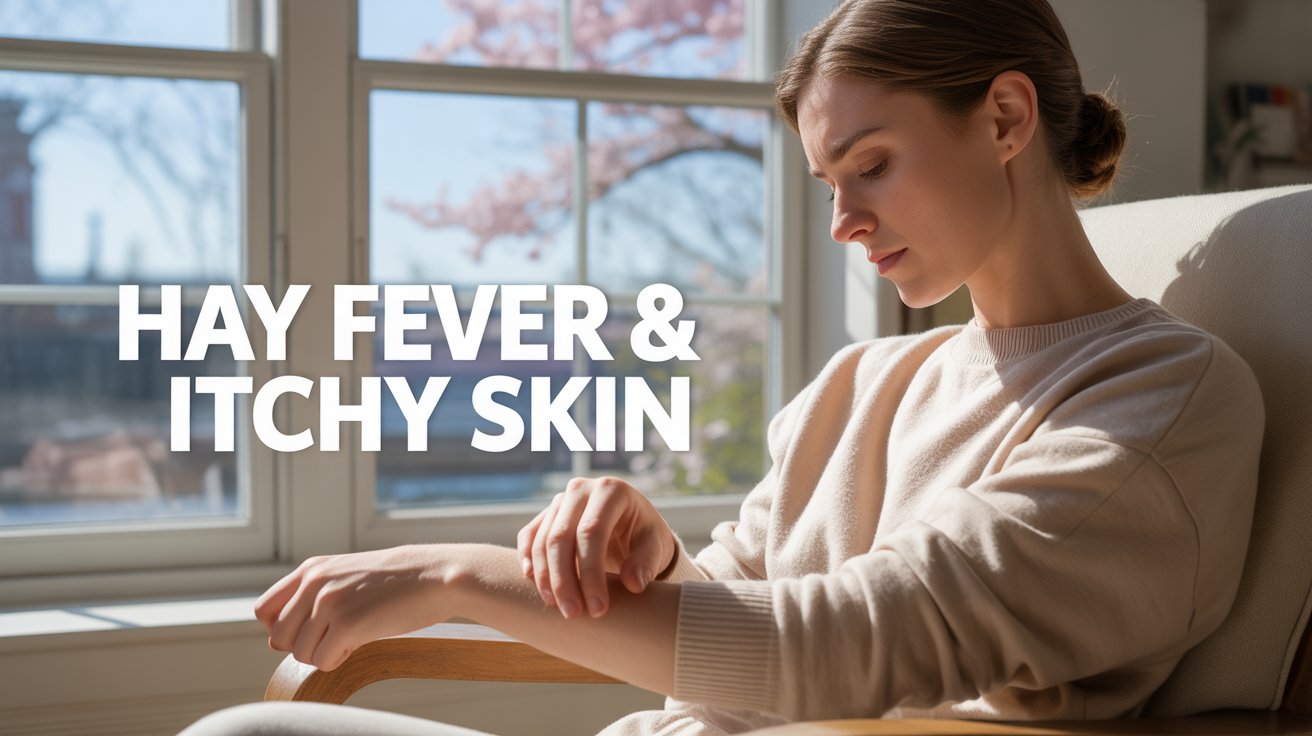
Sneezing and watery eyes tend to dominate the conversation around hayfever, but skin symptoms are a well-recognised part of the allergic picture for many sufferers. If you notice that your skin becomes irritated, itchy, or reactive during pollen season — even when you have not touched anything obviously different — hayfever may be the underlying cause.
The connection is not always obvious, and many people manage their nasal and eye symptoms while remaining puzzled by skin changes that appear at the same time of year. Understanding why this happens, and which skin conditions are associated with hayfever, makes the whole picture considerably clearer.
How Hayfever Affects the Skin
Hayfever is caused by an immune response to airborne allergens — most commonly pollen — that triggers the release of histamine and other inflammatory mediators. Histamine does not stay confined to the nasal passages. It circulates systemically and acts on histamine receptors throughout the body, including those in the skin.
The skin is rich in mast cells — the same immune cells that release histamine in the nose and eyes during an allergic response. When pollen lands on exposed skin or when systemic histamine levels rise during a significant allergic reaction, these cutaneous mast cells can be activated, producing itching, flushing, and in some cases hives.
This is the same biological mechanism that connects hayfever to other atopic conditions. Allergic rhinitis, asthma, eczema, and urticaria (hives) share an underlying immune profile, and it is common for people with hayfever to also experience skin reactivity — either as a separate condition or as a direct response to pollen during the season.
Types of Skin Reaction Associated With Hayfever
Pollen Contact Urticaria
Some people develop hives — raised, red, intensely itchy welts — when pollen comes into direct contact with the skin. This is known as contact urticaria and can occur on any exposed area: the arms, neck, face, and hands are most commonly affected. The reaction typically appears within minutes of exposure and resolves within a few hours. It can easily be mistaken for an insect bite or contact with an irritant plant, particularly when it occurs during outdoor activity in summer.
Hayfever and Eczema Flares
People with atopic eczema frequently find that their skin worsens during pollen season, even if pollen is not a direct contact trigger. The systemic inflammatory burden of hayfever — the elevated histamine and cytokine activity circulating throughout the body — lowers the skin barrier threshold and makes eczema-prone skin more reactive and harder to control. If your eczema reliably flares in spring and summer without a change in your skincare routine or products, hayfever may be the driver.
Oral Allergy Syndrome and the skin
Oral allergy syndrome is a cross-reactive response in which proteins in certain raw fruits and vegetables resemble pollen proteins closely enough that the immune system reacts to both. In people with grass or birch pollen allergy, eating raw apples, peaches, carrots, or celery can trigger itching and tingling of the lips, mouth, and throat. Occasionally this extends to mild skin flushing around the mouth. It is not a separate food allergy but a cross-reaction driven by pollen sensitisation, and it typically resolves when the food is cooked.
General Skin Sensitivity during Pollen Season
Even without a specific allergic skin condition, many hayfever sufferers notice that their skin becomes generally more sensitive, reactive, or prone to flushing during peak pollen periods. Skincare products that are normally tolerated without issue may cause mild irritation; skin may feel drier or more easily inflamed. This reflects the systemic inflammatory state associated with active allergic rhinitis rather than a distinct skin condition.
What Helps With Hayfever-Related Itchy Skin?
As with hayfever’s other less familiar symptoms — fatigue, sore throat, blocked ears — the most effective approach is to address the underlying allergic response rather than the skin symptoms in isolation.
Non-sedating Antihistamines
Antihistamines reduce systemic histamine activity and are effective for both the nasal and skin manifestations of hayfever. Taken consistently rather than reactively, they reduce the overall allergic burden that makes skin more reactive throughout the season.
Shower after Outdoor Exposure
Washing pollen off the skin promptly after spending time outdoors reduces contact urticaria and skin irritation caused by direct pollen exposure. This is particularly important before bed.
Emollients for Eczema-prone Skin
Applying a fragrance-free emollient regularly during pollen season helps maintain the skin barrier and reduces the likelihood of flares triggered by systemic allergic inflammation. More frequent application during high pollen periods is often needed.
Avoid known Cross-reactive Foods during Peak Season
If you experience oral allergy syndrome, avoiding raw trigger foods during the pollen season reduces the overall allergic load on the immune system. Cooking or peeling the relevant fruits and vegetables generally eliminates the cross-reactive proteins.
Minimise Additional Skin Irritants
During pollen season, simplify your skincare routine and avoid heavily fragranced products, harsh cleansers, or new formulations. Skin that is already sensitised by systemic allergic activity is more vulnerable to irritant reactions than at other times of year.
When Skin Symptoms Need Proper Assessment
Mild, seasonal skin reactivity that improves with antihistamines and basic skincare adjustments is unlikely to require urgent medical attention. However, if you are experiencing significant hives, widespread itching, or eczema that is not responding to your usual management during pollen season, a GP consultation is worthwhile. At The Private GP in Birmingham, same-day appointments are available, and our doctors can assess whether your skin symptoms are hayfever-related and whether a hayfever and allergy injection or a revised treatment approach would reduce the systemic allergic burden driving your skin reactions.
Frequently Asked Questions
- Can pollen give you a skin rash?
Yes. Direct contact between pollen and exposed skin can trigger contact urticaria — raised, itchy hives that appear within minutes and usually resolve within hours. This is most common on the arms, face, and neck during outdoor activity in summer. Systemic histamine release during hayfever can also cause skin flushing and generalised itching without direct skin contact.
- Why does my eczema get worse during hayfever season?
Eczema and hayfever share the same underlying atopic immune profile, and the systemic inflammation associated with active allergic rhinitis lowers the skin’s barrier threshold. The elevated histamine and cytokine activity circulating during hayfever makes eczema-prone skin more reactive and harder to manage, even without a change in skincare products or direct pollen contact.
- What is oral allergy syndrome?
Oral allergy syndrome is a cross-reactive response in which the immune system mistakes proteins in certain raw foods for pollen proteins. People with grass or birch pollen allergy may experience itching and tingling in the mouth and lips when eating raw apples, stone fruits, carrots, or celery. It is driven by pollen sensitisation rather than a true food allergy, and cooking the relevant foods typically eliminates the response.
- Will antihistamines help with itchy skin from hayfever?
Yes. Antihistamines reduce circulating histamine levels and are effective for both the respiratory and skin manifestations of hayfever. Consistent daily use throughout the pollen season is more effective than reactive use after itching has already begun. For significant urticaria, a GP may recommend a higher licensed dose or a different formulation.
- How do I know if my itchy skin is from hayfever or something else?
The clearest indicator is seasonal pattern and association with other hayfever symptoms. If your skin becomes itchy or reactive each spring and summer alongside nasal or eye symptoms, and improves when the season ends or when antihistamines are taken, hayfever is the most likely explanation. Skin conditions that are year-round, associated with specific food or product triggers, or accompanied by other systemic symptoms may have a different cause and are worth discussing with a GP. If there is any uncertainty, a private GP consultation can help clarify the diagnosis and direct treatment appropriately.
Get the Right Help for Your Hayfever Symptoms This Season
Whether it is itchy skin, fatigue, blocked ears, or a sore throat — hayfever affects more than most people expect, and effective treatment is available for all of it. The Private GP in Birmingham offers same-day appointments to review your symptoms and discuss all options, including the hayfever injection for patients whose symptoms are not adequately controlled with daily tablets.