

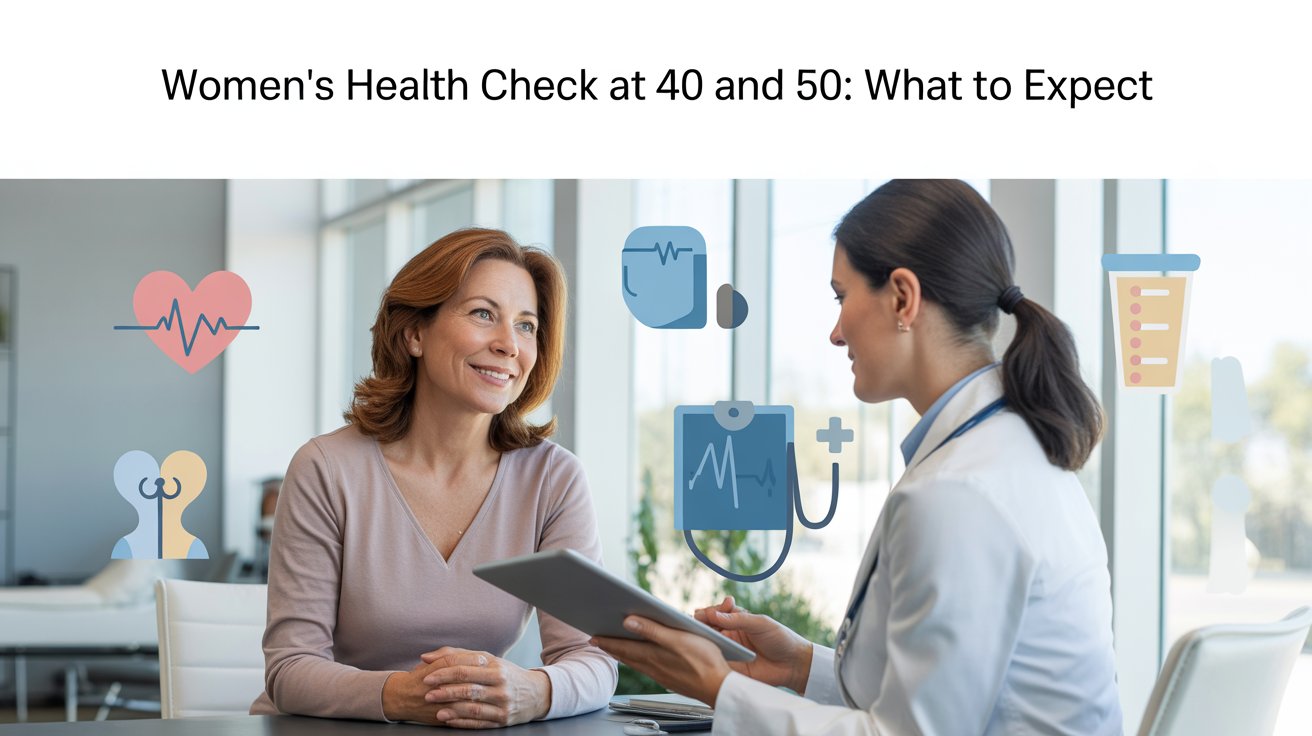
The forties and fifties are a decade of significant hormonal and physiological change for women — and the NHS screening programmes at these ages, while valuable, were not designed to capture all of it. Cardiovascular risk rises, hormonal changes begin, bone density starts to decline, and several common conditions that disproportionately affect women go undetected because they fall outside routine screening criteria.
Knowing what you are entitled to on the NHS, and what gaps a private health check fills, puts you in a much stronger position to manage your health proactively rather than reactively.
What NHS Screening Are Women Entitled to at 40?
Turning 40 marks the start of eligibility for the NHS Health Check — a free cardiovascular risk assessment offered every five years to adults aged 40 to 74 in England.
The NHS confirms that the Health Check is designed to find early signs of stroke, kidney disease, heart disease, type 2 diabetes, and dementia. It includes blood pressure, cholesterol, blood glucose or HbA1c, BMI, and a QRISK cardiovascular risk score. You should be invited automatically by your GP surgery, but you can also request one if you believe you are eligible and have not been contacted.
Cervical screening also continues at 40. Women aged 25 to 49 are invited every three years, and women aged 50 to 64 are invited every five years. If you have been up to date with screening in your thirties, your next invitation at 40 will arrive in line with your existing recall schedule.
What the NHS Health Check does not cover at 40 is significant. Thyroid function, hormone panels, iron studies, vitamin D, ECG, liver function, and inflammatory markers are all absent. For women entering their forties, these are not optional extras — they are clinically relevant markers that become increasingly important during this decade.
What NHS Screening Are Women Entitled to at 50?
At 50, the range of NHS screening programmes available to women expands meaningfully — and it is worth knowing exactly what you are entitled to so you can make sure you receive it.
Breast cancer screening. The NHS confirms that women aged 50 to 71 are invited for breast cancer screening every three years. The screening involves a mammogram — a low-dose X-ray of each breast — which can detect cancers before they are large enough to feel. You will receive an invitation automatically. If you are over 71, you are no longer automatically invited but can self-refer by contacting your local breast screening unit.
Bowel cancer screening. Men and women aged 50 to 74 receive a home FIT (faecal immunochemical test) kit through the post every two years. The test detects tiny traces of blood in a stool sample, which can indicate polyps or early-stage bowel cancer. It takes a few minutes at home and is posted back in a prepaid envelope. If the result is positive, you will be invited for a colonoscopy.
NHS Health Check and cervical screening. Both continue as normal at 50. The NHS Health Check is offered every five years, and cervical screening every five years for women aged 50 to 64.
These programmes are evidence-based and save lives. Attending them when invited should be treated as a clinical priority, not an optional appointment.
What Should Women Screen for at 40?
The NHS Health Check at 40 is a starting point, not a comprehensive assessment. For women in their forties, several markers are highly clinically relevant but fall entirely outside NHS routine screening criteria. A private health check at 40 covers the full picture.
Cardiovascular Risk
Heart disease is the leading cause of death in women in the UK — yet it is consistently underestimated, underdiagnosed, and undertreated in women compared to men. Women are more likely than men to have atypical heart attack symptoms, less likely to be referred for cardiac investigation, and less likely to receive optimal treatment after a cardiac event.
A thorough cardiovascular assessment at 40 should include blood pressure, a full fasting lipid panel, HbA1c, and a resting ECG. NICE cardiovascular risk guidelines recommend a full formal risk assessment rather than relying on any single marker in isolation, as the combination of blood pressure, cholesterol, age, and lifestyle factors together determines meaningful risk.
An ECG adds something no blood test can provide — a direct recording of the heart’s electrical activity, identifying arrhythmias such as atrial fibrillation before they cause symptoms. Our ECG heart health check-up provides a same-day result reviewed by a GP, and it is an important component of any thorough women’s health check at 40.
Perimenopause and Hormonal Health
Perimenopause — the transition leading up to menopause — typically begins in the early-to-mid forties for most women, though it can start earlier. It is characterised by hormonal fluctuation rather than a simple decline, and symptoms vary considerably between women.
NICE menopause guidelines (NG23) confirm that for women over 45 with typical perimenopausal symptoms — irregular periods, hot flushes, night sweats, mood changes, brain fog, disturbed sleep, reduced libido — a clinical diagnosis can be made on the basis of symptoms alone, without blood tests. FSH testing is not recommended to confirm perimenopause in this age group because hormone levels fluctuate significantly during the perimenopausal transition and a single result can be misleading.
However, blood tests remain useful in specific situations: in women under 45 where premature ovarian insufficiency needs to be ruled out, when symptoms are atypical, or when the GP needs additional information to guide management including HRT decisions. A hormone panel including FSH, LH, and oestradiol alongside a thyroid screen is worth discussing with your GP at a private health check, particularly if your symptoms are significant or you are considering HRT.
Thyroid Function
Women are five to eight times more likely than men to develop thyroid disorders, and the peak incidence of hypothyroidism in women occurs between the ages of 40 and 60. The symptoms — fatigue, weight gain, feeling cold, hair thinning, low mood, poor concentration — overlap significantly with those of perimenopause, meaning the two conditions are frequently confused.
A full thyroid panel including TSH, free T4, and thyroid antibodies (anti-TPO) distinguishes between the two and identifies autoimmune thyroid disease — the most common cause of hypothyroidism in women — before it has progressed to full thyroid failure. Our private blood tests include a comprehensive thyroid panel that is not routinely offered on the NHS unless TSH is already abnormal.
Iron, Ferritin, and Vitamin D
Iron deficiency is one of the most common and most underdiagnosed nutritional deficiencies in premenopausal women. Monthly menstruation creates an ongoing demand for iron that diet does not always meet. The result is often depleted ferritin stores — the body’s stored form of iron — well before haemoglobin drops low enough to be classified as anaemia.
Depleted ferritin causes persistent fatigue, hair shedding, poor concentration, breathlessness on exertion, and low mood. It is not routinely tested on the NHS unless anaemia is already suspected. A full iron panel including ferritin, serum iron, and transferrin saturation gives a meaningful picture that a haemoglobin check alone does not.
Vitamin D deficiency is widespread across the UK population, particularly in those who spend limited time outdoors, have darker skin, or live at northern latitudes. Deficiency causes fatigue, low mood, bone pain, and muscle weakness — all of which overlap with other conditions common in women at 40. It is simple, inexpensive to test, and straightforward to treat.
What Should Women Screen for at 50?
The arrival of menopause — on average at age 51 in the UK — marks a significant shift in a woman’s physiological risk profile. The loss of oestrogen affects cardiovascular health, bone density, metabolic function, and cognitive health in ways that warrant specific screening attention.
Bone Density
Oestrogen plays a key protective role in maintaining bone density. In the years immediately following menopause, bone loss accelerates significantly — women can lose up to 20% of their bone density in the five to seven years after menopause. This increases the risk of osteoporosis and fragility fractures, particularly of the hip, spine, and wrist.
A DEXA scan measures bone mineral density and is the standard tool for diagnosing osteoporosis. It is not routinely offered on the NHS unless you have specific risk factors — including a family history of osteoporosis, early menopause, prolonged steroid use, a history of fragility fractures, or a low BMI. The FRAX tool, available on the NHS and clinically validated, calculates ten-year fracture risk from a combination of clinical factors and can determine whether a DEXA scan is warranted for you.
For women at 50 who have gone through menopause, discussing bone health with a GP — and calculating FRAX risk — is a practical and important part of a health check.
Cardiovascular Risk After Menopause
Before menopause, oestrogen provides a degree of cardiovascular protection that significantly reduces women’s risk of heart disease relative to men of the same age. After menopause, that protection is largely lost — and women’s cardiovascular risk rises sharply, eventually converging with that of men.
The cholesterol profile often changes unfavourably after menopause, with LDL rising and HDL declining. Blood pressure tends to increase. A full fasting lipid panel, blood pressure measurement, HbA1c, and ECG form the core of a cardiovascular screen at 50, and should be repeated regularly rather than once every five years if results are borderline or risk factors are present.
Blood Sugar and Metabolic Health
Insulin resistance tends to increase after menopause, partly due to hormonal changes and partly due to the shift in body fat distribution that accompanies them. Women who were previously at low risk for type 2 diabetes may find their HbA1c creeping upwards in their early fifties.
HbA1c and fasting glucose, alongside waist circumference as a marker of visceral fat accumulation, form a practical metabolic screen at 50. Identifying pre-diabetes at this stage allows lifestyle intervention before full type 2 diabetes develops — a window that closes once the condition is established.
What Is Often Missed in Women’s Health Checks?
Women’s symptoms in midlife are frequently under-investigated. Fatigue, mood changes, weight gain, disturbed sleep, hair loss, and reduced energy are common presentations in women aged 40 to 55 — and they are routinely attributed to stress, low mood, or “just getting older” without adequate investigation.
Three conditions in particular are consistently missed or delayed in diagnosis: thyroid disorders, iron deficiency, and perimenopause. All three are common, all three are treatable, and all three produce symptoms that significantly affect daily life. None is part of routine NHS screening at 40 or 50.
A private GP consultation creates the space to investigate these symptoms properly — with a full blood panel, adequate appointment time, and a doctor who reviews results in the context of your clinical history rather than in isolation. Our full health check-up at The Private GP in Birmingham covers physical examination, blood tests, ECG, and a GP consultation with same-day results — giving you a complete picture of your health at either 40 or 50.
Frequently Asked Questions
When does NHS breast cancer screening start?
NHS breast cancer screening begins at 50 in England, with women invited every three years until the age of 71. Women over 71 are no longer automatically invited but can self-refer by contacting their local breast screening unit.
Do I still need cervical screening after menopause?
Yes. Cervical screening continues until the age of 64 regardless of menopausal status. Changes to the cervix can still occur after menopause, and attending when invited remains clinically important.
Can a blood test diagnose perimenopause?
Not reliably in women over 45. NICE guidelines confirm that perimenopause in women over 45 is diagnosed on the basis of symptoms, not blood tests, as hormone levels fluctuate significantly during this transition and a single result can be misleading.
Should women have a bone density scan at 50?
Not automatically on the NHS — a DEXA scan is offered to women with specific risk factors including early menopause, family history of osteoporosis, low BMI, or a history of fragility fractures. The FRAX tool calculates your individual fracture risk and determines whether a scan is clinically warranted.
What is the most important health check for women at 40?
There is no single answer — a comprehensive check covering cardiovascular risk, thyroid function, iron and vitamin D levels, hormonal assessment, and an ECG gives a genuinely useful picture. The NHS Health Check is a good starting point but does not cover all of these areas.