

You have a cholesterol blood test booked for tomorrow morning, and you are wondering whether what you eat tonight will affect the result. It is a practical question — and the answer is more nuanced than most online articles suggest. The short version is this: for most people, a sensible evening meal the night before a cholesterol test is perfectly fine, but there are specific foods, drinks, and behaviours that can skew your results and are worth avoiding. And whether you need to fast at all depends on which type of cholesterol test you are having and your clinical history. Here is what a GP actually recommends.
Do You Need to Fast Before a Cholesterol Test in the UK?
This is the most important question to settle first — because the answer determines everything else about how you prepare. Fasting guidance for cholesterol testing has changed meaningfully over the past decade, and a lot of the information online still reflects older, more rigid rules that no longer apply universally.
The NHS advises that you may need to fast for up to 12 hours if your cholesterol test involves a blood draw from the arm (a venous sample), rather than a finger-prick test. However, updated guidance — including from Harvard Medical School and the European Atherosclerosis Society — makes clear that for most adults without a history of elevated triglycerides or cardiovascular disease, the difference between fasting and non-fasting values for total cholesterol and LDL cholesterol is clinically negligible. An analysis of data from over 4,000 patients found that LDL values in non-fasting tests were only around four milligrams per deciliter higher than fasting values — a difference too small to affect clinical decision-making in most cases.
The critical exception is triglycerides. Unlike LDL and total cholesterol, triglyceride levels are significantly affected by recent food intake. After a meal — particularly one high in fat or carbohydrate — triglycerides can remain elevated in the bloodstream for several hours, producing a result that overstates your true baseline. For this reason, fasting is recommended for anyone who has previously had elevated triglycerides, has diabetes, is significantly overweight, drinks alcohol regularly, or is being tested as part of a full cardiovascular risk assessment where triglyceride accuracy matters clinically.
The practical rule: always follow the specific preparation instructions given to you by your GP or clinic. If you have been told to fast, fast. If you have not been given any specific guidance, a light, low-fat evening meal the night before and no food from midnight onwards is a sensible default for a morning blood draw — giving you a 9 to 12 hour fast without any of the difficulty of an extended daytime fast.
What to Eat the Night Before a Cholesterol Test
If you have been asked to fast from midnight and your test is first thing in the morning, your evening meal the night before is your last substantive food intake before the test. The goal is a meal that is nutritionally balanced, reasonably light, and low in saturated fat, refined sugars, and alcohol — not because a single meal changes your long-term cholesterol level significantly, but because a high-fat or high-sugar evening meal can elevate triglycerides enough the following morning to affect that component of your result, even after an overnight fast.
Grilled or Baked Lean Protein
Chicken breast, turkey, white fish, salmon, or tofu. These provide satisfying protein without the saturated fat load of red or processed meat. Grilling or baking rather than frying avoids adding unnecessary fat.
Non-starchy Vegetables
Broccoli, courgette, spinach, green beans, carrots, peppers, cauliflower. Vegetables are low in calories and rich in fibre, which slows fat absorption and supports stable blood lipid levels. Fill at least half your plate.
Wholegrains in Moderate Portions
Brown rice, quinoa, wholemeal pasta, or sweet potato. These provide slow-release energy without the sharp glucose and triglyceride spike associated with white refined carbohydrates. Keep the portion size moderate.
Legumes
Lentils, chickpeas, kidney beans. Rich in soluble fibre and plant protein, and well-evidenced to support healthy lipid metabolism. A lentil-based soup or chickpea curry with vegetables is an excellent pre-test evening meal.
Healthy Fats in Small Amounts
A small drizzle of olive oil for cooking or dressing, or a few slices of avocado, provides monounsaturated fat without the saturated fat impact. Avoid large quantities.
Water
Drink plenty throughout the evening. Staying well hydrated makes the blood draw easier, improves venous access, and keeps you comfortable during the fasting period. Water does not affect cholesterol or triglyceride results.
A Practical Example Evening Meal
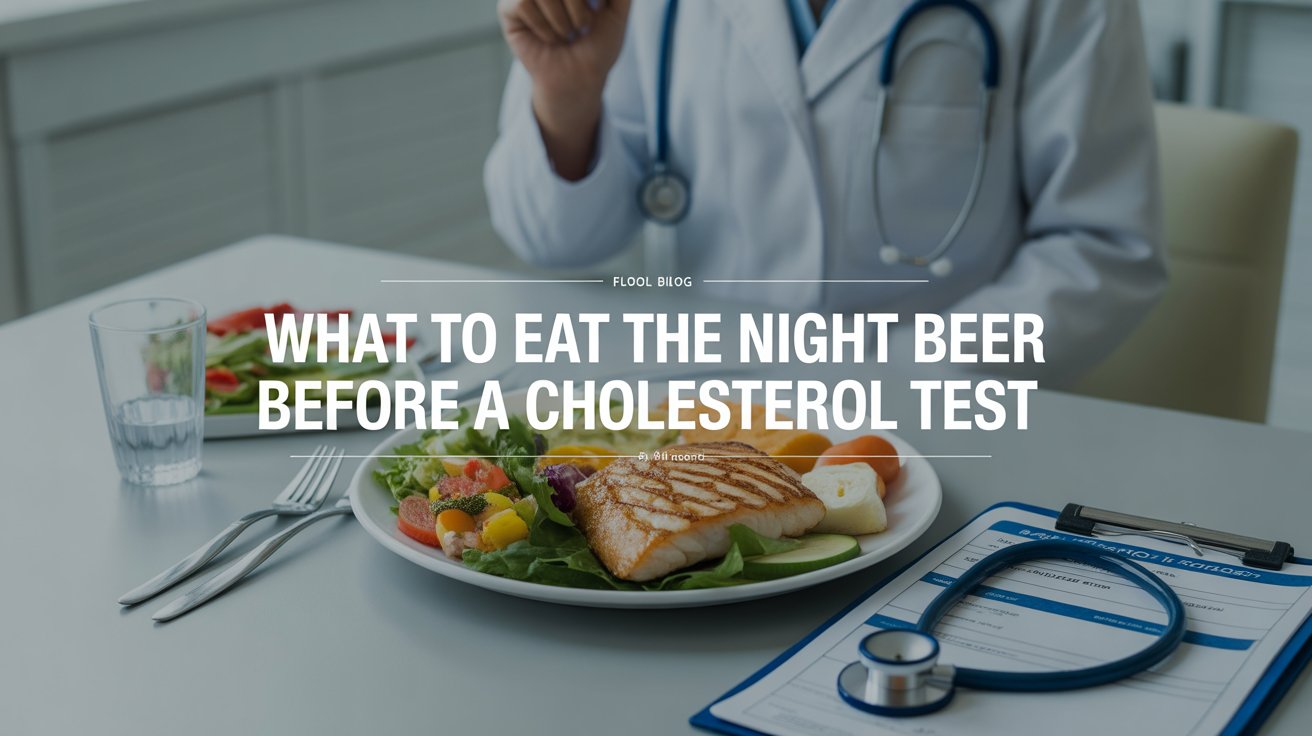
Grilled salmon with steamed broccoli and a moderate portion of brown rice. Or baked chicken with roasted vegetables and a small portion of quinoa. Or a lentil and vegetable soup with a slice of wholemeal bread. These meals provide a good nutritional balance — lean protein, fibre, complex carbohydrate, and moderate healthy fat — without the saturated fat, refined sugar, or alcohol that can affect test results the following morning.
What to Avoid the Night Before a Cholesterol Test
Certain foods and drinks have a measurable effect on blood lipids — particularly triglycerides — in the hours after consumption, and are worth avoiding the evening before your test.
Alcohol
This is the most important thing to avoid. Alcohol causes a significant short-term rise in triglycerides that can persist well into the following morning, even after an overnight fast. Avoid alcohol entirely for at least 24 hours before your test — ideally 48 hours if you drink regularly.
High-fat Meals
A takeaway, a restaurant meal with rich sauces, or a home-cooked meal heavy in butter, cheese, cream, or fatty meat can elevate both triglycerides and post-prandial lipid particles in a way that persists into the next morning. Avoid a Friday night curry or fish and chips the night before a Saturday morning test.
Red and Processed Meat
Beef, lamb, pork, bacon, sausages, and processed deli meats are high in saturated fat, which contributes to elevated LDL over time and can affect short-term triglyceride levels after a large portion. Replace with lean white meat, fish, or plant protein for the evening before your test.
Fried Foods
Chips, fried chicken, battered fish, spring rolls, samosas — anything deep-fried or pan-fried in significant oil adds a large saturated and trans fat load that can temporarily raise triglycerides and LDL-related particles.
Full-fat Dairy in Large Quantities
Full-fat cheese, cream, butter, and full-fat milk contain significant saturated fat. A small amount is unlikely to dramatically affect results, but a meal heavy in these items — a cheesy pasta dish or a cream-based sauce — is worth avoiding.
Sugary Foods and Refined Carbohydrates
Desserts, biscuits, sweets, fizzy drinks, white bread, and white rice in large portions cause a rapid glucose and insulin response that drives triglyceride synthesis. Avoid sugary snacks after dinner and opt for water rather than fruit juice, squash, or fizzy drinks during the evening.
Caffeine
Tea and coffee in moderate amounts are unlikely to affect cholesterol results significantly, but avoid unusually large quantities. If you are fasting, skip your morning coffee before the blood draw — caffeine can mildly affect lipid metabolism and some labs prefer a clean fast.
What You Can Still Have During the Fast
If you are fasting from midnight for a morning blood test, you do not need to deprive yourself entirely. The following are fine during the fasting period:
Water
Drink as much as you like. Staying well hydrated makes the blood draw significantly easier and more comfortable, and water has no effect on cholesterol or triglyceride results.
Your Regular Medications
Unless your GP has specifically advised otherwise, continue taking your regular medication with a small sip of water as normal. Do not stop statins, blood pressure medications, or other drugs without being explicitly told to do so by your doctor.
Plain Water Only
Avoid anything other than water during the fasting period — no tea, no coffee (unless explicitly told otherwise by your clinic), no squash, no fruit juice. These can affect insulin and lipid metabolism.
Other Things That Can Affect Your Cholesterol Test Result
Diet the night before is just one variable. Several other factors can affect the accuracy of your cholesterol result and are worth being aware of:
Recent Strenuous Exercise
Intense exercise in the 24 hours before a cholesterol test can temporarily alter lipid values — typically lowering triglycerides and transiently affecting LDL. Avoid unusually intense exercise the day before your test. Normal daily activity is fine.
Illness or Infection
Acute illness — including a cold, flu, or any active infection — can significantly suppress LDL cholesterol and total cholesterol values. If you are unwell, it is worth rescheduling your test, as the result may understate your true baseline.
Stress
Significant psychological stress can affect cortisol, which in turn influences lipid metabolism. While you cannot always control your stress levels, avoid scheduling your test immediately after an unusually stressful event if possible.
Medications
A number of medications affect cholesterol levels — corticosteroids, thiazide diuretics, beta-blockers, antipsychotics, and hormonal contraceptives can all influence lipid values. Your GP will take these into account when interpreting your result. Do not stop any medication before your test without explicit clinical advice.
Pregnancy
Cholesterol levels rise physiologically during pregnancy and in the postpartum period. Results during this time are not representative of your baseline and are generally not used for routine cardiovascular risk assessment.
A patient seen at The Private GP in Birmingham came for a private cholesterol blood test having been told by a friend that eating oats the night before would lower her result. She had eaten a large bowl of porridge, a banana, and some nuts immediately before attending — believing she was improving her numbers. In practice, her test was a non-fasting venous draw, and the nuts and banana consumed shortly before the appointment had elevated her triglyceride reading meaningfully above her true baseline. Dr Ul-Haq explained what had happened, rescheduled the test with proper fasting preparation, and her repeat result gave a clinically accurate lipid profile. The lesson: the night before matters, but so does the morning of the test — and eating immediately before a blood draw is never helpful, regardless of what you eat.
The Night Before vs Your Long-Term Diet: What Actually Changes Your Cholesterol
One important thing to understand is the limitation of dietary changes in the days immediately before your test. A single healthy evening meal will not meaningfully lower your LDL cholesterol or total cholesterol result. It takes weeks to months of sustained dietary change for cholesterol levels to shift appreciably — as evidenced by the clinical trials on dietary intervention in hypercholesterolaemia. What you eat the night before affects primarily your triglyceride reading and the accuracy of the test, not the underlying cholesterol values that reflect your habitual diet.
This also means that deliberately eating a very restricted diet in the days before your test in the hope of producing a better result is both pointless and counterproductive — it does not substantially alter LDL or total cholesterol, and it may produce a result that does not reflect your true metabolic state. The value of a cholesterol test lies in accuracy, not in an optimised number produced by short-term manipulation.
At The Private GP in Birmingham, a private cholesterol blood test includes a full fasting lipid profile — total cholesterol, LDL, HDL, non-HDL, and triglycerides — with same-day results and a face-to-face review with Dr Ul-Haq. You will receive clear, practical preparation instructions before your appointment so you arrive ready for an accurate result. If your cholesterol test is part of a broader health assessment, our private blood test service covers the full range of cardiovascular and metabolic markers — thyroid function, HbA1c, kidney and liver function, and more — in a single same-day appointment. No referral required. Same-day appointments available.
Ready to get a clear picture of your cholesterol? Book a face-to-face consultation at The Private GP Birmingham today.
Frequently Asked Questions
- What should I eat the night before a cholesterol test?
Eat a light, balanced evening meal based on lean protein — grilled chicken, fish, tofu, or legumes — with plenty of non-starchy vegetables and a moderate portion of wholegrains such as brown rice or quinoa. Avoid high-fat foods, fried foods, red or processed meat in large amounts, sugary foods, and alcohol. Drink plenty of water. This approach keeps your triglyceride levels stable overnight and ensures your test result is as accurate as possible.
- Can I eat normally the night before a cholesterol test?
Broadly yes — but with caveats. A normal, balanced evening meal is fine. What to avoid specifically is a meal that is unusually high in saturated fat, refined carbohydrates, or sugar, and alcohol in particular. A takeaway, a large restaurant meal, or a dessert-heavy dinner the night before is likely to elevate your triglyceride result the following morning, even if you fast overnight. Stick to the kind of balanced, home-cooked meal described above for the most reliable result.
- Do I need to fast before a cholesterol blood test in the UK?
It depends on the type of test and your clinical history. The NHS advises fasting of up to 12 hours for a venous (arm) blood draw in many cases, particularly where triglyceride accuracy matters. Updated guidance from Harvard Medical School and the European Atherosclerosis Society confirms that fasting has little effect on total cholesterol and LDL values, but significantly affects triglycerides. If you have previously had elevated triglycerides, have diabetes, or drink alcohol regularly, fasting is recommended. Always follow the specific instructions given to you by your GP or clinic. At The Private GP Birmingham, you will receive clear fasting guidance with your cholesterol test booking.
- Can I drink water before a fasting cholesterol test?
Yes — and you should. Water has no effect on cholesterol or triglyceride levels and does not compromise a fasting test. Staying well hydrated before a blood draw makes the process easier and more comfortable, improving venous access and reducing the likelihood of a difficult or repeated blood draw. Drink freely throughout the evening and morning up until your test. Avoid tea, coffee, fruit juice, squash, or any drink other than plain water during the fasting period unless your clinic has specifically said otherwise.
- How long do I need to fast before a cholesterol test?
If fasting is required, the standard NHS recommendation is 9 to 12 hours. Scheduling your blood test for early morning — ideally between 7am and 10am — and eating your last meal by 9pm or 10pm the previous evening satisfies this requirement comfortably without extending the fast unnecessarily into the day. A 10 to 12 hour overnight fast is the most practical and widely recommended approach. At The Private GP in Birmingham, same-day cholesterol blood tests are available with morning appointments to make fasting as straightforward as possible.