

Here’s the reworded version with the word removed throughout, ready to paste into WordPress:
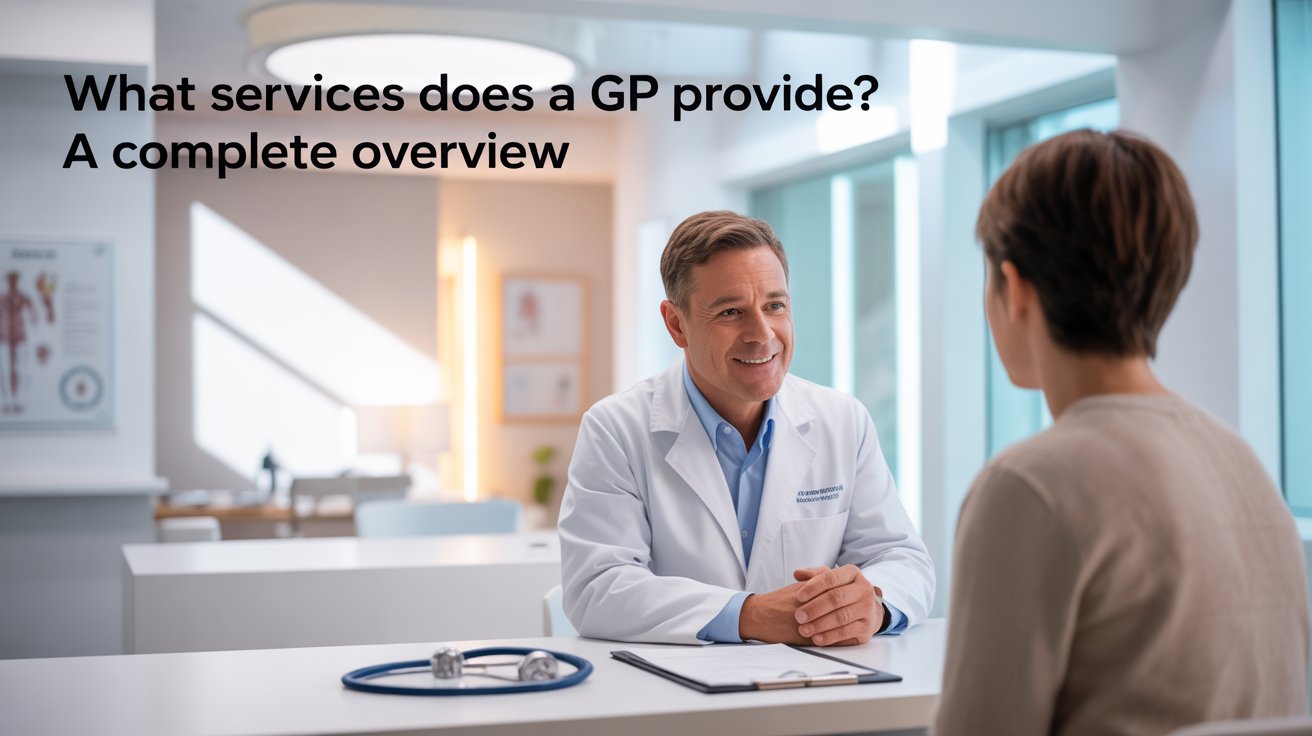
What Does a GP Do? A Complete Guide to General Practice Services
A GP, or General Practitioner, is the cornerstone of primary healthcare in the UK. As the King’s Fund describes it, general practice acts as the front door of the NHS, providing the first point of contact for the vast majority of health concerns and acting as the gateway to more specialist care. But what exactly does a GP do? And what can you reasonably expect from a GP appointment, whether with an NHS or a private practice?
The answer is considerably broader than many people realise. GPs are expert medical generalists, trained to assess, diagnose, and manage an enormous range of conditions across every stage of life. From a straightforward infection to a complex chronic condition, from a mental health concern to a minor surgical procedure, the scope of what a GP can help with is wide, and understanding that scope can help you make much better use of the care available to you.
This guide provides a complete overview of the services a GP provides, with particular attention to what is available through a private GP practice such as The Private GP in Birmingham.
1. Diagnosis and Assessment of New Symptoms
One of the most fundamental roles of a GP is to assess new or changing symptoms and work towards a diagnosis. When something feels wrong but you are not sure what it is, or when a symptom has been present for a while and you want it properly investigated, a GP is the right starting point.
A GP will take a thorough clinical history, carry out a physical examination where relevant, and use their clinical judgement to determine what is most likely to be happening. They may arrive at a working diagnosis within the consultation itself, or determine that further investigation is needed before a clear picture emerges. In either case, you leave with a plan rather than uncertainty.
This diagnostic role covers an extraordinarily wide range of presentations: skin conditions, respiratory symptoms, digestive problems, joint and muscle pain, neurological symptoms, cardiac symptoms, urinary and reproductive health concerns, and much more. GPs are trained to recognise patterns across all body systems and to identify when something requires urgent attention, further testing, or specialist referral.
2. Management of Ongoing and Chronic Conditions
A large proportion of a GP’s work involves the ongoing management of chronic conditions. These are health issues that require regular review, medication management, and monitoring over months or years, rather than a single episode of care. Common examples include type 2 diabetes, hypertension, asthma, chronic obstructive pulmonary disease (COPD), hypothyroidism, anxiety and depression, and osteoarthritis.
In a private GP setting, this ongoing management benefits from the same advantages that apply to all private consultations: more time per appointment, faster access when a concern arises between reviews, and a level of continuity and personalised attention that is increasingly difficult to guarantee within the NHS system. A private GP who knows your medical history can monitor your condition with genuine depth of understanding, rather than relying on notes from a rotating pool of different clinicians.
3. Medication Management
GPs are authorised to issue medication, and this is a central part of what they do. This includes treating acute conditions such as infections, ongoing chronic conditions requiring regular medication, and short-term needs such as pain management or anxiety during a particularly difficult period.
A private GP issues medication privately, dispensed at pharmacies across the UK. For patients who take regular medication and find themselves in a situation where their supply has run out or cannot be accessed through their usual route, this offers a fast alternative route.
Medication review is also an important part of GP care, particularly for patients on multiple medications or long-term treatments. A GP can assess whether current medication is still appropriate, whether doses need adjusting, and whether any interactions or side effects need addressing.
4. Health Screening and Preventive Care
Prevention and early detection are as important a part of a GP’s role as treating established conditions. Regular health screening, through blood tests, blood pressure monitoring, cardiovascular risk assessments, and cancer screening discussions, allows potential problems to be identified and addressed at the earliest opportunity, when intervention is most effective.
Our full health check-up service in Birmingham is a comprehensive preventive health assessment that brings together a wide range of investigations in a single appointment, including blood tests, ECG, spirometry, blood pressure, BMI, and a detailed GP consultation. It is designed for people who want a thorough, proactive review of their overall health, rather than waiting for something to go wrong before seeking medical advice.
GPs also provide vaccination advice and administration, sexual health guidance, lifestyle counselling on topics such as smoking cessation, alcohol reduction, diet, and exercise, and family planning support.
5. Blood Tests and Diagnostic Investigations
Blood tests are one of the most frequently used diagnostic tools in general practice, capable of revealing a wide range of conditions and risk factors that produce no outward symptoms. A GP can arrange blood tests to assess kidney and liver function, thyroid health, blood glucose and HbA1c, cholesterol levels, full blood count, iron and vitamin levels, inflammatory markers, hormonal profiles, and much more.
At The Private GP, our private blood test service in Birmingham delivers fast turnaround times with results reviewed in detail by your GP, who can explain what the findings mean for your individual health profile and advise on any action required. Private blood testing removes the waiting and uncertainty that can accompany NHS-arranged investigations, allowing your care to progress without unnecessary delay.
Beyond blood tests, GPs can arrange or carry out a range of other diagnostic investigations, including urine tests, swabs, electrocardiograms (ECGs), spirometry, and, where necessary, referrals for imaging or specialist assessment.
6. ECG and Heart Health Assessment
An ECG, or electrocardiogram, records the electrical activity of the heart and is a valuable tool for identifying cardiac irregularities including atrial fibrillation, conduction abnormalities, and other findings that may be asymptomatic or presenting as non-specific symptoms such as palpitations, dizziness, or breathlessness.
Our ECG and heart health check-up service provides a prompt and thorough cardiac assessment, carried out and interpreted by an experienced GP in our Birmingham clinic. It is available as a standalone appointment or as part of a broader health review, and is particularly valuable for patients with cardiovascular risk factors, a family history of heart disease, or symptoms that suggest the heart may need closer attention.
7. Mental Health Assessment and Support
Mental health care is an integral part of general practice. GPs assess and manage a wide range of mental health conditions, including anxiety disorders, depression, stress-related illness, insomnia, and adjustment difficulties. They can provide or coordinate a range of interventions, including issuing medication where appropriate, making referrals for talking therapies, issuing fit notes to support time away from work, and signposting to relevant community or specialist services.
A private GP appointment is particularly well suited to mental health concerns, because the additional time available allows for the kind of thorough, unhurried conversation that these issues require. Mental health problems are rarely straightforward to articulate in ten minutes, and the space to speak openly, without feeling rushed, can make a significant difference both to the quality of the assessment and to the experience of the patient.
8. Minor Surgery
Many GP practices, including The Private GP in Birmingham, offer a range of minor surgical procedures that would otherwise require a hospital appointment or a referral to a secondary care setting. These procedures are performed under local anaesthetic in a clinical setting and typically involve minimal recovery time.
Our minor surgery service covers procedures including mole removal, cyst removal, lipoma removal, and the removal of other benign skin lesions. Removed tissue is processed for pathological analysis where clinically appropriate, ensuring that the procedure is not only safe and well-executed but also provides the diagnostic information needed to confirm the nature of what was removed.
For patients who would like to discuss a procedure before committing to it, a dedicated minor surgery consultation allows you to explore your options, understand the process and aftercare involved, and make an informed decision in your own time.
9. Referrals to Specialists and Secondary Care
One of the most important functions of a GP is to recognise when a concern falls outside the scope of primary care and to coordinate an appropriate referral to the right specialist. A GP acts as a skilled navigator of the healthcare system, using their broad clinical knowledge to determine which specialist is most relevant, what information needs to accompany the referral, and how urgently it needs to happen.
In a private GP setting, this referral process can move considerably faster than within the NHS pathway. A private GP can write a referral letter promptly, and the patient can typically access a specialist within days rather than weeks or months. Where imaging is required, our private MRI and CT referral service provides rapid access to high-quality imaging without the waiting times associated with NHS-arranged scans. Results are reviewed by your GP and discussed with you clearly, allowing your care to proceed without unnecessary delay.
10. Medical Letters, Fit Notes, and Documentation
GPs are frequently called upon to provide medical documentation of various kinds. This includes fit notes (previously known as sick notes) for patients who are unable to work due to illness or injury, letters confirming a diagnosis or current medication for employers, insurers, or other third parties, letters supporting applications for exemptions, adjustments, or benefits, and reports required for legal or occupational health purposes.
A private GP can typically produce this documentation more quickly than an NHS practice, where administrative turnaround times can be extended. For patients who need documentation promptly, a private appointment provides a reliable and efficient route.
11. Home Visits
For patients who are unwell, have limited mobility, are elderly, or who for any other reason find it difficult or impractical to attend a clinic, a GP home visit brings medical care directly to the patient. This is a service that is increasingly rare within NHS general practice, where home visiting capacity has reduced significantly in recent years due to workforce pressures.
At The Private GP, our home visit service provides a fully qualified GP who travels to your home to carry out a proper clinical assessment. This is not a compromised version of a GP appointment: it is a thorough consultation with a qualified doctor, carried out in the environment that is most accessible and comfortable for you. It is particularly valued by patients who are acutely unwell, those with chronic conditions limiting their mobility, and those who simply find the prospect of travelling to a clinic difficult when they are not feeling well.
12. Driver Medical Examinations and Specialist Assessments
GPs are also called upon to carry out a range of specialist medical examinations that fall outside routine clinical care. These include HGV and taxi driver medicals, sports medical examinations, and pre-employment health assessments. These are typically required by employers, licensing bodies, or regulatory authorities, and must be conducted by a qualified doctor following specific guidelines.
At The Private GP, we offer these assessments as part of our broader service range, providing thorough, properly documented examinations with prompt turnaround times to support licensing applications, employment decisions, or sporting participation requirements.
The Bottom Line
The range of services a GP provides is far broader than many people appreciate. From diagnosing new symptoms and managing long-term conditions to carrying out minor surgery, issuing urgent medication, arranging specialist referrals, and visiting patients at home, a GP is a versatile and essential healthcare professional whose scope extends well beyond the brief consultations that many NHS patients have come to expect.
At The Private GP in Birmingham, all of these services are available with faster access, more time per appointment, and a level of personalised attention that is genuinely difficult to replicate in an overstretched system. Whether you have a specific concern you want addressed, a condition you want reviewed, or simply want to understand where your health stands, we are here to help.
No referral is needed, same-day and next-day appointments are typically available, and everything is handled with complete confidentiality. Get in touch with The Private GP in Birmingham to find out more or to book your appointment today.