


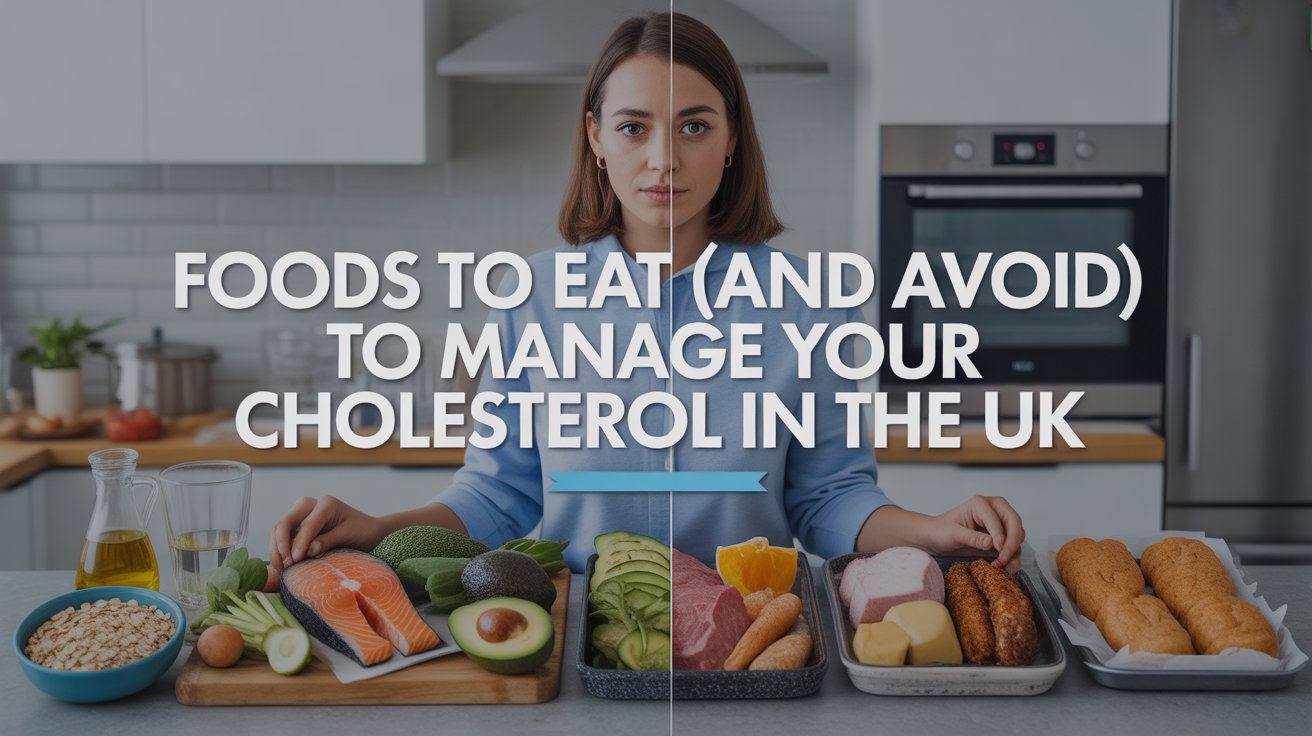
If you have been told your cholesterol is elevated, or you want to manage it proactively, diet is the most powerful non-pharmacological tool available to you. The evidence is clear, consistent, and practically actionable: the right dietary changes can reduce LDL cholesterol by 10 to 35% without medication — and the wrong dietary pattern can raise it just as meaningfully. This guide sets out exactly which foods to eat and avoid to manage your cholesterol in the UK, grounded in the latest guidance from the British Heart Foundation, Heart UK, NICE, and the NHS, with the evidence behind each recommendation explained rather than assumed.
The Most Important Principle: It Is About Fat Type, Not Fat Amount
The single biggest misconception in cholesterol management is that fat itself is the enemy. It is not. The type of fat you eat matters far more than the total amount of fat in your diet. UK guidance from the British Heart Foundation, Heart UK, and the Scientific Advisory Committee on Nutrition is consistent on this point: saturated fat and trans fat are the primary dietary drivers of elevated LDL cholesterol, while unsaturated fats — monounsaturated and polyunsaturated — are either neutral or beneficial for the lipid profile.
Replacing saturated fat with unsaturated fat reduces both total and LDL cholesterol. Simply reducing saturated fat without replacing it with unsaturated fat — replacing it with refined carbohydrate instead, for example — reduces LDL but also lowers HDL, producing a less favourable outcome overall. The goal is substitution, not just restriction.
Heart UK’s 2024 dietary fat review confirms that saturated fatty acids are the dietary factor with the greatest impact on LDL cholesterol, and that they should be substituted with unsaturated fatty acids — both polyunsaturated (PUFA) and monounsaturated (MUFA). This is the foundation on which all the specific food advice below is built.
Foods to Eat: What Lowers Cholesterol
1. Oats, Barley, and Foods Rich in Soluble Fibre
Oats and barley contain a form of soluble fibre called beta-glucan, which forms a gel-like substance in the gut that binds to bile acids — which are made partly from cholesterol — and prevents their reabsorption. This forces the liver to draw more cholesterol from the blood to make new bile acids, lowering circulating LDL. The BHF confirms that oats and barley contain this type of soluble fibre and are among the most consistently evidenced dietary interventions for cholesterol reduction. To achieve a meaningful effect, 3 g of beta-glucan per day is the clinically relevant dose — equivalent to a bowl of porridge made from 75 g of oats. Other good sources of soluble fibre include apples, pears, oranges, psyllium husk, and kidney beans.
2. Pulses, Beans, and Lentils
Pulses — chickpeas, lentils, kidney beans, black beans, cannellini beans, and peas — are rich in both soluble fibre and plant protein, and are one of the most evidence-based food categories for LDL reduction. They feature centrally in the Portfolio Diet — a plant-based dietary pattern developed by Dr David Jenkins at the University of Toronto that has been shown in controlled metabolic studies to lower LDL cholesterol by up to 35%, comparable to first-generation statins. Under free-living conditions with motivated individuals, the Portfolio Diet reduces LDL by 14 to 17% over three months. Replacing animal protein with pulses two to three times per week is one of the most impactful and practical steps someone in the UK can take to lower their LDL.
3. Nuts — Particularly Almonds and Walnuts
Nuts are high in unsaturated fat, plant protein, fibre, and phytosterols — all of which contribute to LDL reduction. Heart UK includes nuts as one of the four core components of the Portfolio Diet, each capable of producing a 5 to 10% LDL reduction individually. A 30 g daily handful of almonds, walnuts, or hazelnuts is a clinically meaningful and achievable portion. Walnuts are particularly noteworthy as a plant-based source of omega-3 alpha-linolenic acid (ALA), which contributes to triglyceride reduction. The caloric density of nuts means portion control matters, but eating a standard daily serving carries clear cardiovascular benefit.
4. Oily Fish
Salmon, mackerel, sardines, herring, and trout are rich in long-chain omega-3 fatty acids (EPA and DHA), which lower triglycerides, reduce vascular inflammation, and are associated with meaningful cardiovascular risk reduction. The NHS recommends at least two portions of fish per week, including at least one portion of oily fish. Oily fish does not lower LDL directly, but its effect on triglycerides, HDL, and systemic inflammation makes it a key component of a cholesterol-managing diet. Replacing red and processed meat with oily fish two to three times per week is one of the most impactful swaps available for overall cardiovascular risk.
5. Olive Oil and Rapeseed Oil
Extra virgin olive oil is rich in monounsaturated fat (oleic acid) and polyphenols with anti-inflammatory properties. Both olive oil and rapeseed oil are recommended by the BHF and NHS as the cooking oil of choice in place of butter, lard, ghee, or coconut oil. Monounsaturated fat does not raise LDL and supports HDL maintenance. Rapeseed oil is additionally a good plant-based source of omega-3 ALA. The swap from butter to olive or rapeseed oil for cooking and spreading is one of the single most evidence-based dietary changes for improving the lipid profile.
6. Plant Sterols and Stanols
Plant sterols and stanols occur naturally in small amounts in plant foods but are also added to specific products — spreads (Flora ProActiv, Benecol), yoghurt drinks, and milk alternatives. They work by competing with cholesterol for absorption in the gut, reducing the amount of dietary and biliary cholesterol that enters the bloodstream. Heart UK confirms that plant sterols and stanols can reduce LDL cholesterol by 7 to 10% when consumed at 1.5 to 3 g per day. They are one of the four core components of the Portfolio Diet. They are not suitable for pregnant women, breastfeeding women, or children, and should not replace cholesterol-lowering medication where that has been prescribed. Used consistently and correctly, however, they are one of the most practically effective food-based LDL reduction tools available.
7. Soya Protein
Foods made from soya — soya milk, tofu, edamame, soya mince, and tempeh — are the fourth component of the Portfolio Diet. Soya protein has been shown to reduce LDL cholesterol by 5 to 10% in controlled trials, through mechanisms that include displacement of saturated fat from the diet, the direct effect of soya protein on LDL receptor upregulation, and the isoflavone content of soya foods. Including 25 g of soya protein per day — equivalent to roughly 300 ml of soya milk plus a portion of tofu — is the clinically studied dose. Soya is a practical protein alternative to meat and dairy for those managing their cholesterol through diet.
8. Avocado
Avocado is rich in monounsaturated fat and plant sterols, and has been shown in randomised controlled trials to reduce LDL and non-HDL cholesterol when used to replace saturated fat in the diet. Half an avocado per day provides approximately 1 g of plant sterols alongside beneficial fibre, potassium, and folate. It is a practical, satisfying, and nutritionally dense addition to a cholesterol-managing diet — used in place of butter on toast, cream cheese in sandwiches, or added to salads and grain bowls.
9. Fruit and Vegetables
Fruit and vegetables contribute soluble fibre, plant sterols, polyphenols, and antioxidants — all supporting a favourable lipid profile and broader cardiovascular health. The NHS recommends a minimum of five portions per day. Particularly useful sources of soluble fibre for cholesterol management include apples, pears, citrus fruit, aubergine, okra, and sweet potato. A diet rich in a wide variety of fruit and vegetables also displaces less favourable foods — processed foods, refined carbohydrates, and saturated fat — which indirectly supports LDL management.
Foods to Avoid or Reduce: What Raises Cholesterol
1. Saturated Fat — The Primary Target
Saturated fat is the dietary factor with the greatest impact on LDL cholesterol — a fact consistently confirmed across all major UK and international dietary guidelines. The UK Scientific Advisory Committee on Nutrition recommends that saturated fat should account for no more than 10% of total energy intake (approximately 20 g per day for women and 30 g per day for men). Most UK adults consume more than this. The highest saturated fat foods to reduce are:
- Butter, lard, suet, ghee, and dripping
- Full-fat dairy: cream, hard cheese, full-fat milk, crème fraîche, ice cream
- Fatty and processed meat: beef, lamb, pork belly, sausages, bacon, salami, chorizo, pâté
- Pastry, biscuits, cakes, croissants, and most commercially baked goods
- Coconut oil and palm oil — despite their health halo in popular media, both are very high in saturated fat
- Chocolate (particularly milk and white) and confectionery
- Ready meals and processed foods — often high in hidden saturated fat from cheap cooking oils and processed meat
2. Trans Fats
Trans fats raise LDL and simultaneously lower HDL — a uniquely damaging combination for the lipid profile. They are found in industrially hydrogenated oils, some processed and fried foods, and some commercially produced baked goods. The UK food industry has significantly reduced trans fat content in processed foods through voluntary commitments, and average UK trans fat intake is now below the recommended maximum of 2% of dietary energy. Nevertheless, checking the ingredient label for ‘partially hydrogenated vegetable oil’ — the marker of industrially produced trans fat — remains worthwhile for those actively managing their cholesterol.
3. Refined Carbohydrates and added Sugar
White bread, white rice, white pasta, breakfast cereals high in sugar, sugary drinks, sweets, and confectionery do not contain saturated fat but do raise triglycerides significantly when consumed in large amounts. Elevated triglycerides are associated with increased cardiovascular risk, particularly when combined with low HDL. Replacing refined carbohydrates with wholegrains — brown rice, wholemeal bread, oats, quinoa, barley — reduces the glycaemic response, supports triglyceride management, and contributes additional soluble fibre. The BHF includes reducing refined carbohydrates and added sugar as part of its broader cholesterol management guidance.
4. Alcohol
Alcohol raises triglycerides directly — even modest drinking can produce a measurable increase in fasting triglycerides — and excess alcohol contributes to raised total cholesterol and impairs hepatic lipid metabolism. The NHS recommendation of no more than 14 units per week applies for cholesterol management as well as broader health. Reducing alcohol intake, spreading consumption across the week rather than binge drinking, and avoiding alcohol entirely for at least 24 to 48 hours before a cholesterol blood test are all relevant for anyone managing their lipid profile. Alcohol reduction is particularly important for those with hypertriglyceridaemia.
5. A note on Dietary Cholesterol
Foods high in dietary cholesterol — eggs, prawns, liver, kidney — are often unnecessarily avoided by people managing their blood cholesterol. Heart UK, the BHF, and the Medical Research Council are consistent on this point: dietary cholesterol is not the primary target for cholesterol management advice, because most people consume well below the recommended daily limit of 300 mg and saturated fat is far more potent at elevating blood LDL. Eggs, prawns, crab, and offal are low in saturated fat and are fine to eat as part of a balanced diet. The focus should be on saturated fat, not dietary cholesterol, for the vast majority of people.
The Portfolio Diet: A Practical Framework
The Portfolio Diet — developed by Dr David Jenkins at the University of Toronto and adopted by Heart UK as a recommended dietary approach — provides a practical framework for combining the most evidence-based cholesterol-lowering food strategies. It is built around four components, each capable of reducing LDL by 5 to 10% individually, and up to 35% in combination under controlled conditions:
- Soluble fibre: Oats, barley, psyllium, pulses, fruit (notably apples and citrus), and vegetables (notably aubergine and okra)
- Plant protein: Soya foods — soya milk, tofu, edamame, soya mince — replacing animal protein sources
- Nuts: A 30 g daily handful of almonds, walnuts, or hazelnuts
- Plant sterols and stanols: 5 to 3 g per day from fortified foods — spreads, yoghurt drinks, or milk alternatives
In 12-month free-living studies with motivated participants, sustained adherence to the Portfolio Diet achieved LDL reductions of 20% or more in one third of participants. For people committed to dietary management of their cholesterol, the Portfolio Diet provides a structured and evidence-based target to work towards — and is entirely compatible with a mainstream UK diet.
A patient at The Private GP Birmingham — a man in his early fifties with an LDL of 3.9 mmol/L and a QRISK3 just below the treatment threshold — was advised by Dr Ul-Haq to pursue a structured dietary approach before considering medication. He followed a modified Portfolio Diet for three months: daily porridge, a handful of almonds, three to four plant-based protein meals per week replacing red meat, and a daily Flora ProActiv spread. His follow-up cholesterol blood test at three months showed his LDL had fallen from 3.9 to 3.1 mmol/L — a 21% reduction achieved entirely through diet. His QRISK3 score fell below 7%, removing the immediate case for medication. He continued the dietary pattern alongside regular exercise and maintained the improvement at his six-month review.
Practical Swaps to Start Today
- Butter → olive oil or rapeseed oil spread: for cooking, baking, and spreading
- Full-fat milk → semi-skimmed, skimmed, or fortified soya milk: reduces saturated fat while maintaining calcium
- Cheddar → reduced-fat cheese or smaller portions: hard cheeses are among the highest saturated fat foods in the average UK diet
- Fatty mince → lean mince (5% fat) or lentil-based mince: significant saturated fat reduction per meal
- White bread → wholemeal or seeded bread: adds soluble fibre, reduces glycaemic response
- Biscuits and cakes → fruit, nuts, or oatcakes: swaps saturated fat and refined sugar for fibre and unsaturated fat
- Processed meat → grilled chicken, fish, tofu, or eggs: lean protein with significantly less saturated fat
- Takeaway → home-cooked equivalents with lean protein and vegetable-rich bases: the cooking method and fat used matter as much as the ingredients
- Sugary breakfast cereals → porridge with fruit and a handful of walnuts: the single most impactful breakfast swap for cholesterol management
If you would like to know exactly what your current cholesterol levels are and what dietary changes would be most impactful for your specific lipid profile, a private cholesterol blood test at The Private GP Birmingham provides a full fasting lipid panel with face-to-face GP results review by Dr Israar Ul-Haq. He will interpret your results, calculate your QRISK3 cardiovascular risk score, and provide specific, evidence-based dietary advice tailored to your individual findings. If you would prefer a broader metabolic assessment, our comprehensive private blood test service covers cholesterol alongside HbA1c, thyroid function, liver and kidney function, and more in a single same-day appointment. No referral required. Same-day appointments available. Book a face-to-face consultation today.
Frequently Asked Questions
- What is the best food to eat to lower cholesterol in the UK?
The most evidence-based single dietary change for lowering LDL cholesterol is replacing saturated fat with unsaturated fat — swapping butter and fatty meat for olive oil, oily fish, nuts, and avocado. Beyond this, the foods with the most direct and well-evidenced LDL-lowering effect are oats and barley (beta-glucan soluble fibre), pulses and lentils, nuts (particularly almonds and walnuts), soya protein foods, and plant sterol/stanol-fortified products. Combining these in a structured pattern — as in the Portfolio Diet — can reduce LDL by up to 35% under controlled conditions.
- What foods should I avoid if I have high cholesterol in the UK?
The primary foods to reduce are those high in saturated fat: butter, ghee, lard, full-fat dairy (cream, hard cheese, full-fat milk), fatty and processed meat (bacon, sausages, salami, fatty mince), pastry, biscuits, cakes, coconut oil, and palm oil. Refined carbohydrates and added sugar should also be reduced as they raise triglycerides. Alcohol raises triglycerides and should be kept below 14 units per week. Dietary cholesterol foods such as eggs, prawns, and liver are not primary targets — the evidence is clear that saturated fat, not dietary cholesterol, is the main driver of elevated blood LDL for most people.
- How much can diet lower cholesterol?
Dietary changes alone can lower LDL cholesterol meaningfully — by 10 to 20% with sustained dietary modification in most free-living individuals, and by up to 35% in highly motivated individuals following a structured approach such as the Portfolio Diet. The effect varies significantly between individuals depending on baseline diet, genetics, and adherence. For many people with mildly to moderately elevated cholesterol and a low to moderate overall cardiovascular risk, dietary modification provides sufficient LDL reduction to avoid medication. For those with higher cardiovascular risk or significantly elevated LDL, diet supports — but may not replace — lipid-lowering medication.
- Do plant sterols and stanols really work?
Yes — plant sterols and stanols are among the most consistently evidenced food-based cholesterol-lowering interventions available. Heart UK confirms they can reduce LDL cholesterol by 7 to 10% when consumed at 1.5 to 3 g per day, through competitive inhibition of cholesterol absorption in the gut. They are available in fortified spreads (Benecol, Flora ProActiv), yoghurt drinks, and plant milk alternatives. They are safe for most adults but not recommended for pregnant women, breastfeeding women, or children, and should be used alongside a healthy diet rather than as a substitute for broader dietary improvement.
- Should I eat eggs if I have high cholesterol?
Yes, for most people. Eggs are high in dietary cholesterol but low in saturated fat. The British Heart Foundation and Medical Research Council confirm that dietary cholesterol from foods like eggs does not usually make a significant contribution to blood LDL cholesterol levels for most people. The primary dietary target for blood cholesterol management is saturated fat, not dietary cholesterol. A small minority of people — dietary cholesterol hyper-responders, estimated at 15 to 25% of the population — may see a larger blood cholesterol response to high dietary cholesterol intake, and those with familial hypercholesterolaemia may need more personalised advice. For a personalised assessment of your specific lipid profile and dietary priorities, speak to a GMC-registered GP.