


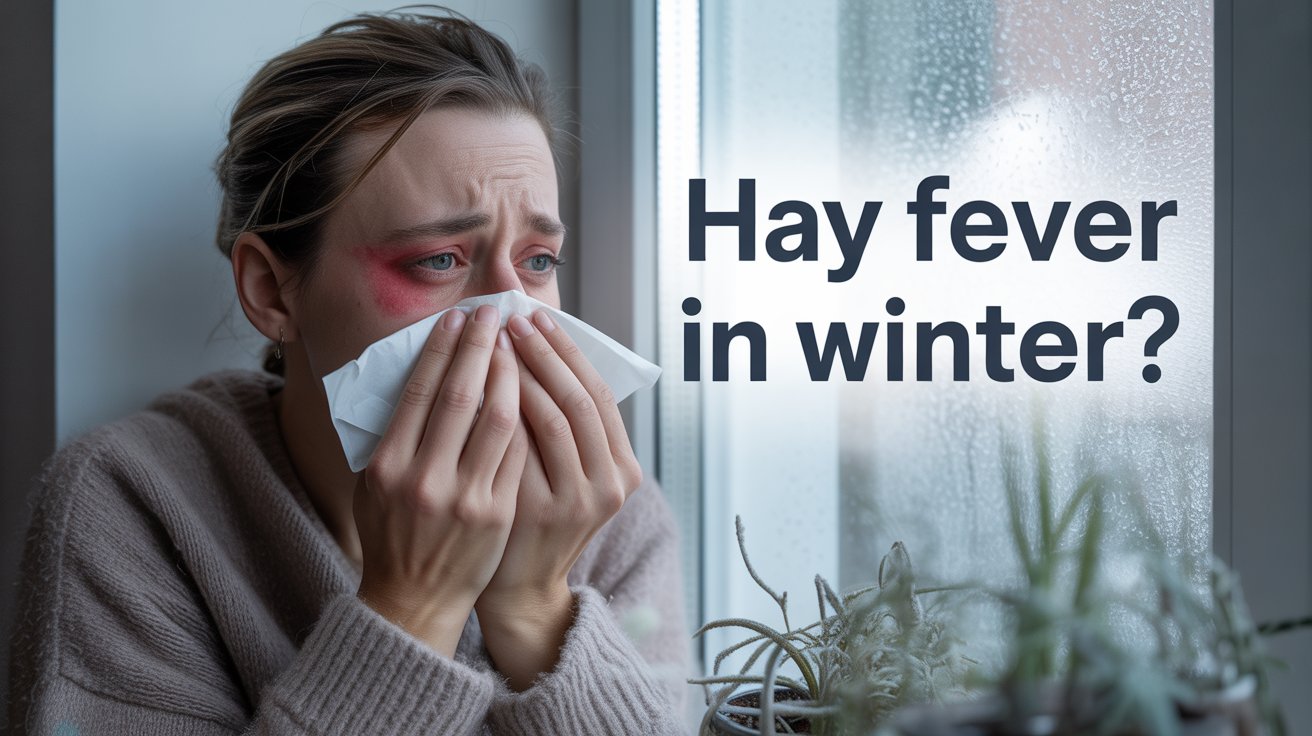
Hayfever is so closely associated with spring and summer that most people assume their symptoms must be something else entirely when they persist into autumn and winter. A cold, perhaps, or just the season. But sneezing, congestion, itchy eyes, and a runny nose that lasts for weeks without developing into a proper illness — and that does not seem to spread to anyone else in the household — is rarely a cold. It is more likely an allergic response to triggers that are present year-round.
Strictly speaking, hayfever refers to allergic rhinitis triggered by pollen, and pollen counts in the UK are low from late autumn through winter. But the same immune mechanism that drives pollen allergy can be triggered by entirely different allergens that peak indoors during the colder months. The result feels identical to summer hayfever — and is just as manageable once you understand what is causing it.
What Causes Winter Allergic Rhinitis?
Dust Mites
House dust mites are the most common trigger of year-round and winter-dominant allergic rhinitis in the UK. They thrive in warm, humid environments — mattresses, pillows, carpets, and upholstered furniture — and their population peaks in autumn as central heating is switched on and homes are sealed against the cold. Spending more time indoors, with windows closed and heating running, dramatically increases exposure. The allergen responsible is not the mite itself but proteins found in its faecal particles, which become airborne and are inhaled continuously in an affected home.
Mould Spores
Mould spores are present outdoors throughout the year but peak in autumn and early winter as fallen leaves and damp vegetation decompose. Indoors, mould thrives in bathrooms, kitchens, and anywhere with condensation or poor ventilation — all of which worsen during winter when windows are kept closed. For people sensitised to mould spores, this combination of elevated outdoor spores in autumn and increased indoor exposure in winter produces a prolonged allergic season that extends well beyond the summer pollen calendar.
Pet Dander
Pet dander — microscopic particles of skin, saliva, and dried secretions shed by cats, dogs, and other animals — is a year-round allergen, but winter intensifies exposure considerably. Pets spend more time indoors, windows are closed, and indoor air is recirculated rather than exchanged with fresh outdoor air. For people who are borderline sensitised to pet allergens, this shift in exposure can tip them from tolerating their pet without symptoms to experiencing persistent allergic rhinitis throughout the colder months.
Tree Pollen in Late Winter
It is worth noting that tree pollen season in the UK begins earlier than most people expect. Hazel and alder trees begin releasing pollen from January in mild years, and birch — one of the most potent tree pollens — follows from March. For people with tree pollen sensitivity, what feels like a persistent winter cold from January onwards may in fact be the beginning of their allergic season rather than an indoor allergen.
How to Tell Winter Allergies from a Cold
The distinction matters because the treatments are different. Winter allergies and repeated colds can feel similar — both cause congestion, sneezing, and a runny nose — but there are reliable ways to tell them apart:
- A cold typically resolves within seven to ten days. Allergic rhinitis persists for as long as exposure continues — which in a home with dust mite sensitisation can mean all winter.
- Fever and body aches. These are signs of viral infection and do not occur with allergic rhinitis. If you feel generally unwell alongside your nasal symptoms, a cold or flu is more likely.
- Pattern of symptoms. Allergy symptoms often follow a pattern — worse at home than outdoors, worse in the bedroom than elsewhere, or worse in the morning after a night in an environment full of dust mite allergen. This kind of environmental correlation is a strong indicator of allergy.
- Itchy eyes, nose, or throat are characteristic of allergic rhinitis and are not typical of a cold. If itching is a prominent feature of your symptoms, allergy is the more likely cause.
- Response to antihistamines. If an antihistamine provides meaningful relief, the underlying cause is almost certainly allergic rather than infectious.
Managing Winter Allergic Rhinitis
The approach to managing winter allergic rhinitis is similar to summer hayfever, with additional focus on the indoor environment:
- Wash bedding at 60°C weekly. This temperature kills dust mites and removes their allergen from the materials closest to your airways during sleep.
- Use allergen-proof pillow and mattress covers. These create a barrier between you and the dust mite population living in your bedding and mattress, reducing overnight exposure significantly.
- Ventilate your home daily. Even briefly opening windows in winter exchanges the allergen-laden recirculated air inside with fresher outdoor air. Ten to fifteen minutes a day makes a meaningful difference to indoor allergen levels.
- Use a HEPA air purifier in the bedroom. Running a HEPA filter overnight reduces airborne allergen particles where you spend the most time.
- Non-sedating antihistamines and nasal corticosteroid sprays. The same treatments that work for summer hayfever are equally effective for winter allergic rhinitis. A nasal steroid spray used consistently is particularly useful for the congestion-dominant picture many winter allergy sufferers experience.
Still Not Sure What’s Causing Your Symptoms?
If you have been congested and sneezing throughout the winter and cannot determine whether it is allergy, repeated colds, or something else, a GP consultation is the most direct route to an answer. At The Private GP in Birmingham, same-day appointments are available, and our doctors can assess your symptoms, identify likely triggers, and recommend the most appropriate treatment. If a broader health picture needs ruling out, targeted private blood tests can be arranged at the same visit.
Frequently Asked Questions
- Can you get hayfever in winter in the UK?
Technically, hayfever refers specifically to pollen allergy, and UK pollen counts are low in winter. However, allergic rhinitis — the same condition with identical symptoms — can be triggered year-round by indoor allergens including dust mites, mould spores, and pet dander. From January onwards, early tree pollens also begin to circulate. What feels like hayfever in winter is almost certainly an allergic response, just not to summer pollen.
- Why are my allergy symptoms worse in winter than summer?
Spending more time indoors with windows closed concentrates indoor allergens — particularly dust mites and pet dander — in the air you breathe. Central heating creates warm, dry conditions that allow dust mite populations to thrive. For people with indoor allergen sensitivities, winter is the most challenging season precisely because the environment they are most exposed to is the one driving their symptoms.
- How do I know if I am allergic to dust mites?
The most reliable indicators are symptoms that are worst in the bedroom, that occur on waking and improve after spending time outdoors, and that persist throughout the year without a clear seasonal peak. A formal allergy assessment — through skin prick testing or a specific IgE blood test — can confirm dust mite sensitisation if diagnosis would change your management approach.
- Is winter allergic rhinitis treated the same way as hayfever?
Yes. The treatments are the same — non-sedating antihistamines and nasal corticosteroid sprays are the mainstay of management for both. The difference lies in avoidance measures: rather than reducing pollen exposure, the focus shifts to reducing indoor allergen levels through bedding management, ventilation, and air filtration.
- Could my winter symptoms be something other than allergy?
Yes. Non-allergic rhinitis, sinusitis, and repeated viral infections can all produce a similar picture. If your symptoms are accompanied by facial pain or pressure, discoloured nasal discharge, fever, or a feeling of general illness, a GP assessment is appropriate. For symptoms that are persistent, unexplained, or accompanied by fatigue disproportionate to the nasal symptoms, a private blood test can help identify whether an underlying condition is contributing.
Get Your Winter Symptoms Properly Assessed in Birmingham
Whether your symptoms started in winter, persist through it, or have never quite fitted the classic hayfever picture, The Private GP in Birmingham offers same-day GP consultations to help you understand what is causing them and what will actually help.