


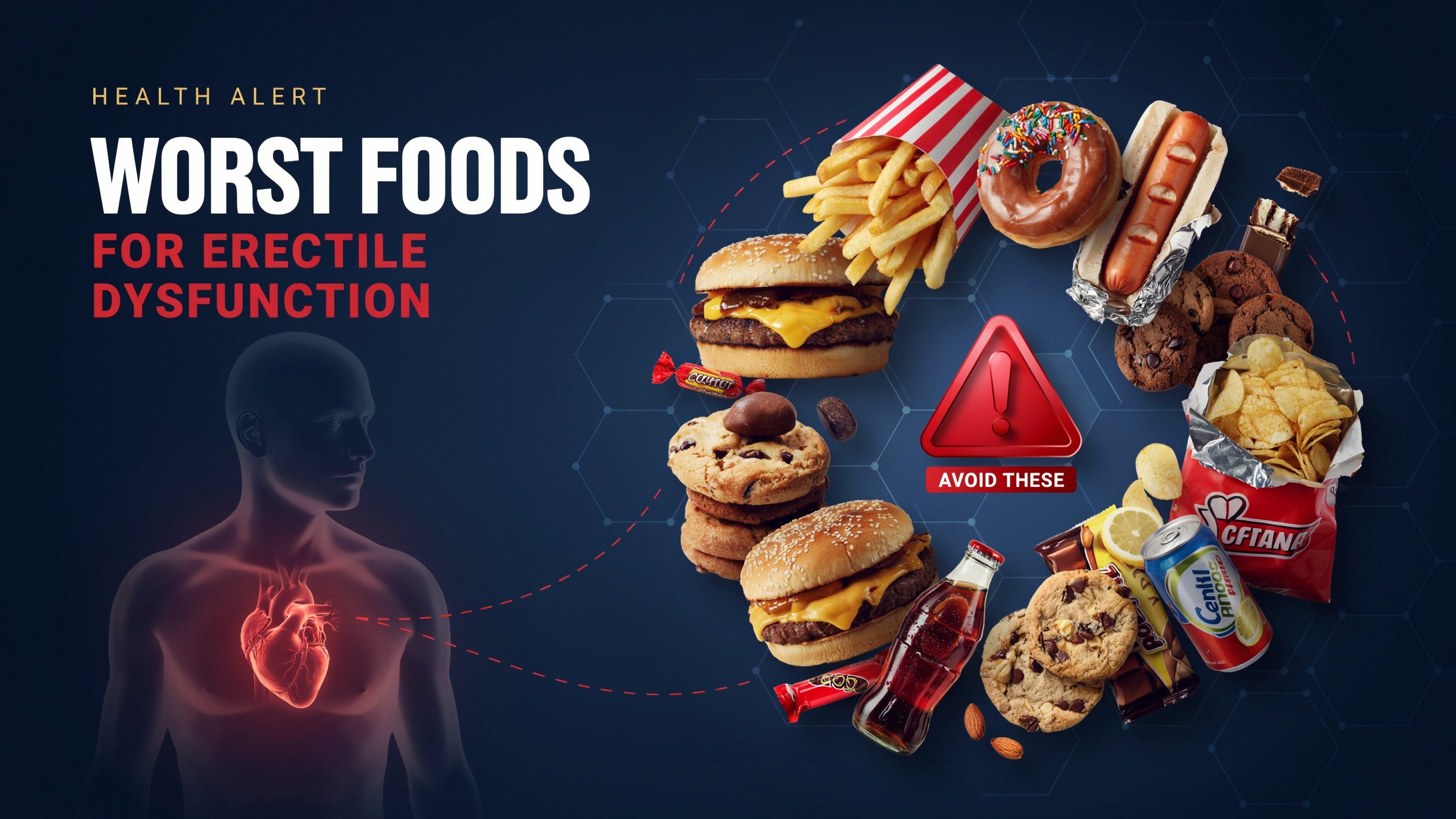
TL;DR: No single food causes erectile dysfunction, but a consistent dietary pattern high in saturated fat, ultra-processed food, added sugar, salt, and excess alcohol damages the vascular and metabolic systems that erections depend on. The link runs through atherosclerosis, endothelial dysfunction, and insulin resistance — the same pathways that drive cardiovascular disease. Improving diet improves vascular health, which improves erectile function — often meaningfully and relatively quickly.
Erectile dysfunction is, at its core, a circulation problem. Blood needs to flow into the penile arteries in sufficient volume, and the arterial walls need to respond properly to nitric oxide signalling to allow it in. Anything that damages blood vessels, raises arterial plaque, or impairs nitric oxide production works directly against that — and diet is one of the most powerful and most modifiable influences on vascular health in a man’s daily life.
No GP will tell you that cutting out processed food is a substitute for clinical treatment. But the evidence that dietary pattern affects erectile function through vascular health is solid — and knowing which foods do the most damage is the first practical step.
Why What You Eat Directly Affects Erectile Function
An erection depends on three things working properly: healthy endothelial function, sufficient nitric oxide, and unobstructed blood flow through the small arteries of the penis. Diet affects all three.
The NHS confirms that being overweight, eating an unhealthy diet, and drinking too much alcohol are all established lifestyle contributors to erectile dysfunction. The mechanism runs through cardiovascular disease — the same arterial damage that causes heart attacks narrows the penile arteries first, because they are smaller.
A case report published in PMC described a 52-year-old man with atherosclerosis-driven ED who completely reversed his erectile function through dietary change to a whole food plant-based diet. The authors noted that while prior literature describes modest improvement in ED with a Mediterranean diet, this case demonstrated complete reversal — achieved by eliminating the foods most damaging to vascular endothelial health and replacing them with those that support nitric oxide production and arterial flexibility.
The Mediterranean diet has the strongest evidence base of any dietary pattern for improving erectile function. But understanding which foods most actively damage the vascular system allows for targeted changes rather than a wholesale dietary overhaul.
Processed and Fried Foods — the Biggest Daily Vascular Damage
Ultra-processed foods — fast food, ready meals, packaged snacks, crisps, most takeaway options — consistently head the list of dietary contributors to vascular disease, and by extension to ED.
The reason is not a single nutrient. It is the combination. Ultra-processed foods tend to be high in trans fats and refined vegetable oils that promote arterial inflammation, refined carbohydrates that spike blood glucose and drive insulin resistance, sodium that raises blood pressure and stiffens arterial walls, and a range of additives and emulsifiers that appear to impair gut and vascular health in ways that are still being characterised.
Trans fats — still present in some commercial baked goods, margarines, and fried foods despite regulatory pressure — are particularly harmful to the endothelium. They raise LDL cholesterol, lower HDL, increase inflammation, and directly impair the endothelial function that nitric oxide depends on. The endothelium is the inner lining of every blood vessel in the body, including the penile arteries. When it is inflamed and dysfunctional, it cannot respond properly to the signals that dilate vessels and allow blood in.
The sodium load in a diet heavy in processed food raises blood pressure chronically, which causes arterial stiffening over time. Rigid arteries cannot dilate as effectively when an erection is required — a direct mechanical problem overlaying the nitric oxide impairment.
Processed Meat and Red Meat — Saturated Fat, Arterial Plaque, and Nitric Oxide
Processed meat — bacon, sausages, deli meats, hot dogs — carries a higher ED risk than unprocessed red meat for two reasons: saturated fat content and nitrite additives.
The saturated fat in processed meat raises LDL cholesterol, which accelerates the deposition of atherosclerotic plaques in arterial walls. Over years and decades, this narrows the arteries throughout the body — including the small penile arteries, which show the effects of arterial disease earlier than larger vessels simply because they are smaller. A millimetre of plaque that barely affects coronary blood flow can halve the cross-sectional area of a penile artery.
Nitrite preservatives in cured and processed meats may also directly impair endothelial nitric oxide synthesis — the opposite of what dietary nitrates from vegetables do. Vegetable-derived nitrates are converted by oral bacteria into nitric oxide, which supports vascular dilation. Nitrites from meat processing appear to interfere with this pathway.
Unprocessed red meat — steak, mince, lamb — carries more modest risk than processed varieties and can be part of a diet that supports testosterone (through zinc and protein) without the same arterial damage profile. The distinction between processed and unprocessed matters considerably more than the red/white meat distinction.
Sugar and Refined Carbohydrates — the Insulin Resistance Route to ED
High sugar intake does not damage arteries directly in the immediate term. What it does is drive a metabolic cascade — elevated blood glucose, insulin resistance, type 2 diabetes — that is one of the most powerful predictors of erectile dysfunction in the medical literature.
Diabetes damages erectile function through two distinct mechanisms. The first is vascular — chronically elevated blood glucose glycates arterial walls, accelerates atherosclerosis, and impairs endothelial function in the same way and often in the same men as cardiovascular disease. The second is neurological — diabetic neuropathy damages the autonomic nerves that signal the penile arteries to dilate. A man with longstanding, poorly controlled diabetes may have both mechanisms working against him simultaneously.
Sugar-sweetened drinks — fizzy drinks, fruit juices, energy drinks, sweetened coffees — are particularly harmful because they deliver large amounts of sugar with no fibre to slow absorption, producing rapid glucose spikes repeatedly throughout the day. Over months and years, this chronic glucose loading drives insulin resistance even in men without other obvious risk factors.
Refined carbohydrates — white bread, white rice, most breakfast cereals, pastries — produce similar effects through rapid glucose release. They also contribute to visceral fat accumulation — fat stored around the internal organs rather than under the skin — which is metabolically active, promotes inflammation, and suppresses testosterone production.
Our private blood tests include HbA1c and fasting glucose alongside a full cardiovascular and hormonal panel — the markers that reveal whether insulin resistance or diabetes is contributing to ED.
Alcohol — the Dose-Dependent Disruptor
Alcohol and erectile function have a dose-dependent and context-dependent relationship that most men understand intuitively but underestimate clinically.
In the short term, alcohol is a central nervous system depressant. A drink or two reduces social anxiety — which is why so many men reach for it before sex. But at the quantities typically consumed before a sexual encounter, alcohol reliably impairs the nervous system’s ability to transmit the arousal signals needed for erection, reduces sensitivity, and inhibits the smooth muscle relaxation in the penile arteries that allows blood in. The temporary reduction in performance anxiety is cancelled — and often outweighed — by the direct physiological impairment.
A meta-analysis of alcohol and erectile dysfunction published in PMC found that higher alcohol consumption was associated with a significantly higher risk of ED. Chronic heavy drinking adds further mechanisms: it damages the vascular endothelium directly, suppresses testosterone production through impaired hypothalamic-pituitary function, and causes peripheral neuropathy that impairs the nerve signals erectile function depends on.
Men who use alcohol specifically to manage performance anxiety before sex are caught in a trap — the short-term anxiety relief perpetuates the habit while the physiological impairment makes the underlying erectile difficulty worse over time. The alcohol is not solving the problem. It is masking it while compounding it.
A Very Low-Fat Diet — the Overlooked Testosterone Risk
This is the dietary risk for ED that most articles miss, and it cuts against the natural instinct to go low-fat after reading about saturated fat and arterial disease.
Dietary fat is required for testosterone synthesis. Cholesterol — found in and produced from dietary fat — is the precursor molecule from which the body synthesises all steroid hormones, including testosterone. Men who follow very low-fat diets over extended periods have been shown in systematic review to have measurably lower testosterone levels than men who include adequate dietary fat.
This does not mean loading up on saturated fat from processed meat and fried food. The type of fat matters enormously. Monounsaturated fats from olive oil, avocado, and nuts, and omega-3 polyunsaturated fats from oily fish, support testosterone synthesis and vascular health simultaneously. Saturated fat from processed meat and trans fats from manufactured foods do not.
The practical takeaway: olive oil, oily fish, nuts, seeds, and avocado should not be cut from a diet aimed at improving erectile function. Eliminating fat indiscriminately in an attempt to improve cardiovascular health may actually reduce testosterone and worsen the hormonal contribution to ED.
What to Eat Instead — the Diet Pattern That Protects Erectile Function
The Mediterranean diet has the strongest and most consistent evidence for improving both cardiovascular and erectile health. The PMC case report noted that prior literature consistently describes improvement in erectile function with Mediterranean-style eating — a pattern built around vegetables, legumes, whole grains, oily fish, olive oil, and moderate amounts of lean meat and dairy, with minimal ultra-processed food.
The specific dietary components most relevant to ED through the nitric oxide and vascular pathway include dark leafy greens and beetroot — high in dietary nitrates that the body converts to nitric oxide. Berries and citrus fruits — high in flavonoids with antioxidant effects that protect endothelial function. Oily fish — omega-3 fatty acids that reduce arterial inflammation and support endothelial health. Nuts and seeds — healthy fats, zinc, and magnesium relevant to testosterone. Dark chocolate — flavonoid-rich when at high cocoa percentage.
These are not superfoods with magical properties. They are foods that support the same vascular and hormonal systems that ED drugs target pharmacologically. Dietary change works more slowly and less reliably than medication — but unlike medication, it improves the underlying mechanism rather than working around it.
A full health check-up at The Private GP in Birmingham gives you a comprehensive metabolic and cardiovascular picture — blood pressure, cholesterol, blood glucose, and key hormones — so dietary and lifestyle changes can be directed at the right targets.
Frequently Asked Questions
Can changing my diet reverse erectile dysfunction?
For ED driven primarily by poor vascular health and metabolic dysfunction, dietary improvement can produce meaningful and in some cases complete reversal — particularly in younger men and those without longstanding arterial damage. Clinical evidence including a documented PMC case supports this. It works more slowly than medication but addresses the underlying cause.
How quickly does diet affect erectile function?
Vascular improvements from dietary change develop over weeks to months rather than days. Some men notice improved morning erections within four to eight weeks of significant dietary improvement — a sign that vascular function is recovering. Full benefit develops over months of sustained change.
Is alcohol always bad for erectile dysfunction?
Moderate alcohol — one to two units occasionally — is unlikely to cause significant ED in otherwise healthy men. The problems arise with regular heavy use (chronic vascular and hormonal damage) and with drinking before sex specifically (acute CNS depression of erectile function). If you drink before sex to manage performance anxiety, the alcohol is making the underlying problem worse.
Does sugar cause erectile dysfunction?
Not directly, but chronically high sugar intake drives insulin resistance, type 2 diabetes, and visceral fat accumulation — all of which impair erectile function through vascular and hormonal mechanisms. Sugar-sweetened drinks are among the most efficient routes to insulin resistance and represent a high-impact dietary change to make.
Should I see a GP about ED even if I’m working on my diet?
Yes. Dietary change is a meaningful part of managing ED but rarely the complete answer. A GP assessment identifies whether cardiovascular disease, diabetes, low testosterone, or other treatable conditions are contributing — and these often need addressing directly alongside lifestyle changes.