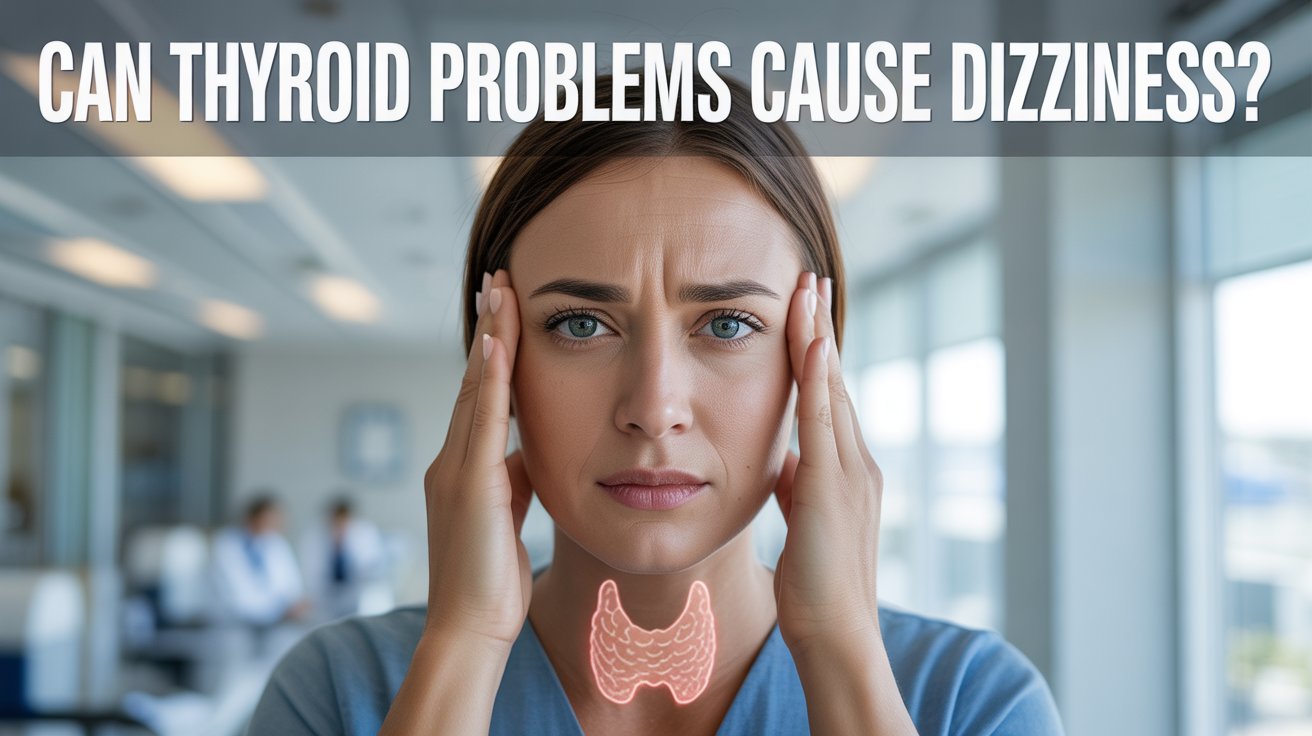
If you have been feeling persistently lightheaded, unsteady, or as though the room is gently spinning, you may well be asking: can thyroid problems cause dizziness? The short answer is yes — both an underactive thyroid (hypothyroidism) and an overactive thyroid (hyperthyroidism) can disrupt your body’s balance mechanisms in different ways. Understanding this connection is the first step towards getting the right answers and, more importantly, the right care.
How Does the Thyroid Affect Your Balance?
Simply put, your thyroid is a small, butterfly-shaped gland in your neck that produces hormones regulating your metabolism, heart rate, blood pressure, and neurological function. When those hormone levels fall out of balance, the knock-on effects can be surprisingly wide-ranging — including your sense of balance and spatial awareness.
Thyroid hormones play a direct role in maintaining healthy function of the vestibular system — the network within your inner ear and brain that keeps you upright, steady, and aware of where you are in space. When hormone levels become either too high or too low, this system can be disrupted, leaving you feeling dizzy, off-balance, or lightheaded.
Hypothyroidism and Dizziness: What’s the Link?
An underactive thyroid produces too little thyroid hormone, and this deficiency can set off a chain of physiological changes that contribute to dizziness. These include:
Raised Diastolic Blood Pressure
Studies suggest that around 1 in 3 people with hypothyroidism experience an increase in diastolic blood pressure — the pressure in your arteries when your heart rests between beats. Elevated diastolic pressure can cause feelings of dizziness and unsteadiness.
Vestibular Disruption
Thyroid hormones help regulate fluid balance within the inner ear. When levels are low, the vestibular system can malfunction, sometimes causing vertigo — a spinning sensation — particularly when you change position quickly.
Benign Paroxysmal Positional Vertigo (BPPV)
Research published in peer-reviewed journals has found a significant association between hypothyroidism and BPPV, a condition in which small crystals in the inner ear become dislodged, triggering brief but intense bouts of dizziness.
Fatigue and Cognitive Slowing
The deep fatigue associated with an underactive thyroid can leave you feeling mentally foggy and physically unsteady, both of which can be experienced as a form of dizziness.
One of our patients — a woman in her early forties from Birmingham — came to us having been told by multiple people that her dizziness was simply stress. After a private thyroid gland test, we identified significantly elevated TSH levels consistent with hypothyroidism. Once her treatment was underway, her balance improved considerably within a matter of weeks.
Hyperthyroidism and Dizziness: A Different Mechanism
An overactive thyroid floods the body with excess thyroid hormone, and the consequences for balance are equally real, though they arise through different pathways:
- Rapid or irregular heart rate: Excess thyroid hormone can cause tachycardia (a fast heartbeat) or arrhythmia (an irregular rhythm). Both conditions reduce the efficiency of blood flow to the brain, which can trigger lightheadedness and dizziness.
- Anxiety and tremor: Hyperthyroidism is closely associated with heightened anxiety and physical tremors — both of which can intensify the sensation of dizziness and make it harder to pinpoint the underlying cause.
- Orthostatic hypotension: Rapid metabolic changes from an overactive thyroid can cause blood pressure to drop momentarily when you stand up, producing a brief but unsettling wave of dizziness.
If you are experiencing palpitations alongside your dizziness, it is worth having both a thyroid function test and a cardiac assessment. Our ECG heart health check can help rule out any cardiac component and give you a clearer picture of what is driving your symptoms.
Hashimoto’s Thyroiditis and Vertigo
Hashimoto’s thyroiditis — an autoimmune condition in which the immune system attacks the thyroid gland — deserves a mention of its own. Research suggests it may directly damage the peripheral vestibular organ in the inner ear, leading to paroxysmal positional vertigo. The dizziness associated with Hashimoto’s can appear even before obvious thyroid hormone abnormalities show up on routine tests, which is one reason why a thorough assessment matters so much.
When Should You See a GP About Dizziness?
Dizziness is one of those symptoms that is easy to dismiss as tiredness or anxiety, particularly when it comes and goes. However, if your dizziness is persistent, worsening, or accompanied by any of the following, it is important to seek a professional assessment:
- Unexplained weight changes
- Persistent fatigue or cold intolerance
- Heart palpitations or an irregular heartbeat
- Thinning hair or changes to skin and nails
- Low mood, brain fog, or anxiety
- A feeling of fullness or swelling in the neck
If any of these resonate with you, a private blood test in Birmingham that includes a full thyroid panel — covering TSH, free T3, and free T4 — can provide clarity quickly, often with results available the same day.
At The Private GP, we offer same-day appointments with short waiting times and a genuinely personalised approach. You will be seen by a GMC-registered doctor who takes the time to listen — not simply review a checklist. If you have been wondering whether your thyroid could be behind your dizziness, a face-to-face GP consultation is the most reliable way to find out. Book today and get the answers you deserve.
How Is Thyroid-Related Dizziness Treated?
The good news is that dizziness caused by thyroid dysfunction is typically addressed by treating the underlying thyroid condition itself. For hypothyroidism, this usually means thyroid hormone replacement medication; for hyperthyroidism, there are several well-established treatment options your doctor will discuss with you.
As thyroid hormone levels are brought back into the normal range, balance symptoms often resolve or significantly improve. In cases involving BPPV, vestibular rehabilitation exercises may also be recommended alongside thyroid treatment.
Frequently Asked Questions
- Can an underactive thyroid cause vertigo?
Yes. Hypothyroidism can disrupt inner ear fluid balance and increase diastolic blood pressure, both of which can contribute to vertigo — including benign paroxysmal positional vertigo (BPPV). Treating the underlying thyroid condition usually leads to improvement in these symptoms.
- What does thyroid dizziness feel like?
Thyroid-related dizziness can present in several ways: a spinning sensation (vertigo), a feeling of lightheadedness or faintness, or general unsteadiness when walking or changing position. The exact character of the dizziness often depends on whether the thyroid is overactive or underactive, and whether the inner ear or cardiovascular system is primarily involved.
- Can a thyroid blood test detect what’s causing my dizziness?
A thyroid function test measuring TSH, free T3, and free T4 can identify whether an imbalance in thyroid hormones is contributing to your symptoms. However, dizziness has many potential causes, so a full clinical assessment by a GP is always recommended to build the complete picture.
- How quickly will dizziness improve once thyroid treatment begins?
Many people notice an improvement in balance and dizziness within four to six weeks of starting thyroid medication, once hormone levels begin to stabilise. However, individual responses vary, and ongoing monitoring of thyroid levels is important to ensure the correct dosage over time.
- Do I need a GP referral to get a thyroid blood test in Birmingham?
No. At The Private GP, you can access a private thyroid test without a referral. Results are typically available quickly, and one of our doctors will explain what they mean for you in a clear, straightforward way.